Is Decaf Tea Acidic?
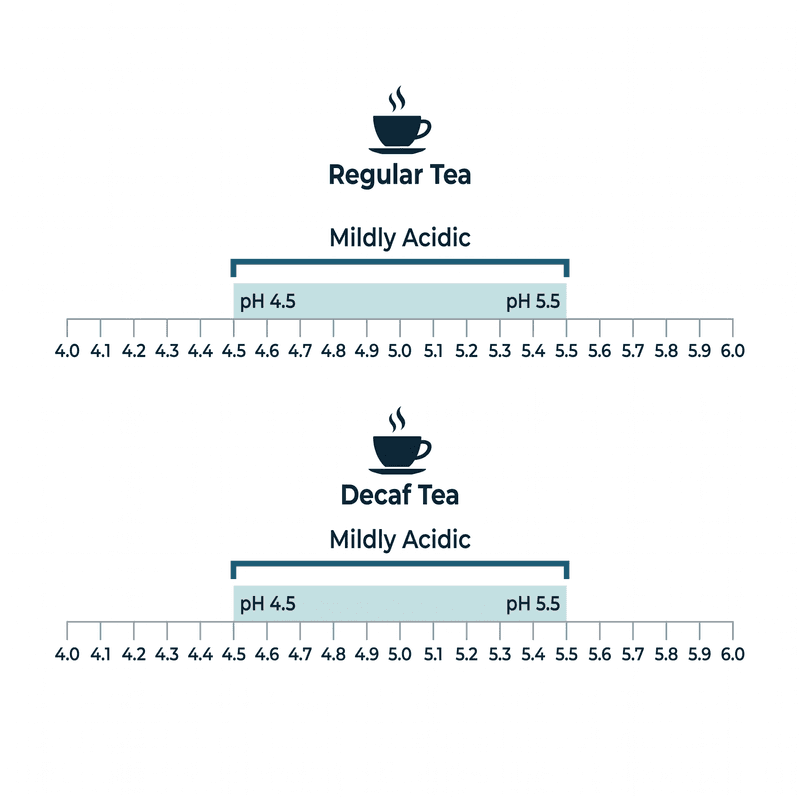
Decaf tea is mildly acidic, generally in the same 4.5 to 5.5 pH range as regular tea, since decaffeination targets caffeine rather than the tannins and organic acids that set a tea's baseline acidity. That mild acidity rarely causes reflux on its own: a 1994 double-blind study found decaf tea did not increase gastro-oesophageal reflux in healthy volunteers, unlike regular caffeinated coffee. For reflux-sensitive drinkers, caffeine-free herbal options like chamomile and ginger tend to sit easier than even decaf black or green tea.
Is Decaf Tea Acidic?
Decaf tea is mildly acidic, roughly the same as regular tea, with a pH generally in the 4.5 to 5.5 range depending on the tea type. That mild acidity comes from tannins and organic acids naturally present in the leaf, not from caffeine, so removing caffeine does not meaningfully change it.
The same logic applies across caffeinated beverages more broadly. Coffee's own pH sits around 5.0, which reflux specialist Dr. Jamie Koufman notes is far milder than soda, orange juice, or wine, yet coffee still gets blamed for acid reflux more often than those drinks. Tea follows the same pattern: its raw acidity is modest, and whatever reflux symptoms someone links to a cup are more often driven by caffeine's effect on the lower esophageal sphincter (LES) or by specific compounds like tannins, not by the tea's pH itself.
Does Decaffeination Change Tea's Acidity?
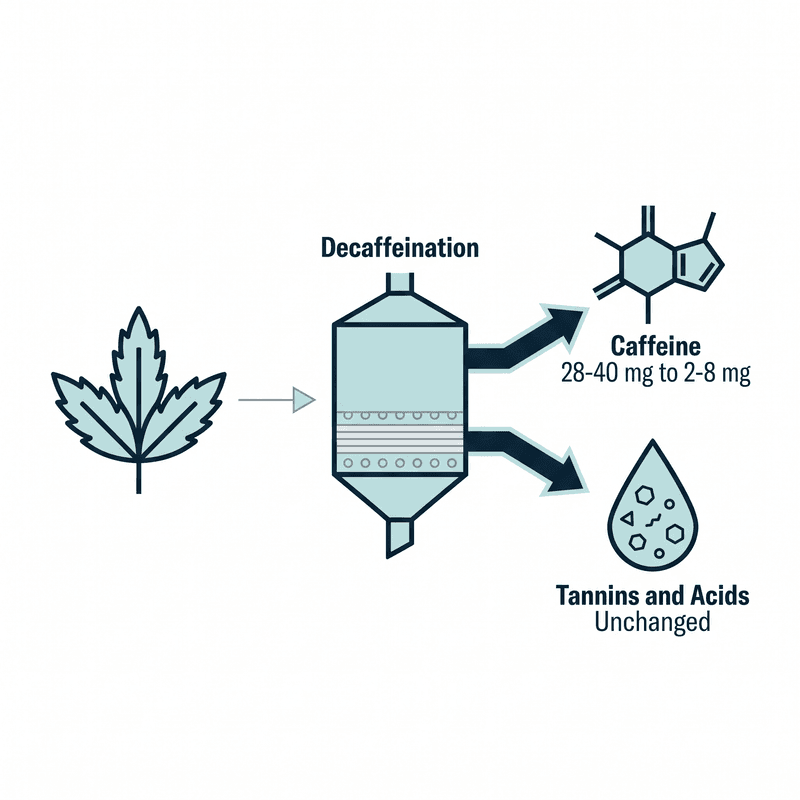
Decaffeination does not meaningfully change a tea's acidity. The process targets caffeine specifically, whether through water, carbon dioxide, or a chemical solvent, and leaves the tannins and organic acids that set a tea's baseline pH largely intact.
What decaffeination does change is antioxidant and catechin content. Decaffeinated green tea typically retains about 2 to 8 milligrams of caffeine per cup, compared with roughly 28 to 40 milligrams in a regular cup, but the decaffeination process can also strip out some of the beneficial polyphenols along the way. Those polyphenols, not the acids, are the compounds most affected by processing, so a decaf tea's acidity profile stays close to its caffeinated counterpart even as its antioxidant content drops somewhat.
Can Decaf Tea Still Trigger Acid Reflux?
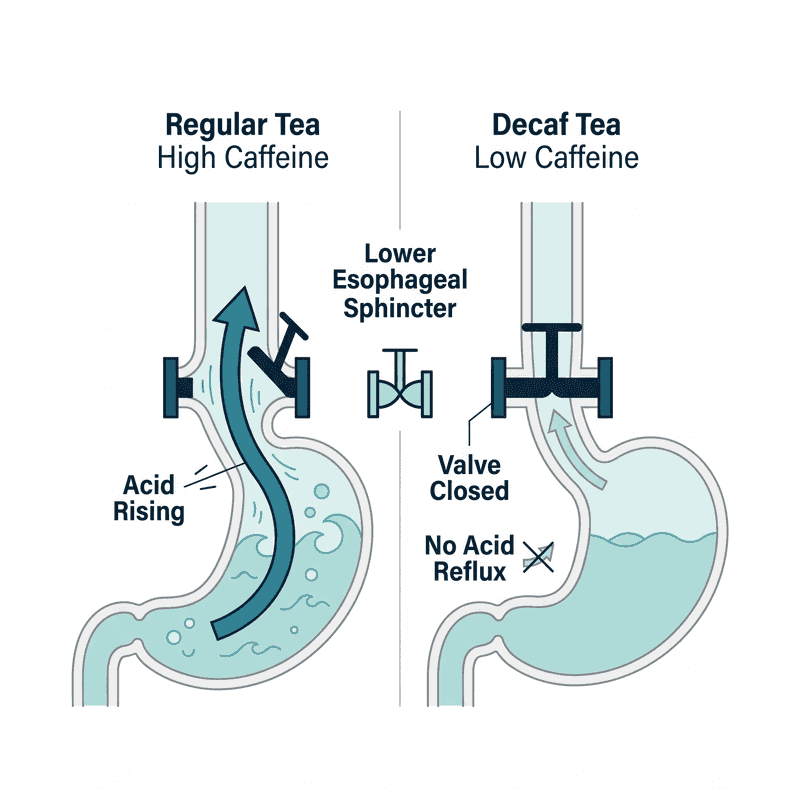
Decaf tea can still trigger acid reflux for some people, but it is meaningfully less likely to than regular tea or coffee. A 1994 double-blind study published in Alimentary Pharmacology & Therapeutics found that decaffeinated tea did not increase gastro-oesophageal reflux in healthy volunteers, while regular caffeinated coffee did.
Caffeine's main mechanism is relaxing the lower esophageal sphincter, the valve that keeps stomach acid from flowing back into the esophagus, so a tea with most of its caffeine removed carries much less of that specific trigger. That said, decaf tea is not entirely risk-free for reflux sufferers. Tannins and residual catechins can still irritate a sensitive gut, and non-caffeinated herbal ingredients such as peppermint or spearmint can independently aggravate reflux symptoms regardless of caffeine content, so the type of tea matters as much as whether it is decaffeinated.
Which Decaf and Herbal Teas Are Easiest on Acid Reflux?
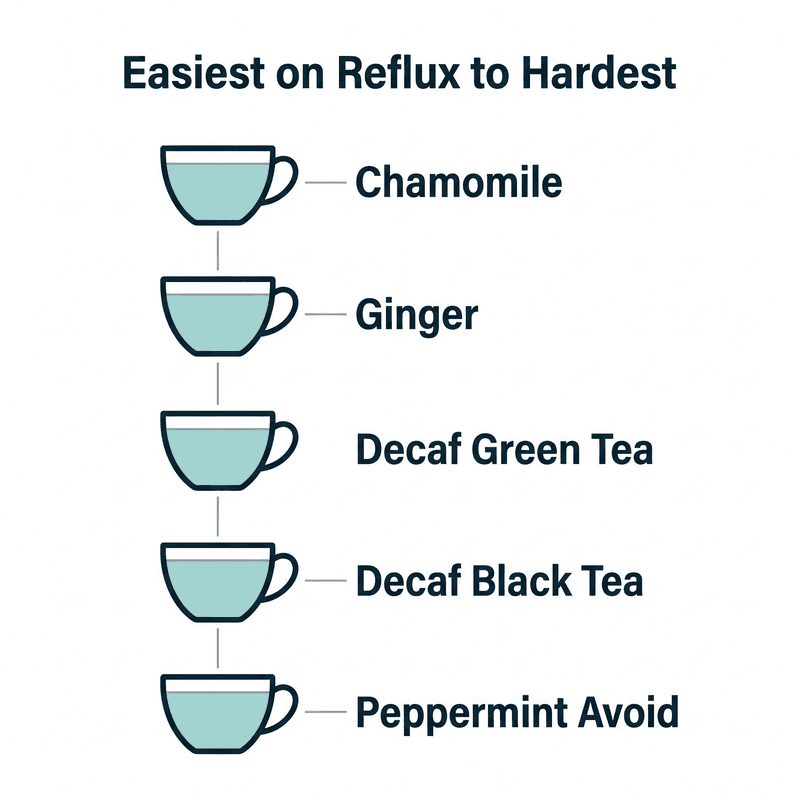
Caffeine-free herbal teas like chamomile and ginger are generally easier on acid reflux than even decaf black or green tea. Decaf versions of true teas still carry trace caffeine and tannins, while herbal blends made from roots and flowers avoid both entirely.
A 2006 review of studies found that chamomile-containing blends lowered gastric acidity, and ginger's anti-inflammatory compounds are commonly credited with easing gastric irritation and reducing gastric contractions that can push stomach acid upward. Decaf green tea still has a place on the list: its polyphenols, central to the benefits of drinking decaf green tea, carry anti-inflammatory properties that some people find soothing, even though its tannins and catechins mean it ranks below purely herbal options for the most sensitive drinkers. Avoiding mint-based blends and sticking to chamomile, ginger, or licorice root is the more reliable starting point if reflux is the main concern.
Is Decaf Coffee Just as Mildly Acidic as Decaf Tea?
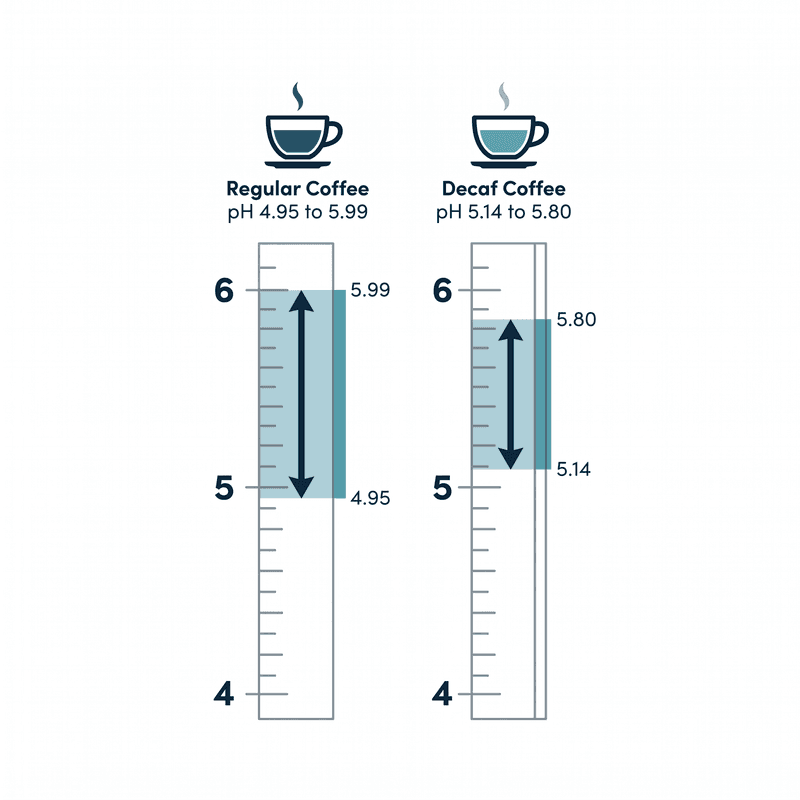
Decaf coffee follows a similar pattern to decaf tea: it is only modestly less acidic than its regular counterpart, not acid-free. A 2008 study in Food Chemistry measured commercial brewed coffees and found regular coffee's pH ranged from 4.95 to 5.99, while decaf coffee's own pH range ran from 5.14 to 5.80, a difference of only two or three tenths of a point.
Ready to Swap in a Gentler Cup?
If tea's mild acidity or trace caffeine still gives you trouble, a low-acid, single-origin decaf espresso can be an easier swap for your reflux-friendly routine. Drink Decaf's single-origin decaf espresso is roasted to order in Oceanside, CA and ships free across the US. Shop the current batch of single-origin decaf espresso beans today.
Are Loose Leaf Decaf Teas Gentler on Acidity?
Whole leaves unfurl more evenly during steeping, so they tend to deliver a rounder, less astringent cup than bagged decaf. Full-leaf control over steep time also caps acid extraction, which is why the best decaf loose leaf tea picks favor sensitive drinkers.
12 oz · Whole bean
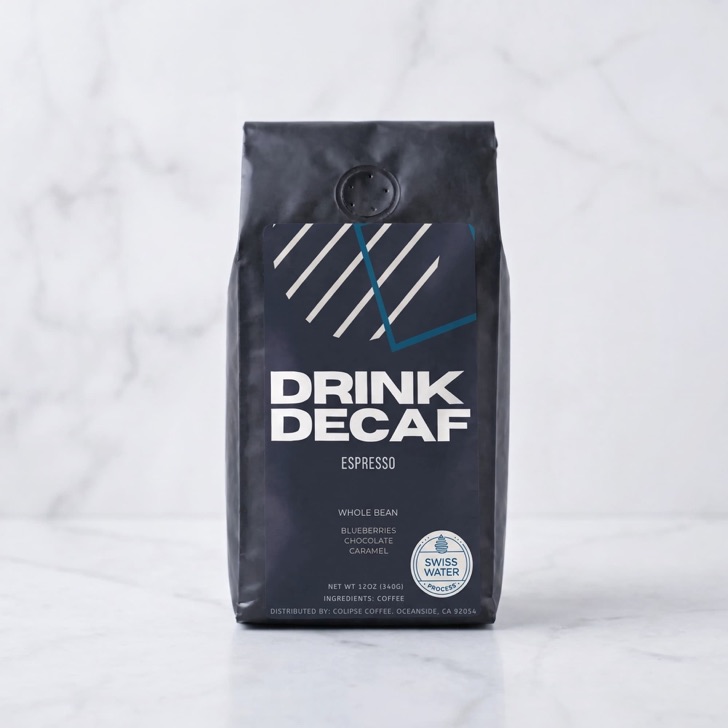
Drink Decaf EspressoSpecialty grade. Swiss Water® Process decaffeinated. Roasted to order at our California roastery. Blueberry, chocolate, caramel.
Free shipping in the US