Decaf Green Tea Benefits
Decaf green tea provides key benefits by keeping most of regular green tea's antioxidants, catechins, and calming L-theanine. Most of the caffeine is removed. Decaf green tea still delivers clear benefits for heart health, stress relief, and weight management. These benefits work at a slightly lower level than the caffeinated version.
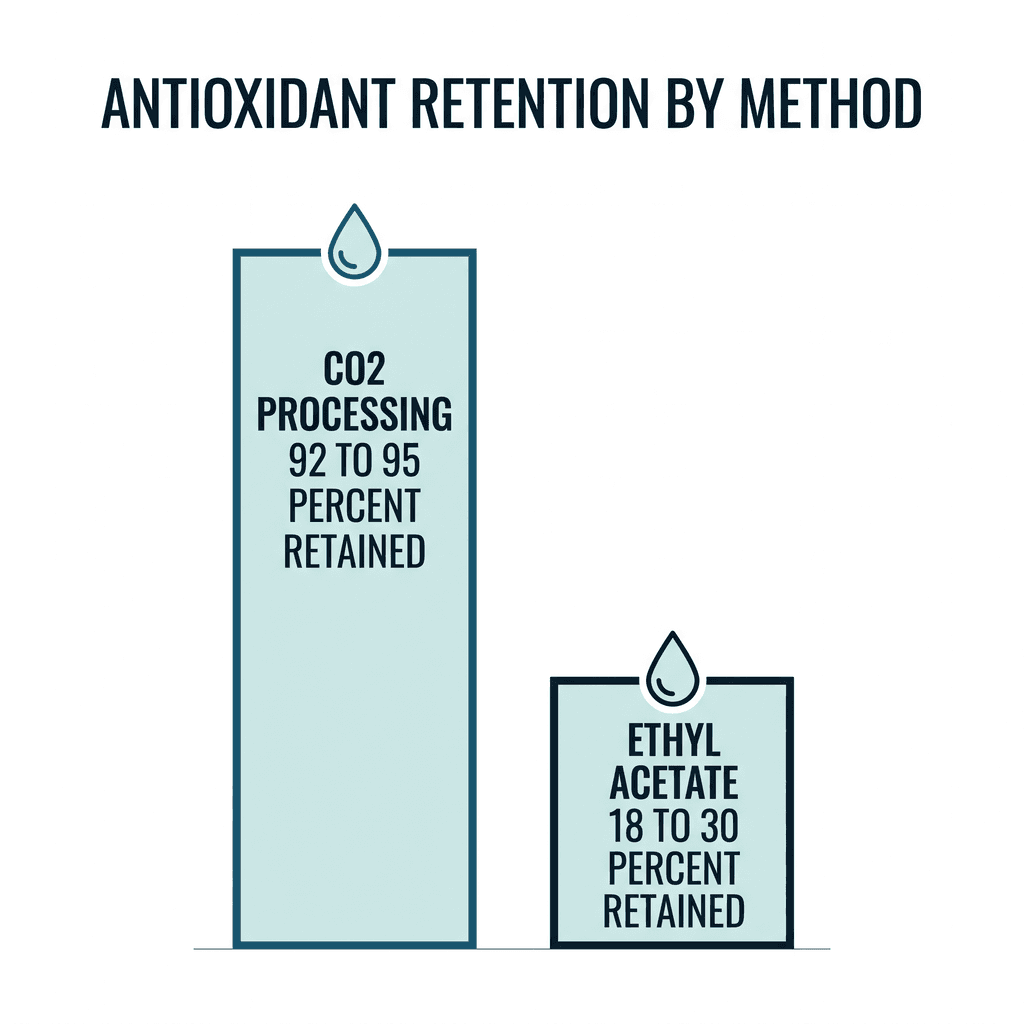
The size of these health gains depends entirely on the decaffeination method a brand uses. Decaf green tea processed with carbon dioxide (CO2) keeps roughly 92% to 95% of its original antioxidant benefits. Ethyl acetate processing is the cheaper method used in most grocery-store tea bags. Ethyl acetate processing cuts that benefit level down to about 18% to 30%. Anyone choosing decaf green tea for its health benefits should check the label first. The decaffeination method determines which benefits below actually apply.
What is Decaf Green Tea?
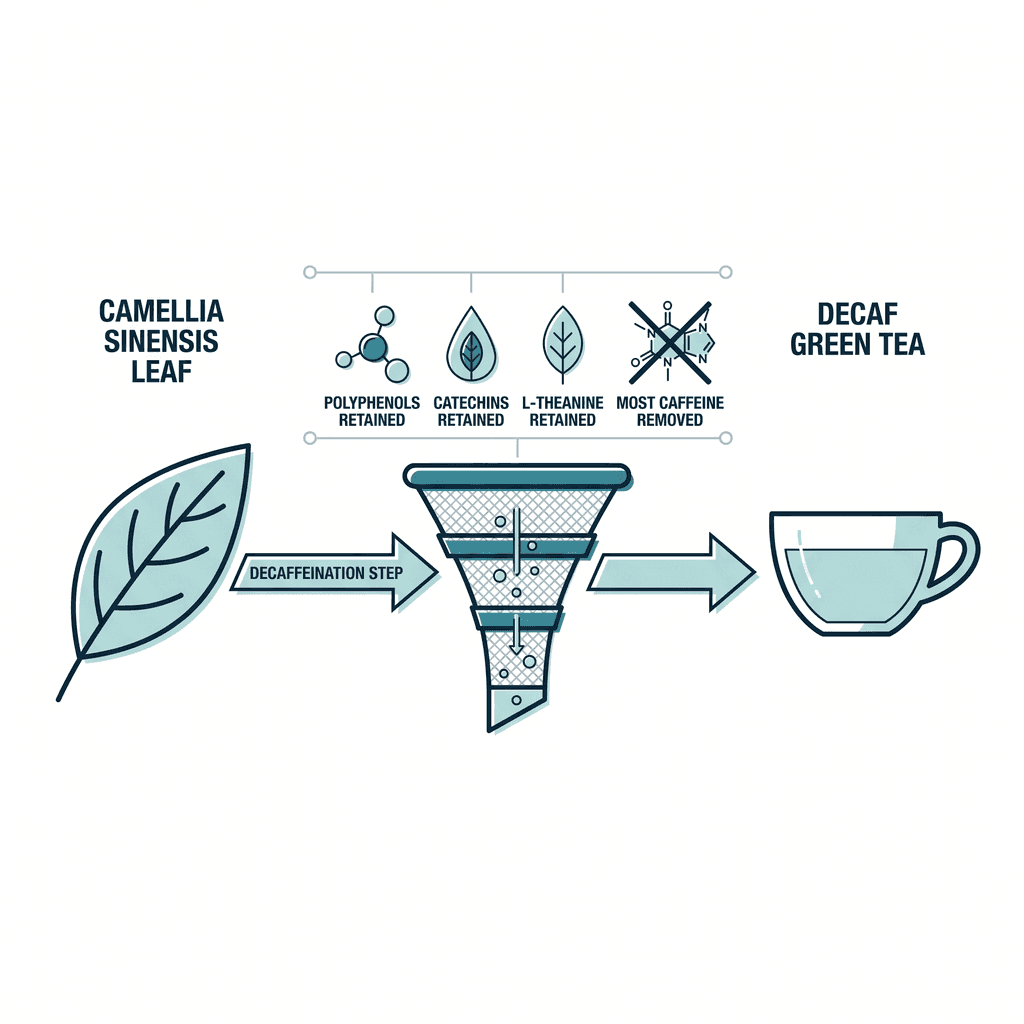
Decaf green tea is regular green tea made from Camellia sinensis leaves. Decaf green tea goes through an extra decaffeination step that removes most of its caffeine. Decaf green tea still contains polyphenols, catechins, and L-theanine, just in reduced amounts.
The leaves start out identical to standard green tea. Growers pick and process them the same way. The decaffeination step is the only difference between decaf and regular green tea. A finished cup holds about 2 milligrams (mg) to 5mg, at the low end of the caffeine in decaf tea range. A regular cup contains 25mg to 50mg. The gap between those numbers is a real reduction, not a marketing rounding error. The reduction does not reach zero, though.
How is Decaf Green Tea Made?
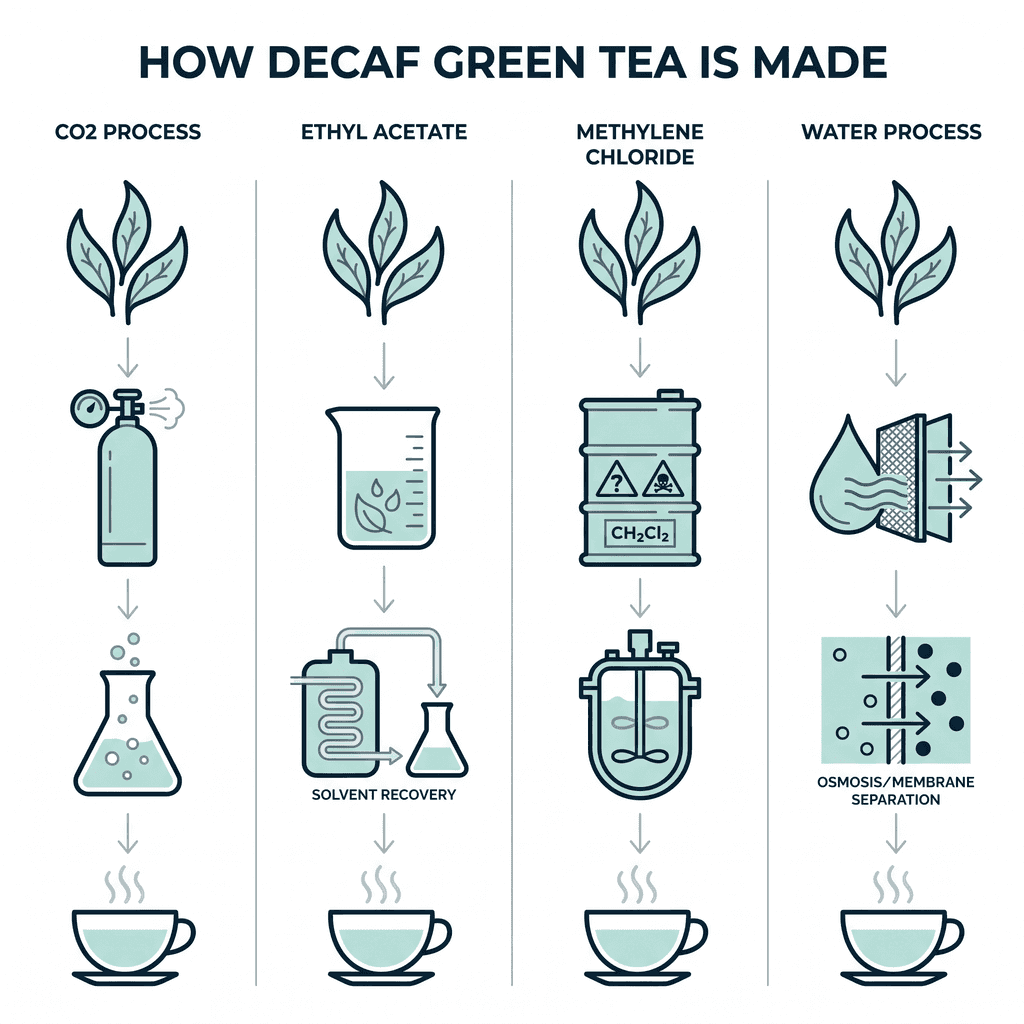
Producers remove caffeine from green tea using one of four methods. Those four methods are supercritical carbon dioxide (CO2), ethyl acetate, methylene chloride, and a water process. Each method trades off differently between flavor, cost, and nutrient retention.
The CO2 method presses tea leaves under high pressure. The carbon dioxide reaches a supercritical state and acts like a solvent. Caffeine molecules bind to the CO2 and get filtered out. Larger flavor and antioxidant molecules stay behind. The CO2 method costs more than the alternatives. Most experts consider CO2 processing the best at preserving both taste and health compounds.
Ethyl acetate decaffeination is often labeled "naturally decaffeinated." The compound occurs in tea leaves already. Producers soak the leaves in it to pull out caffeine. The ethyl acetate method is cheaper than CO2 processing. Ethyl acetate strips away far more of the tea's antioxidants and can leave a faint chemical aftertaste. Methylene chloride preserves flavor reasonably well. The chemical carries cancer and birth-defect concerns at high exposure levels. Several countries restrict or ban its use in food products. The water process soaks leaves in hot water. A carbon filter traps the caffeine from that water. The flavored water then returns to the leaves. Water processing avoids chemicals entirely. Water processing is also the least effective at reducing caffeine and often leaves a noticeably weaker taste.
Does Decaf Green Tea Still Have Antioxidants?
Yes, decaf green tea retains most of its antioxidants when processed with CO2 or water. Ethyl acetate processing removes a much larger share. The decaffeination method matters more than the fact of decaffeination itself.
CO2 processing preserves roughly 92% to 95% of a tea's original antioxidant content. Ethyl acetate extraction can strip that figure down to only 18% to 30%. A 2003 study measured catechin content across 18 teas. The study found flavanol levels in decaf tea ran 16.6mg to 64.2mg lower per serving than in caffeinated versions. That gap is a real reduction, not a total loss. A dietitian quoted by HealthShare Australia put the tradeoff plainly. Choosing water-processed decaf tea means giving up caffeine, not antioxidants.
Can Decaf Green Tea Help You Lose Weight?
Decaf green tea may offer modest weight-management support through its catechin content. The effect is smaller than with caffeinated green tea. Decaf green tea works best alongside diet and exercise, not as a standalone fix.
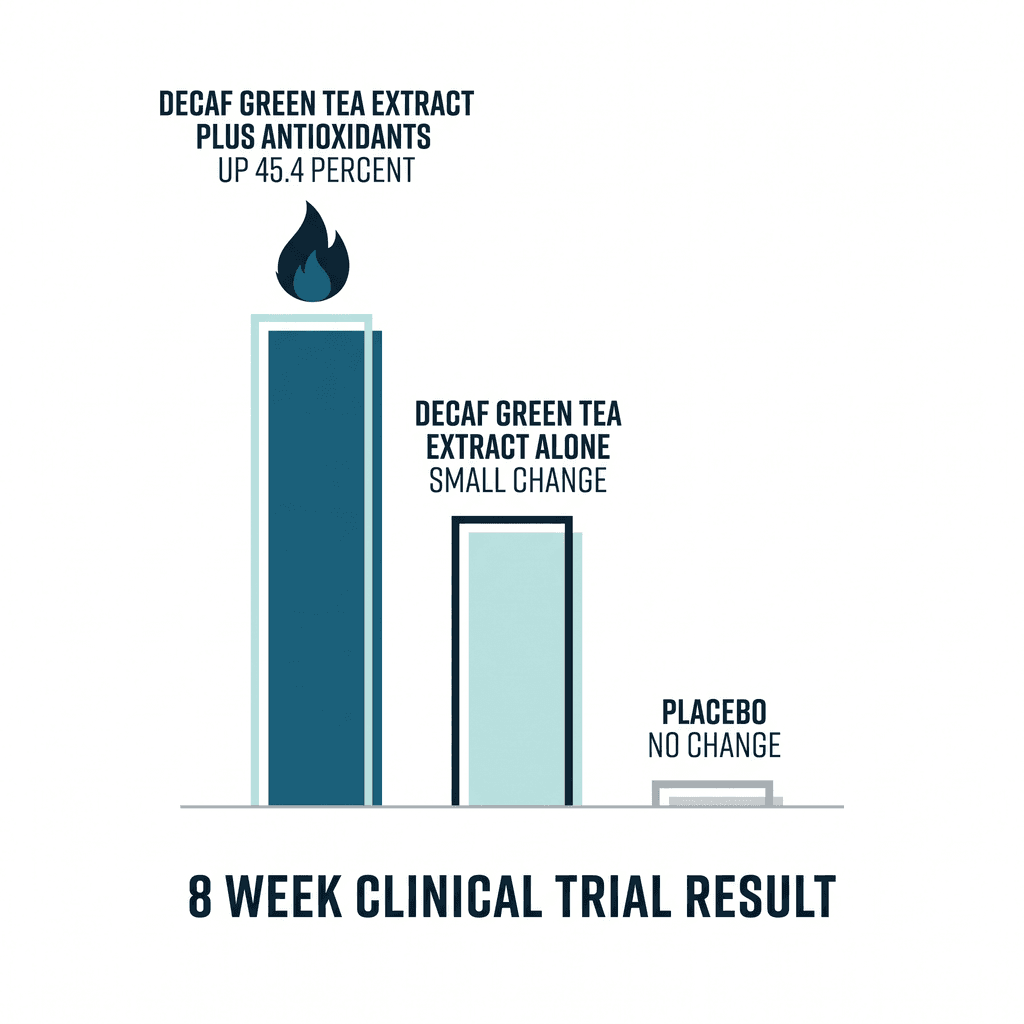
An 8-week randomized, double-blind, placebo-controlled trial published in Nutrients tested this directly. Researchers gave decaffeinated green tea extract to overweight, recreationally active adults. Participants taking the extract combined with quercetin and alpha-lipoic acid saw a real change. Their maximal fat oxidation rose 45.4% compared with baseline, a statistically significant result. Those same participants also saw a meaningful drop in LDL cholesterol. Decaffeinated green tea extract alone, without those added antioxidants, produced a much smaller effect. The smaller effect did not reach statistical significance. Catechins appear to drive fat oxidation somewhat independently of caffeine. Caffeine amplifies that effect substantially, though. This gap explains why decaf versions tend to show weaker results than caffeinated ones in the same research.
Does Decaf Green Tea Support Heart Health?
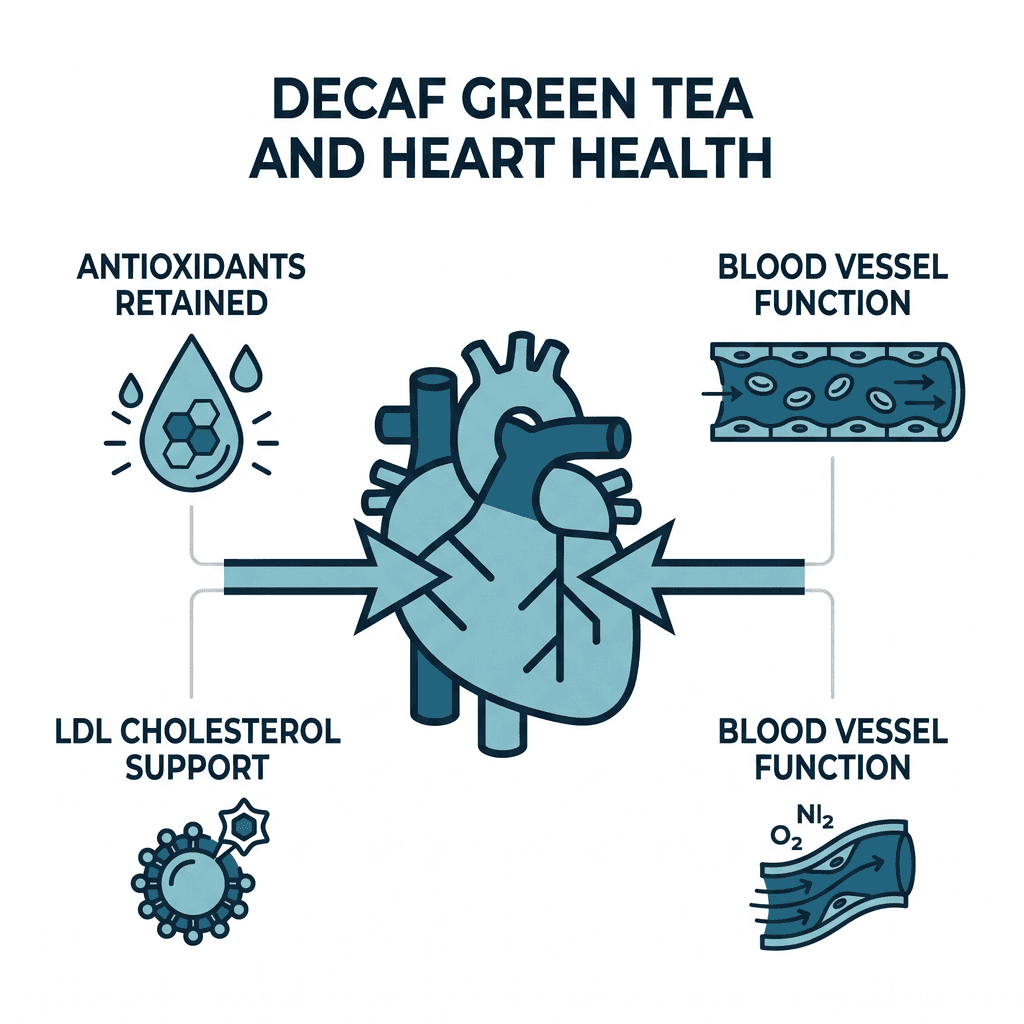
Decaf green tea supports heart health mainly through its retained antioxidants. Research attributes most of tea's cardiovascular benefit to polyphenols, not caffeine. Decaffeination does not appear to cancel this benefit out.
The British Heart Foundation notes that decaf tea and coffee keep their antioxidants after processing. Tea's heart-health benefits come primarily from those antioxidants. A 2021 study cited by the organization looked at coffee drinkers. People drinking about three cups of coffee a day had a 13% lower risk of dying early than infrequent drinkers. The same benefit showed up in both decaf and caffeinated coffee. A 2025 study found a similar pattern for coffee consumed before midday. Caffeine content made no difference to that later result. Green tea catechins specifically have also been linked to lower LDL cholesterol. Green tea catechins are linked to improved blood vessel function too. Both mechanisms remain active in the decaf version.
Can Decaf Green Tea Reduce Cancer Risk?
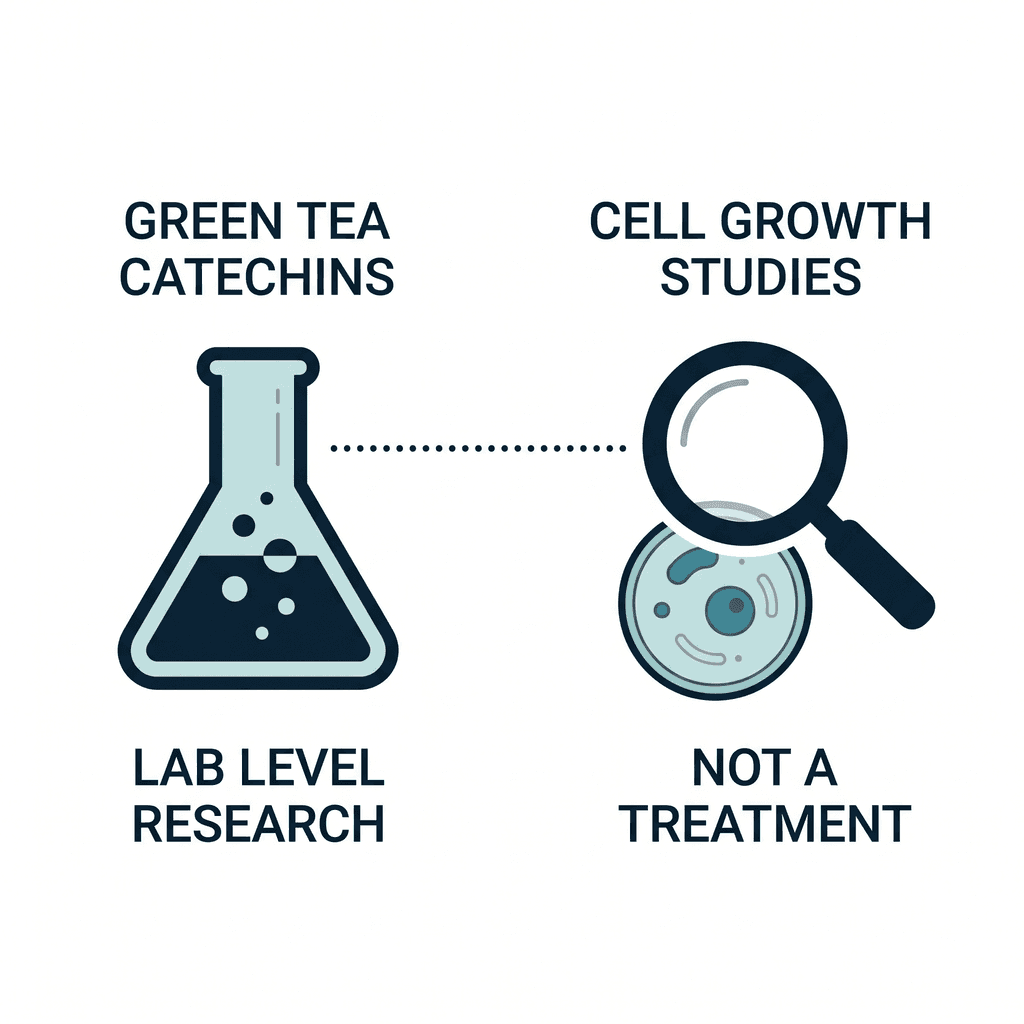
Yes, decaf green tea's catechins have shown some anti-cancer effects in laboratory studies. The evidence in humans remains observational, not conclusive. No major health authority currently recommends tea for cancer prevention or treatment.
Laboratory research suggests catechins may slow the growth of certain cancer cells. Catechins may also support natural DNA repair processes. Population studies have found lower cancer rates in countries with high green tea consumption. A correlation like that does not prove cause and effect. The U.S. National Cancer Institute states its position plainly. The Institute does not recommend tea as a prevention or treatment method for cancer, despite the promising early lab results. Anyone drinking decaf green tea for this reason should keep the evidence in perspective. Decaf green tea works best as one small habit among many, not a substitute for standard medical care.
Does Decaf Green Tea Relieve Stress?
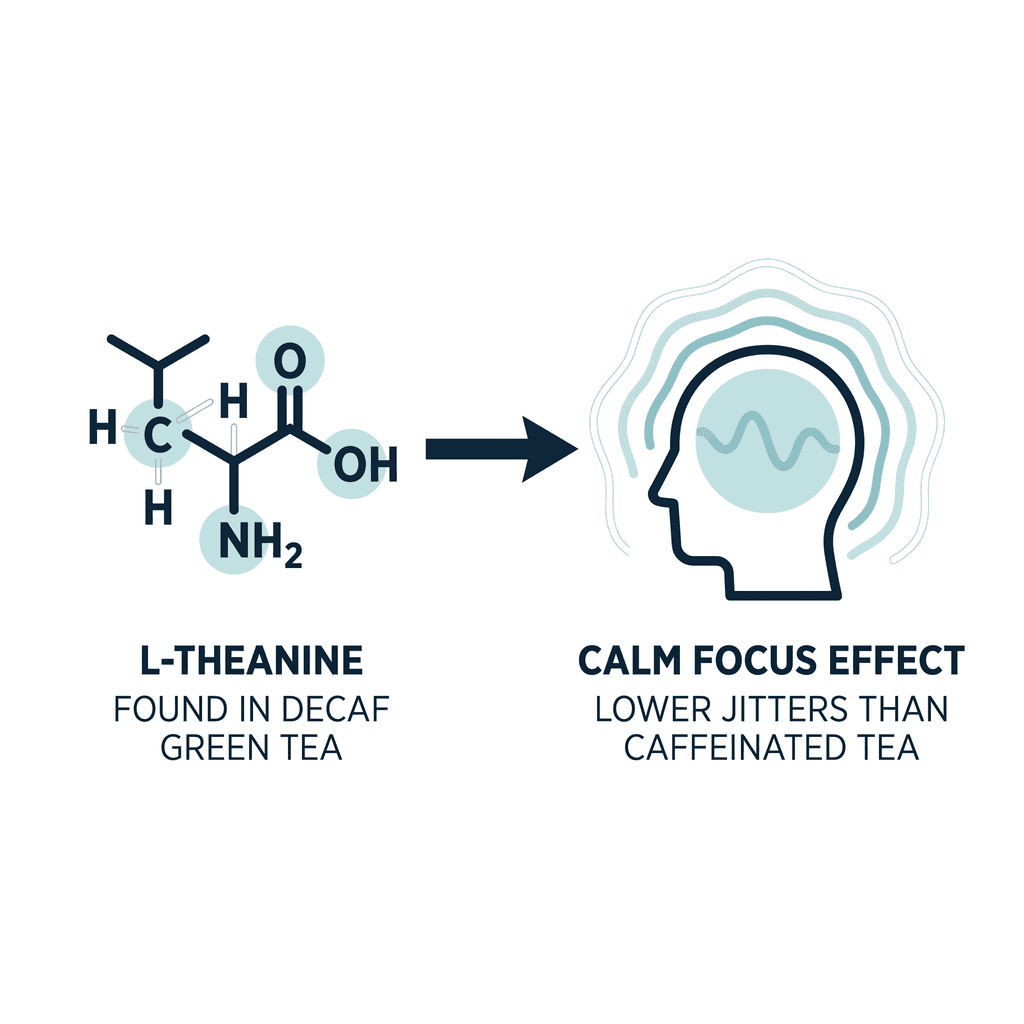
Yes, decaf green tea can help relieve stress through L-theanine, an amino acid that promotes calm focus. L-theanine stays largely intact during the decaffeination process. Other beneficial compounds in tea decrease more significantly during processing.
L-theanine works by calming the nervous system, whereas caffeine can otherwise cause feelings of jitteriness. Decaf green tea contains only tiny trace amounts of caffeine. L-theanine's soothing effect works with much less competing stimulation than it would in regular green tea. This balance makes decaf green tea an effective option for an evening wind-down routine. Regular green tea's higher caffeine content might otherwise disrupt sleep later at night.
How Much Caffeine is in Decaf Green Tea?
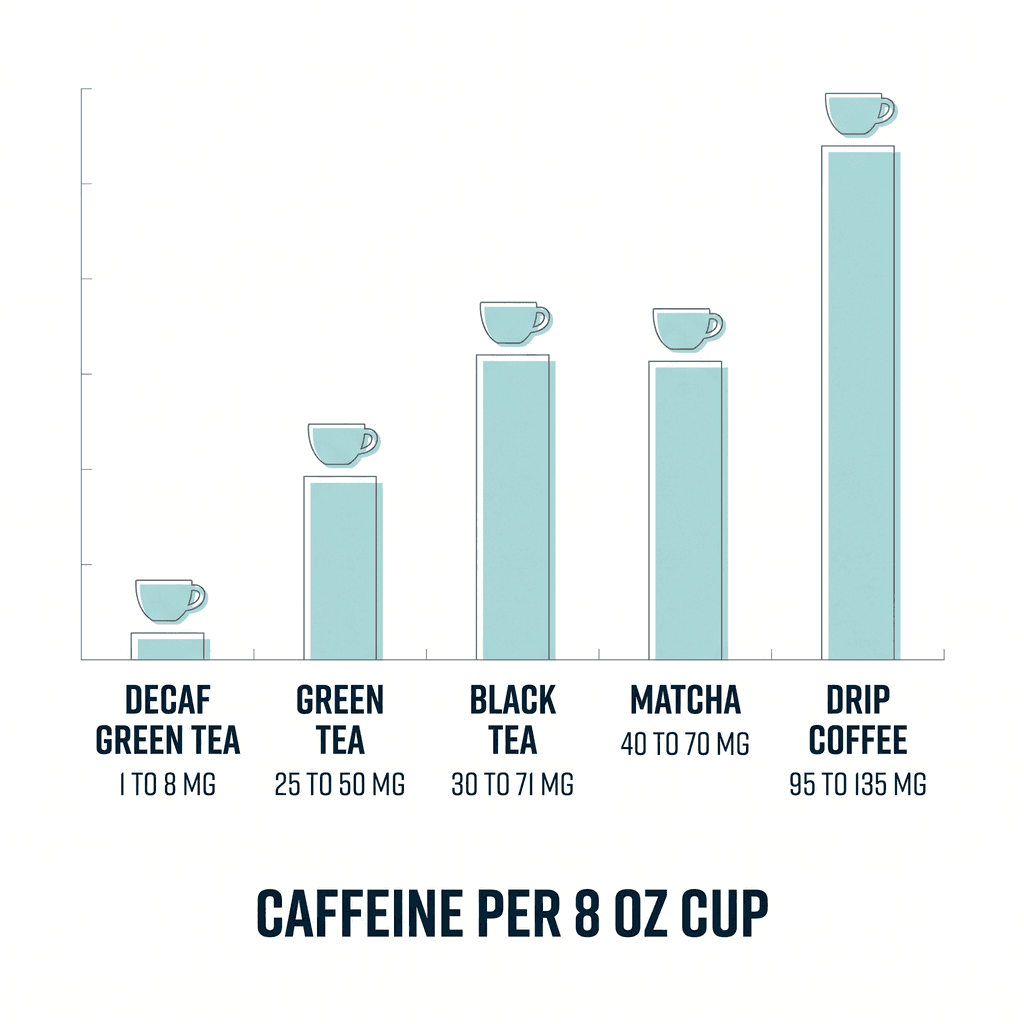
Decaf green tea contains roughly 1mg to 8mg of caffeine per 8 ounce (oz) cup, about 237 milliliters (ml). Regular green tea contains about 25mg to 50mg in the same cup. The reduction is dramatic, though not total.
In the United States, the Food and Drug Administration (FDA) sets an official standard for that reduction. At least 97% of a product's original caffeine must be removed before it can carry a "decaf" label. Trace amounts usually remain despite that process. For comparison, regular black tea runs about 30mg to 71mg per cup. Matcha runs 40mg to 70mg per teaspoon of powder. Drip coffee runs 95mg to 135mg per cup. Decaf green tea sits near the bottom of that entire range. It stays well below every caffeinated tea and coffee option. However, it still sits slightly above a genuinely caffeine-free herbal infusion like chamomile or peppermint.
Are There Downsides to Decaf Green Tea?
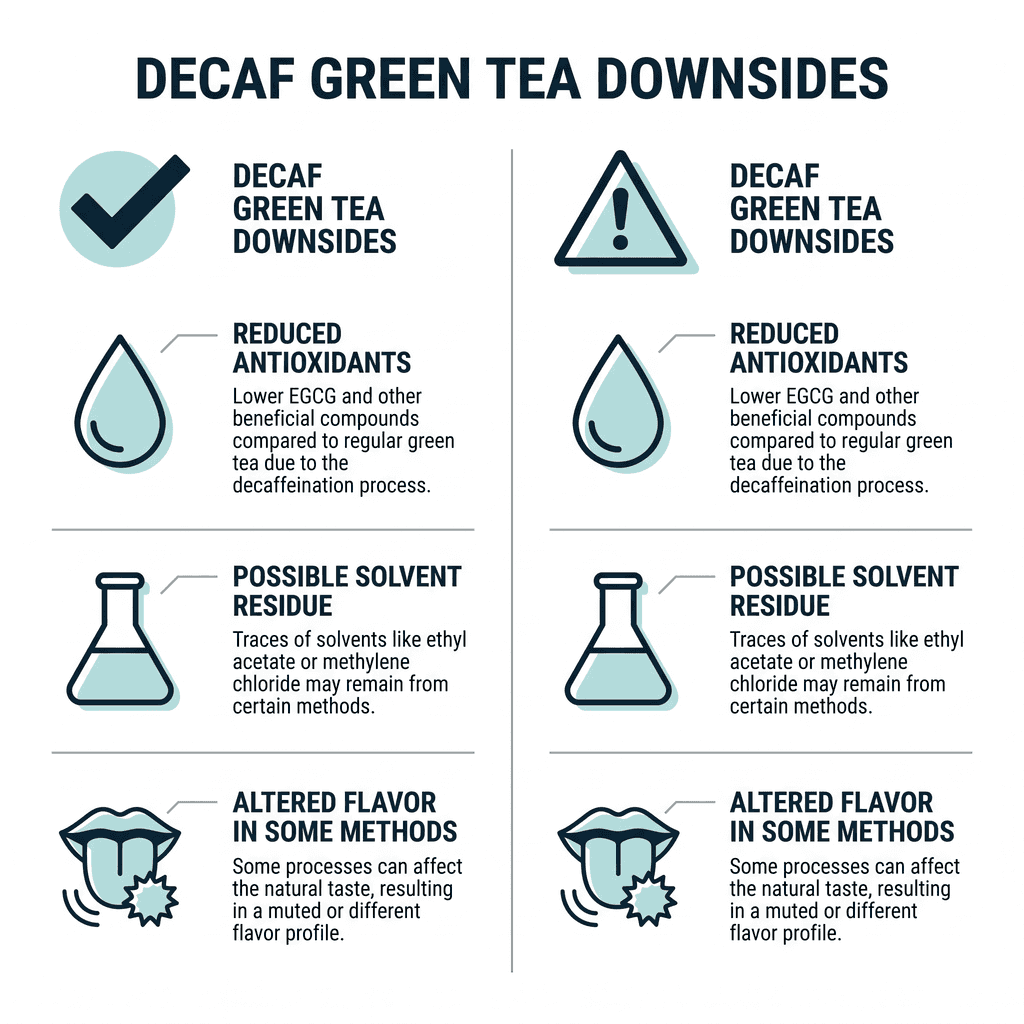
Decaf green tea has two primary downsides. Decaf green tea can lose antioxidant content, and certain processing methods can leave trace solvent residue or altered flavor. Neither issue affects everyone equally.
The size of the antioxidant loss depends entirely on the decaffeination method. CO2 processing causes only a slight reduction. Ethyl acetate processing causes a much greater one. Cheaper decaffeination methods can also leave faint solvent residue behind. Ethyl acetate and methylene chloride both carry that risk and can alter the tea's taste. CO2 and water processing avoid that risk entirely. People with severe caffeine sensitivity should know one more thing. The remaining 1mg to 8mg per cup, while tiny, is not literally zero. That residual amount could matter in rare cases. For most drinkers, this minuscule amount produces no noticeable effect at all.
Is Decaf Green Tea as Healthy as Regular Green Tea?
Decaf green tea keeps most, but not all, of regular green tea's health benefits. The exact gap depends on decaffeination method. The honest framing is "somewhat less potent," not full equivalence.
CO2-processed decaf green tea comes closest to matching regular green tea. CO2 processing preserves the largest share of antioxidants among the four methods. Diane McKay, PhD, of Tufts University's HNRCA Antioxidants Research Laboratory, adds an important caveat. No human study has directly compared health outcomes between regular and decaffeinated tea. A confirmed side-by-side equivalence claim would overstate the current evidence either way. The well-established finding is simpler than a full equivalence claim. Decaf green tea still delivers real antioxidant, cardiovascular, and stress-relief benefits, just at a reduced level. For anyone cutting caffeine broadly rather than switching a single beverage, the same logic extends to coffee. Choosing a well-processed decaf preserves most of what people actually drink coffee for.
Decaf Green Tea with Lemon
Decaf green tea with lemon is a simple variation, not a separate product. Squeeze fresh lemon into a brewed cup of decaf green tea for a brighter, slightly tart flavor. Lemon does not change the tea's caffeine or antioxidant content in any meaningful way, so every fact above still applies.
Decaf coffee follows a similar reduction curve to decaf green tea. Decaf coffee runs about 2mg to 15mg of caffeine per 8oz cup, and a closer look at caffeine in decaf coffee vs. tea shows decaf tea typically undercutting that range. Anyone comparing the two drinks side by side will find the gap real but small in absolute terms.
Do Tannins Cut Into Decaf Green Tea's Benefits?
Green tea's low tannin load is part of why its gentle profile survives decaffeination. Decaf green tea averages about 2.65% tannin against black tea's 13.36%, and how many tannins in decaf tea remain shapes both astringency and iron absorption.
If you're ready to try genuinely great decaf, Drink Decaf's single-origin decaf espresso is roasted to order in Oceanside, CA. Drink Decaf ships free across the US. Shop the current batch of single-origin decaf espresso beans today.
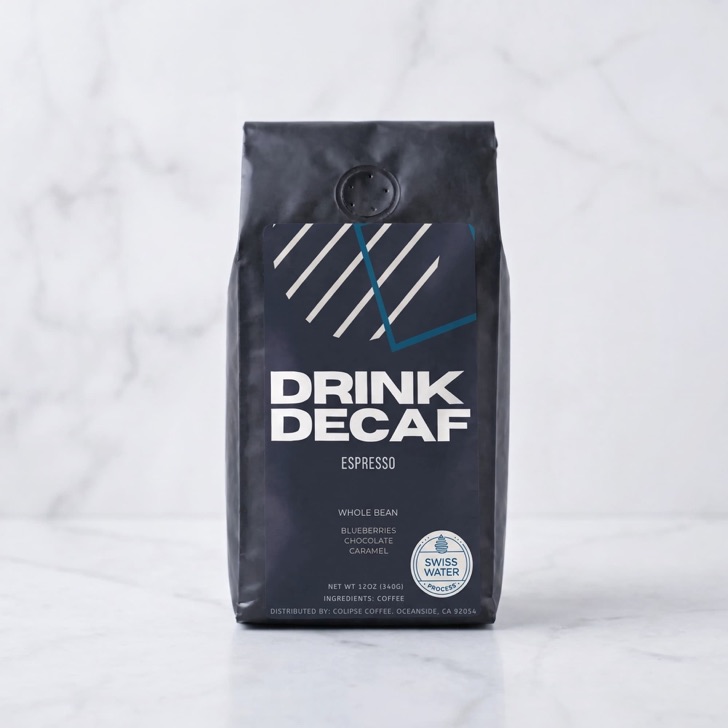
12 oz · Whole bean
Drink Decaf EspressoSpecialty grade. Swiss Water® Process decaffeinated. Roasted to order at our California roastery. Blueberry, chocolate, caramel.
Free shipping in the US