Does Decaf Tea Have Tannins?
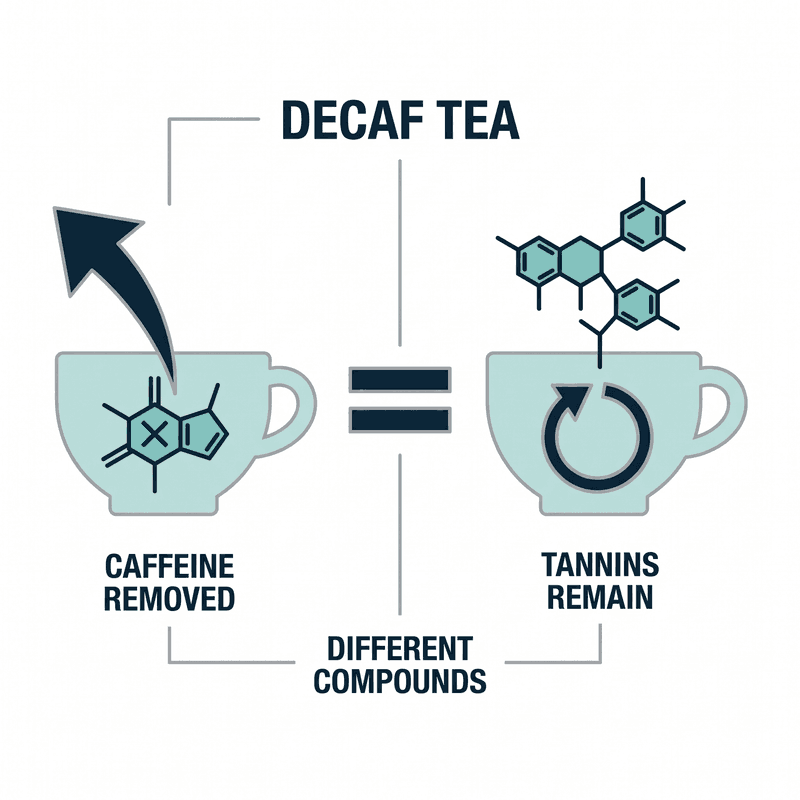
Yes, decaf tea still contains tannins, because decaffeination targets caffeine specifically and tannins are a completely different class of compound. Decaf black tea retains the most tannins of any tea type, averaging 13.36% by weight, while decaf green tea retains the least at around 2.65%. That gap stems from oxidation during processing, not from the decaffeination step itself, so it can guide which decaf tea, brewing habit, or naturally low-tannin alternative suits someone who seeks tea's flavor without the astringency or the caffeine.
Why Does Decaf Tea Still Have Tannins?
Yes, decaf tea still contains tannins. Decaffeination isolates caffeine specifically, and tannins represent a completely different class of compound, so extracting caffeine does not eliminate them.
Caffeine is an alkaloid, while tannins are polyphenols composed of much larger molecules. A decaffeination process, whether it utilizes carbon dioxide, water, or a solvent, is engineered to extract caffeine molecules out of the leaf without binding tannins at all. Tannins and their catechin precursors do decrease in concentration as a side effect of that extraction, since the process alters the leaf's overall chemistry, but they are never stripped the way caffeine is. That is why a cup of decaf black tea can still taste dry and astringent, even after 97-98% of its caffeine is removed.
What Are Tannins?
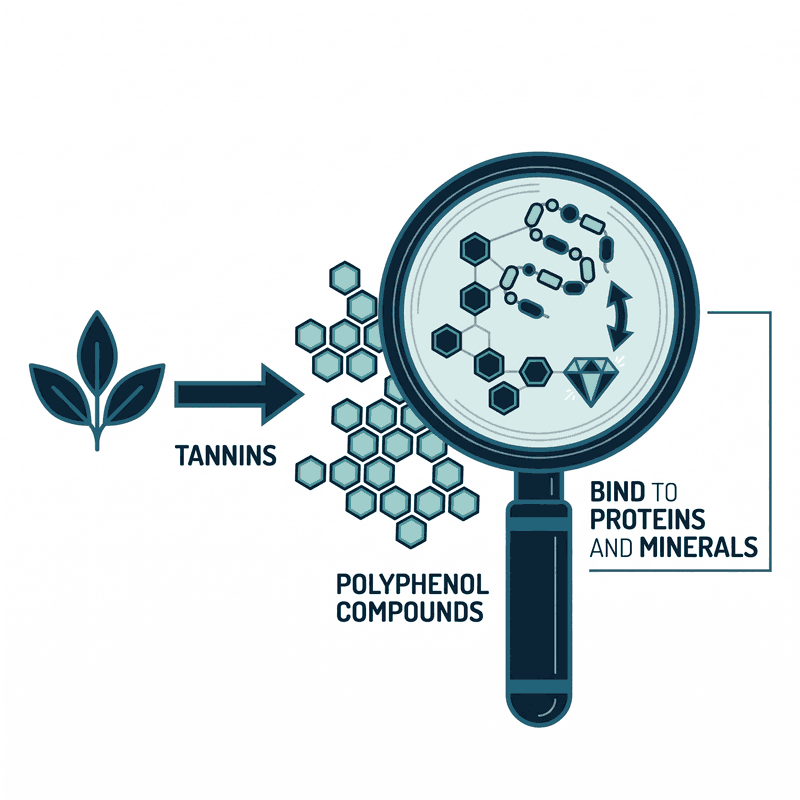
Tannins are a group of astringent, bitter-tasting polyphenol compounds concentrated in tea, coffee, wine, and cocoa. Their large molecules bind readily with proteins and minerals, which is what imparts to strongly brewed tea its dry, puckering mouthfeel.
Plants synthesize tannins as a natural defense against pests and herbivores, so tannins prevail throughout the plant kingdom, not only in tea leaves; tree bark, unripe fruit, nuts, and legumes all contain them too. In tea specifically, tannins derive from the Camellia sinensis plant and yield both flavor and color: the higher the tannin concentration, the darker and more astringent the cup tends to brew.
Which Decaf Teas Have the Most Tannins?
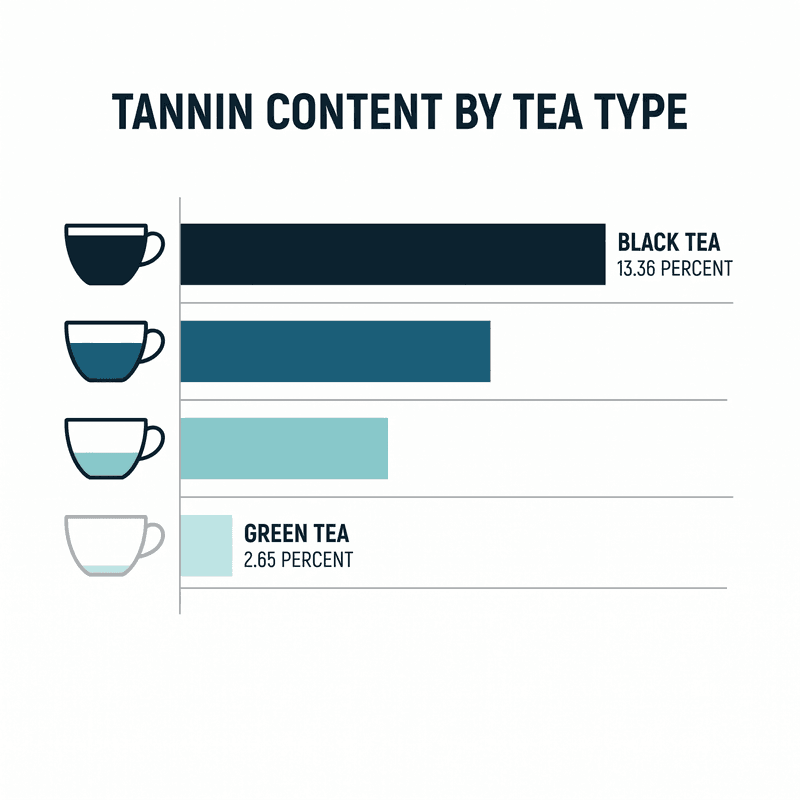
Decaf black tea contains the most tannins, and decaf green tea retains the least. A 2015 titrimetric study documented black tea at 11.76-15.14% tannin (average 13.36%), against green tea's 3.11% at most (average 2.65%).
Oxidation creates that gap. Black tea leaves are fully oxidized during processing, which transforms catechins into theaflavins and thearubigins, the tannin compounds responsible for black tea's dark color and stronger astringency. Green tea undergoes minimal oxidation, so most of its catechins never convert into those higher-tannin compounds. Decaffeination diminishes tannin and catechin concentration somewhat in both cases, but it does not alter this ranking: decaf black tea still registers higher in tannins than decaf green tea, oolong falls in between, and white tea sits closer to green.
Do Tannins Add Health Benefits to Decaf Tea?
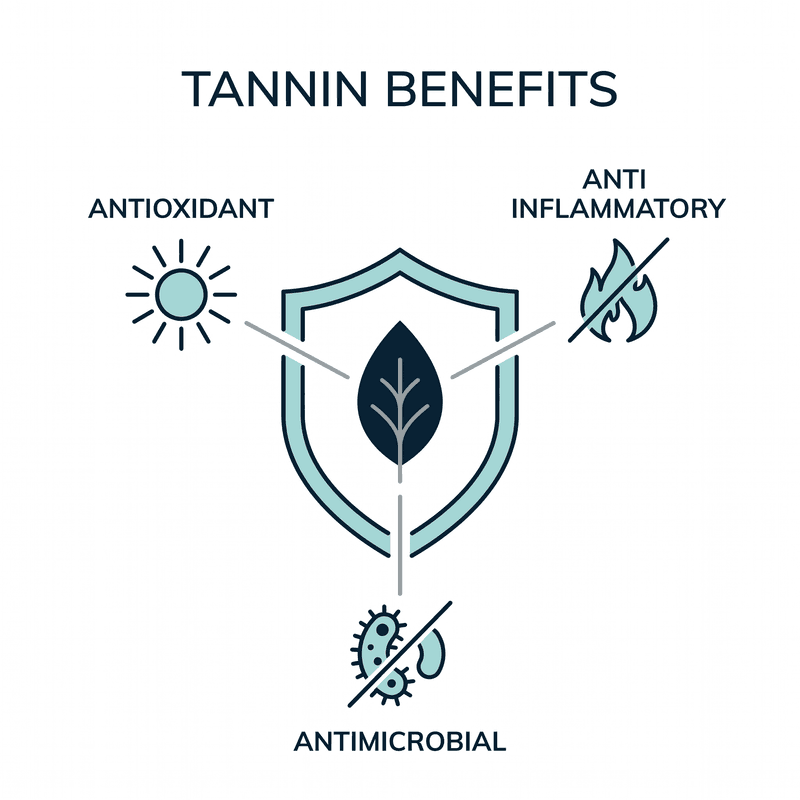
Tannins exhibit antioxidant, anti-inflammatory, and antimicrobial properties, so they do confer some of the same health advantages tea is recognized for, even in decaf.
Diane McKay, PhD, of the Tufts Friedman School's Antioxidants Research Laboratory, observes that decaffeination slightly reduces black tea's polyphenol content and may impair absorption somewhat compared with regular tea. She also highlights that no human study has directly compared health outcomes between decaf and regular tea drinkers, so it is not possible to confirm a real-world difference in benefit either way. In practical terms, decaf tea preserves most of its tannin-linked antioxidant activity intact; it just has not been evaluated head-to-head against caffeinated tea for actual health outcomes.
Can Tannins in Decaf Tea Cause Digestive Issues?
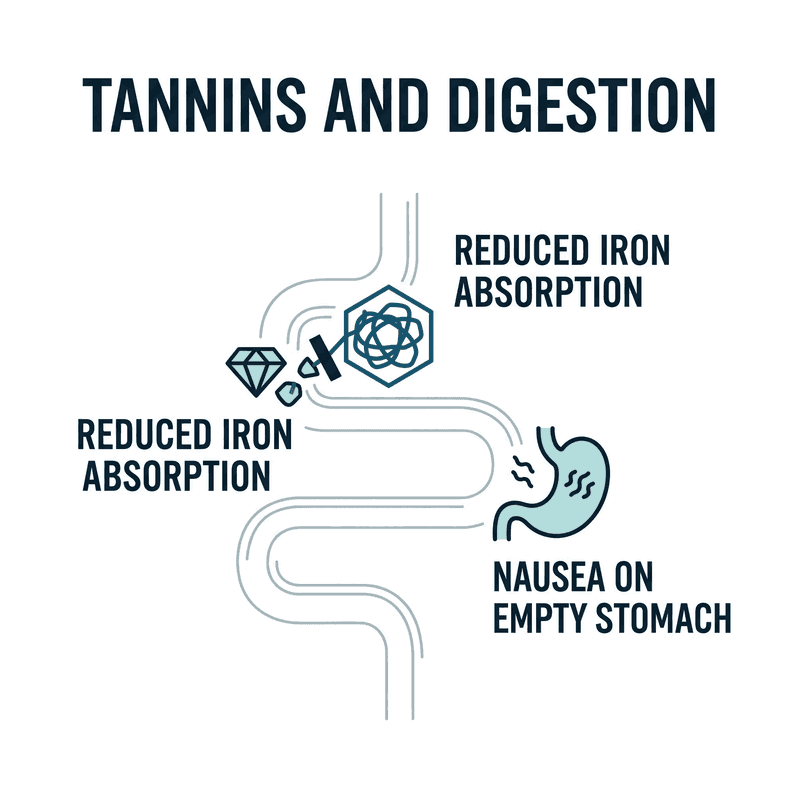
Tannins can inhibit iron absorption and trigger nausea on an empty stomach, and decaf tea carries the same risk as regular tea since tannin levels are only modestly reduced by decaffeination.
In the digestive tract, tannins bind with iron from plant-based foods, making it harder for the body to absorb. This mainly impacts people who are already iron-deficient; consuming decaf tea between meals, rather than with iron-rich foods, mitigates the effect. Tannins can also irritate the stomach lining enough to induce nausea if the tea is consumed on an empty stomach. Adding milk or pairing the cup with food supplies the tannins protein and carbohydrate to bind with instead, which alleviates both the irritation and the bitterness.
How Can You Reduce Tannins in a Cup of Decaf Tea?
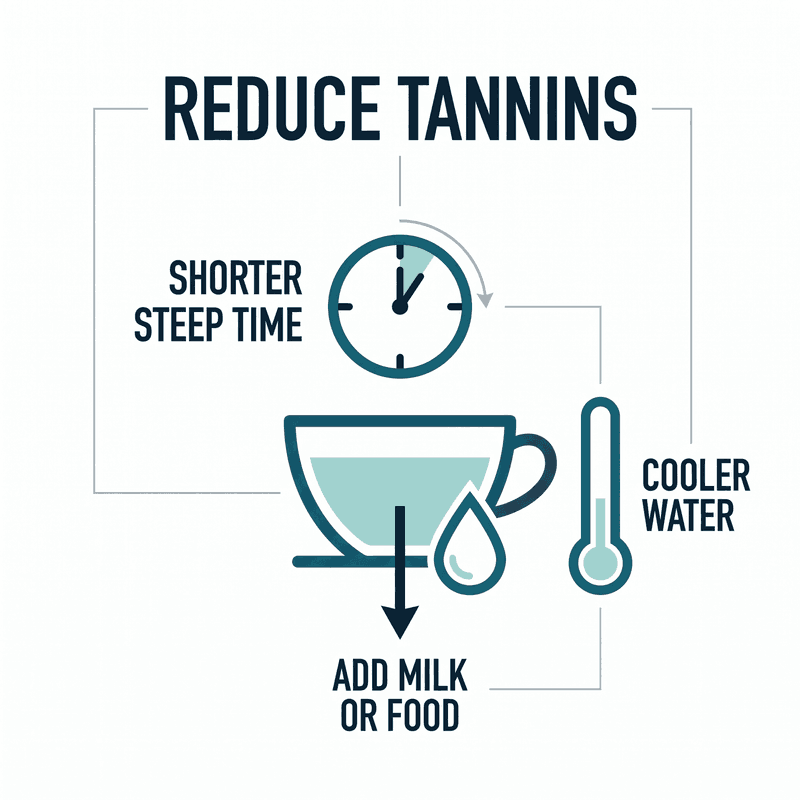
Shorter steeping time and cooler water minimize how many tannins leach into a cup of decaf tea, since both factors slow how much extracts from the leaf.
Steeping longer than five minutes sharply accelerates tannin extraction, so reducing steep time serves as the single biggest lever. Lower water temperature operates the same way: boiling water dissolves tannins faster than water that is only warm. Beyond brewing adjustments, pairing decaf tea with food or adding milk binds some of the tannins with protein before they can fully reach the palate or the stomach, mellowing both the taste and the digestive effect.
Are There Decaf Teas Naturally Lower in Tannins?
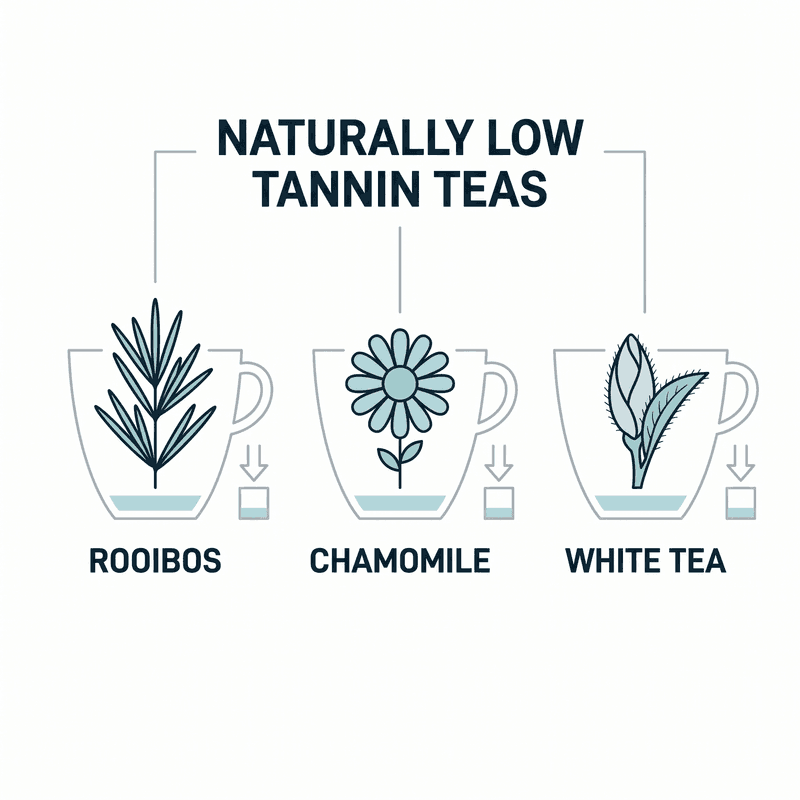
Rooibos is naturally caffeine-free and naturally low in tannins, so it never undergoes decaffeination processing at all, unlike black or green tea.
Because rooibos derives from a different plant than Camellia sinensis, it inherently lacks caffeine or high tannin levels in the first place, which eliminates the whole decaffeination trade-off. Chamomile is similarly low in tannins for the same reason. Among true teas, lightly oxidized white and oolong teas register lower on the tannin scale than black tea, offering a gentler option for anyone who seeks to reduce tannin intake without giving up Camellia sinensis tea altogether.
Can Decaf Tea's Compounds Make It Habit-Forming?
Tannins shape decaf tea's taste, not its pull on the brain. The residual caffeine sits far below the roughly 100 mg a day needed for physical dependence, and whether you can get addicted to decaf coffee comes down to ritual more than any leftover stimulant.
If a low-tannin, low-caffeine coffee alternative sounds appealing, Drink Decaf's single-origin decaf espresso is roasted to order in Oceanside, CA and ships free across the US. Shop the current batch of single-origin decaf espresso beans today.
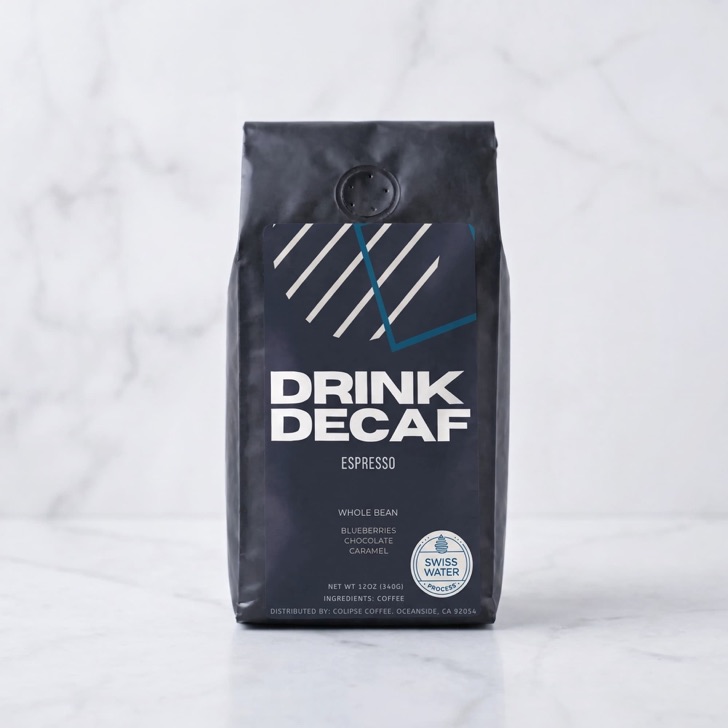
12 oz · Whole bean
Drink Decaf EspressoSpecialty grade. Swiss Water® Process decaffeinated. Roasted to order at our California roastery. Blueberry, chocolate, caramel.
Free shipping in the US