Can You Get Addicted to Decaf Coffee?
Decaf coffee is not caffeine-free. A cup carries roughly 2 to 15 milligrams (mg), far below the 100 mg a day generally needed for physical dependence, so getting genuinely addicted to decaf's own caffeine is unlikely at normal drinking levels. Experts also disagree on whether caffeine itself counts as addictive, with most treating it as mildly habit-forming at most. What keeps people reaching for decaf is often the ritual and aroma, not any leftover stimulant. A 2023 study even found decaf can ease caffeine withdrawal symptoms on its own.
Does Decaf Coffee Have Caffeine?
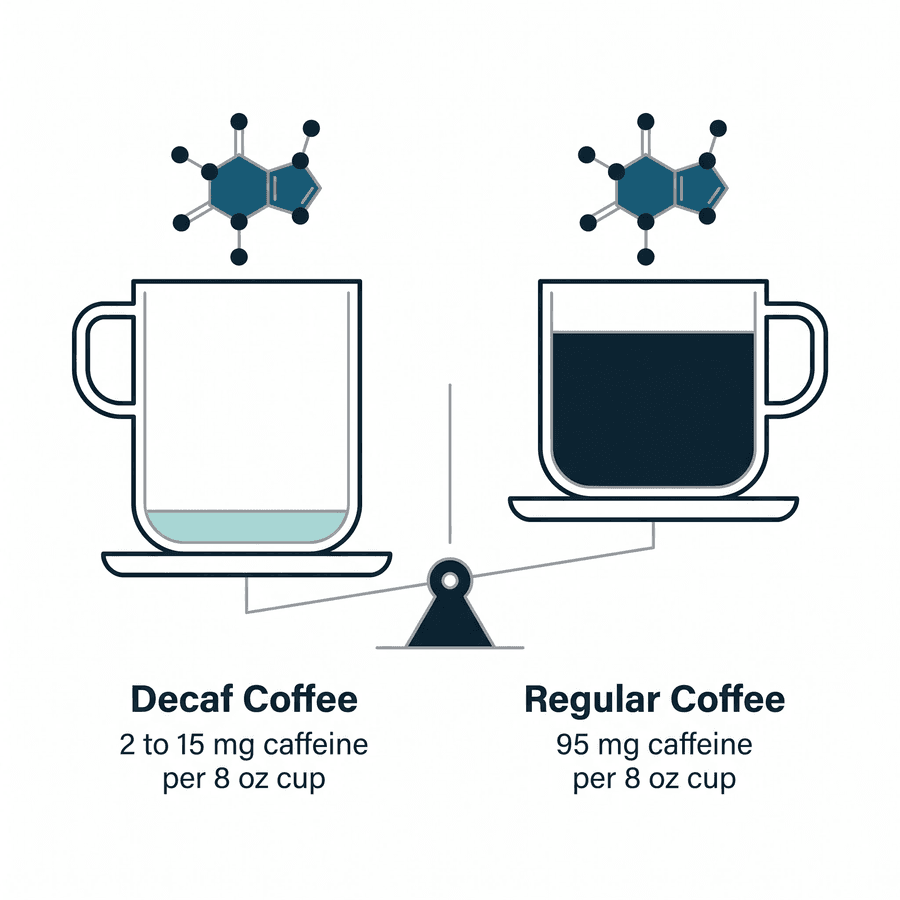
Yes, decaf coffee has caffeine. A cup carries roughly 2 to 15 mg, compared with about 95 mg in a regular 8-ounce (oz) cup. Commercial decaffeination removes about 97% or more of the original caffeine, not all of it.
That leftover amount is the reason the addiction question exists at all. If decaf held zero caffeine, dependence on it would not be biologically possible. The exact amount of caffeine in decaf coffee varies by brand and brewing method, and some outlier cups run higher than the typical range. A person drinking several cups a day still takes in far less caffeine than one regular cup delivers.
How Many Cups of Decaf Would It Take to Build Dependence?
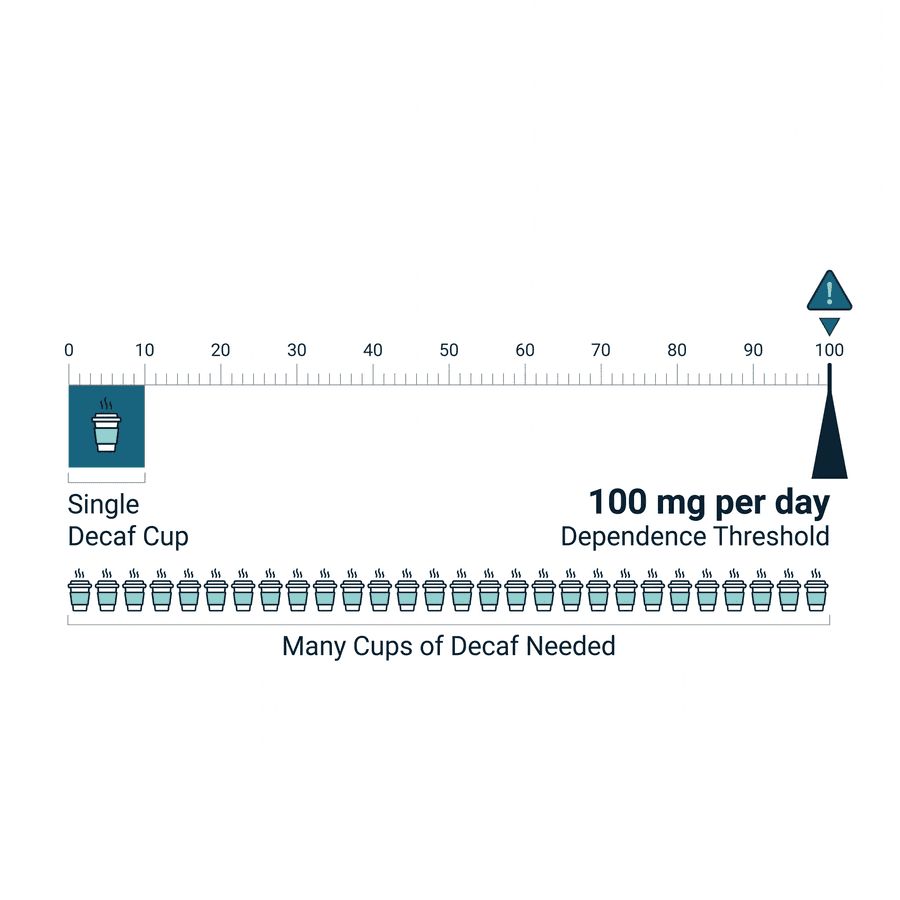
Reaching physical caffeine dependence generally requires around 100 mg of caffeine a day. Decaf holds roughly one-twentieth the caffeine of regular coffee, so hitting that threshold from decaf alone would take many cups a day, consumed consistently.
The math depends heavily on brand and brew strength. A cup on the low end of the 2-to-15-mg range would need dozens of cups to reach 100 mg. A cup on the high end, closer to the rare 30-mg outliers some chains have tested at, would need far fewer. Drinking more cups compounds the total, since caffeine's effect is cumulative across a day rather than reset with each cup. Someone drinking one or two cups of decaf daily stays well under any realistic dependence threshold.
Is Caffeine Actually Addictive?
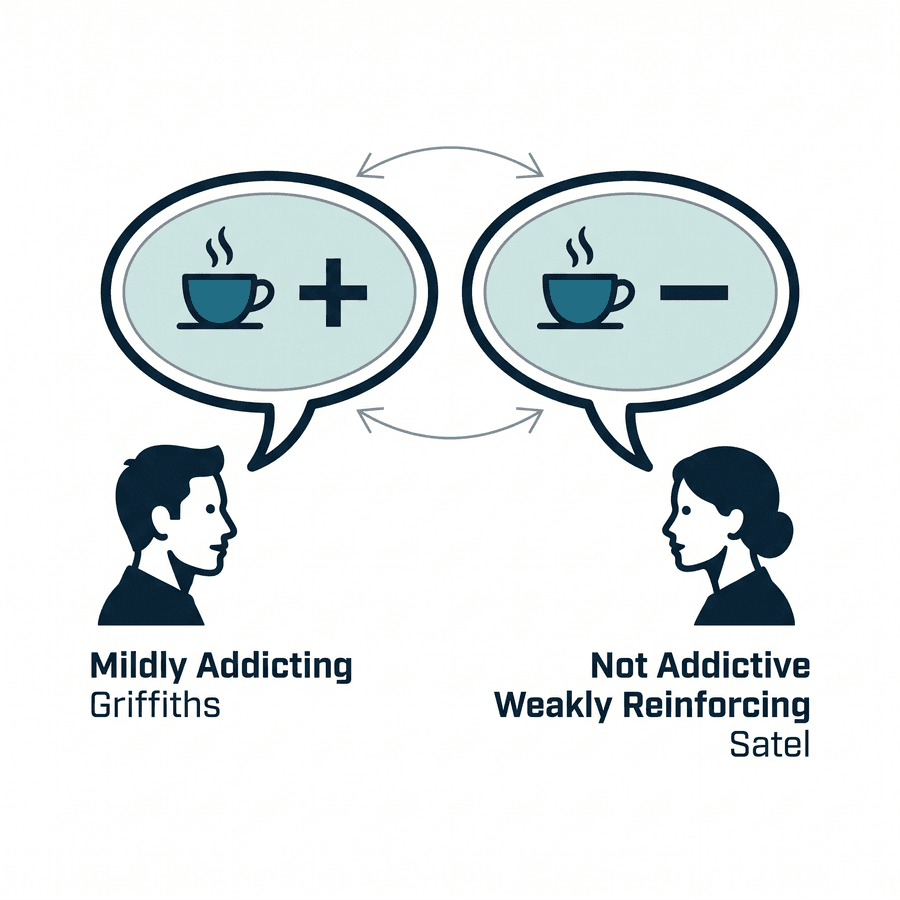
Caffeine does not meet the clinical bar most addictive drugs meet. Experts generally describe it as, at most, mildly habit-forming, and some researchers argue it is not addictive at all, only weakly reinforcing.
WebMD's medically reviewed caffeine guide states that caffeine does not threaten health the way addictive drugs do. It lacks the severe withdrawal profile of alcohol or hard drugs, so experts do not classify regular caffeine use as addiction. Researchers disagree on the finer point. Roland Griffiths of Johns Hopkins Bayview documented real caffeine withdrawal in a study. He said he has no problem calling caffeine a mildly addicting drug. A 2006 literature review by Dr. Sally Satel of the American Enterprise Institute reached the opposite conclusion. It found caffeine not addictive but weakly reinforcing, with any pull coming from coffee's aroma, taste, and social ritual rather than caffeine itself.
Why Do People Still Crave Decaf Coffee?
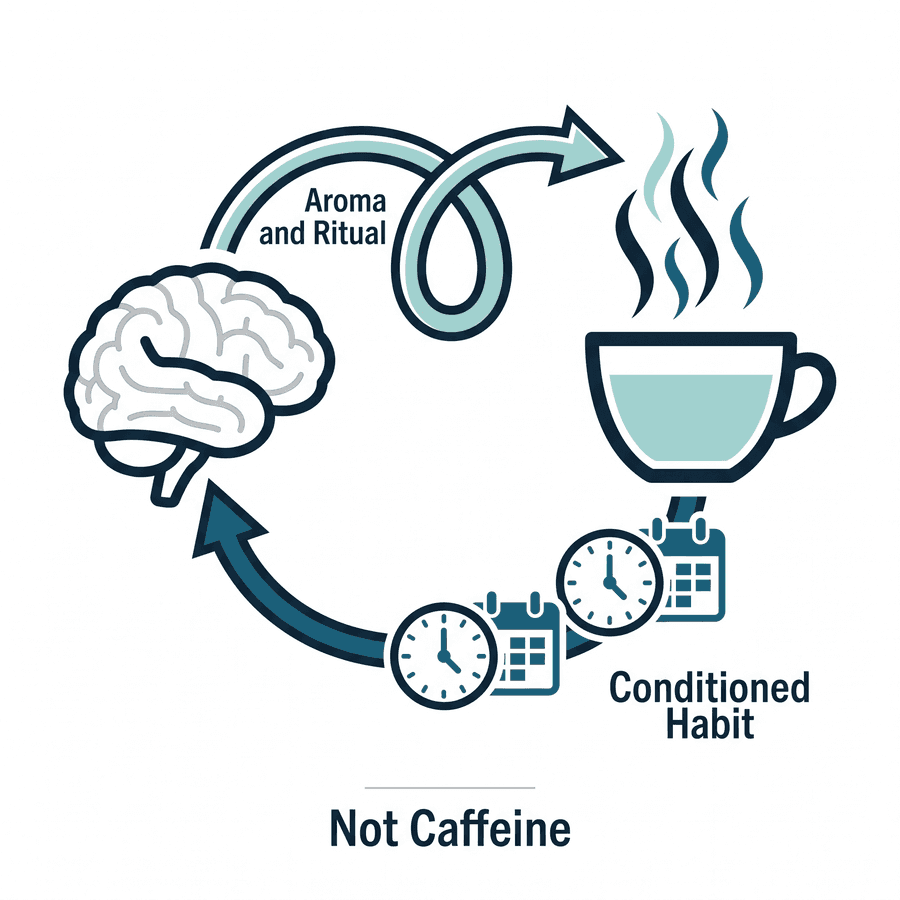
People crave decaf coffee for reasons that have little to do with caffeine. Coffee's aroma and bitter compounds modestly activate dopamine reward pathways, and the daily ritual itself becomes a conditioned habit independent of any stimulant effect.
The sound of a coffee maker, the smell of the beans, and the warmth of the cup all become linked, through years of repetition, to comfort and a sense of transition between parts of the day. That link persists even after caffeine leaves the equation entirely. A person who switches to decaf can still feel a strong pull toward the cup at the same time every morning, driven by conditioning rather than by any chemical the coffee still delivers.
Can Decaf Coffee Ease Caffeine Withdrawal?
Yes, decaf coffee can ease caffeine withdrawal symptoms, even when the drinker knows the coffee has no caffeine. A 2023 study found withdrawal-symptom scores dropped meaningfully in a group that knowingly drank decaf.
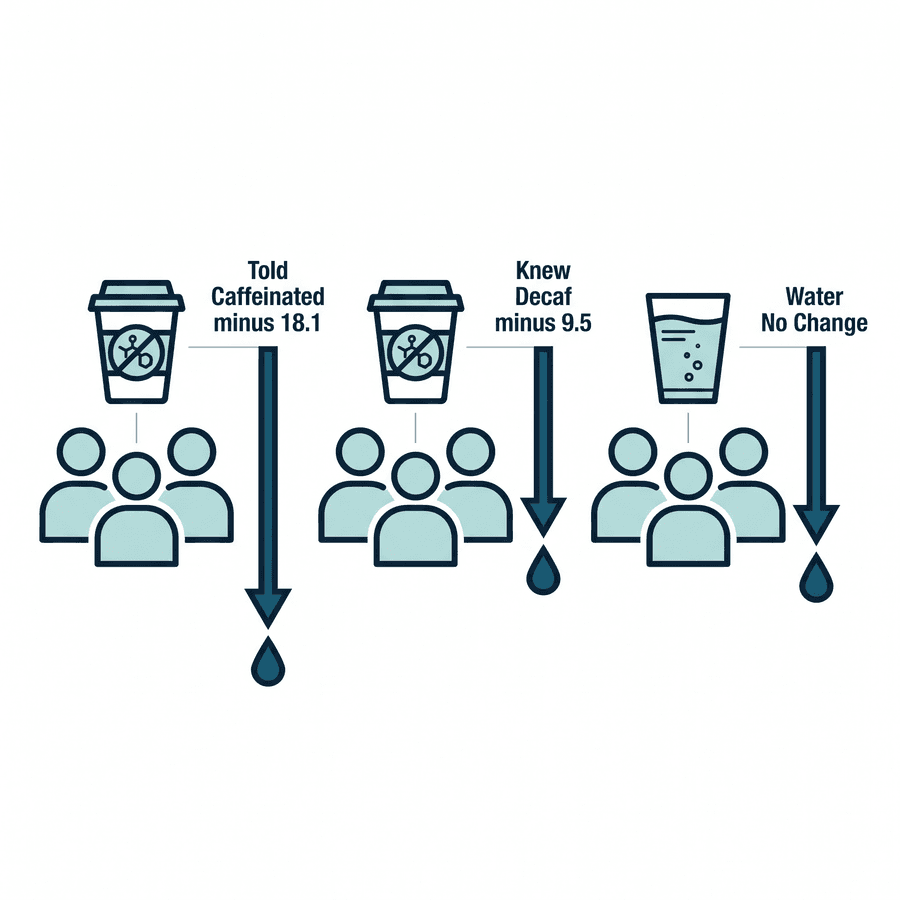
Researchers led by Llewellyn Mills at the University of Sydney published the study in the Journal of Psychopharmacology. They had 61 heavy coffee drinkers abstain from caffeine for 24 hours before drinking a fresh cup. One group was falsely told their decaf was caffeinated. One group knew they were drinking decaf, and a third group drank only water. Withdrawal scores dropped 18.1 points in the falsely-told group and 9.5 points in the knowing-decaf group, while the water group saw no change. The researchers attribute the knowing-decaf group's real drop to conditioning built from years of coffee-drinking, not to expectation alone. Expectations about decaf's effect did not predict how much symptoms actually improved.
What Are the Symptoms of Caffeine Withdrawal?
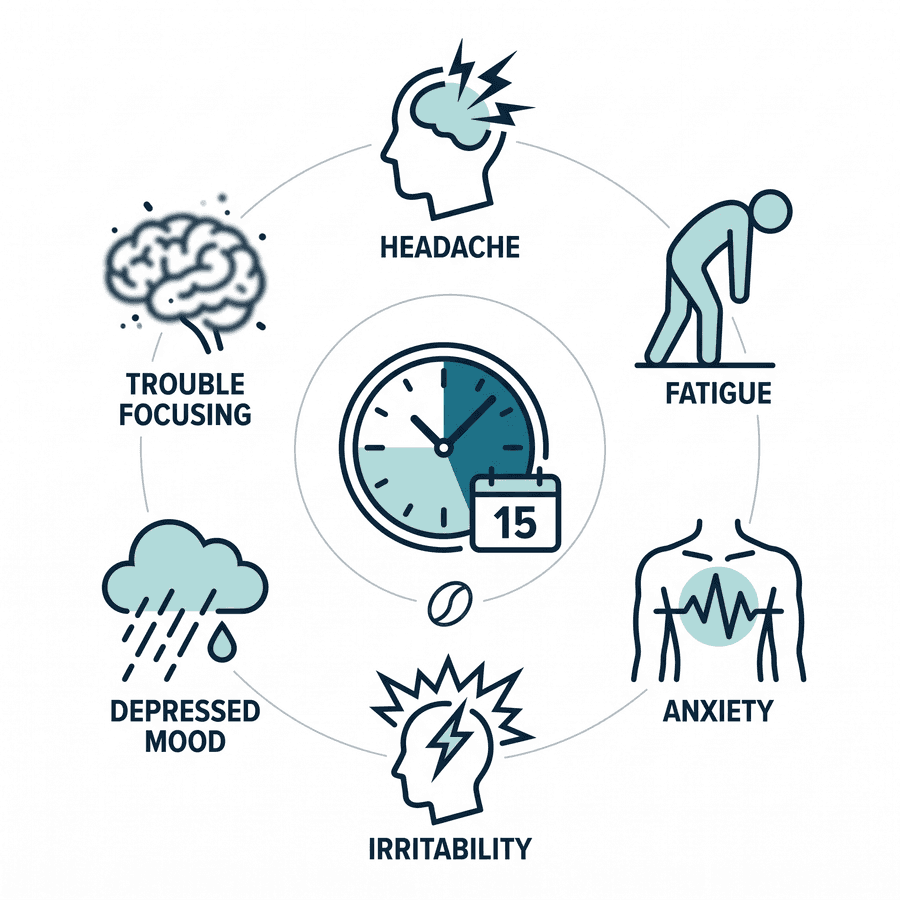
Caffeine withdrawal symptoms include headache, fatigue, anxiety, irritability, a depressed mood, and trouble focusing. Symptoms can begin within a day of stopping caffeine and usually pass within a few days.
Tapering caffeine intake gradually over a few weeks, rather than stopping all at once, can avoid these symptoms entirely for most people. Anyone switching from regular coffee straight to decaf in one step is the person most likely to feel this withdrawal window, since the caffeine drop happens all at once rather than gradually.
Can Switching to Decaf Help You Quit Caffeine?
Yes, switching to decaf can help you quit caffeine, especially when done gradually rather than all at once. Decaf keeps the ritual of a coffee cup intact while cutting the actual caffeine dose to a fraction of a regular cup.
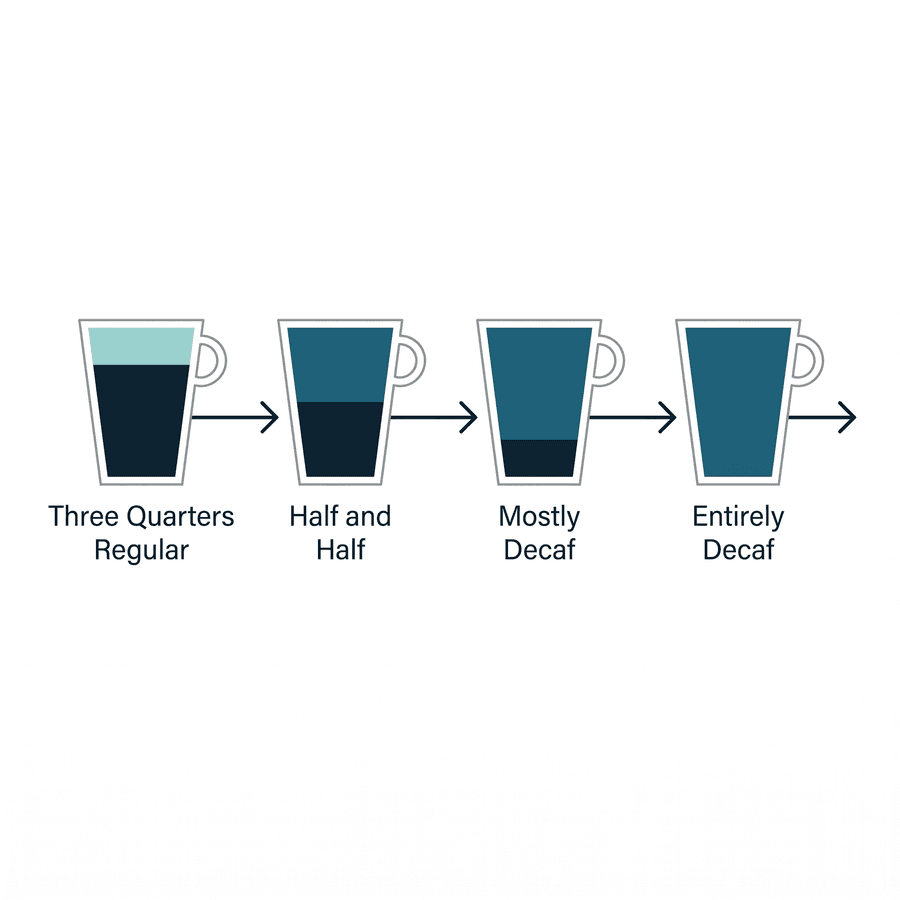
A common approach blends caffeinated and decaf coffee in a shifting ratio. It starts around three-quarters regular to one-quarter decaf, moves toward a half-and-half blend, then shifts to mostly or entirely decaf. That gradual shift mirrors the tapering approach that avoids sharp withdrawal symptoms, and the Mills 2023 study on decaf and withdrawal suggests decaf alone can ease symptoms further once caffeine is mostly or fully out of the routine.
Where to Find a Decaf Worth Switching To?
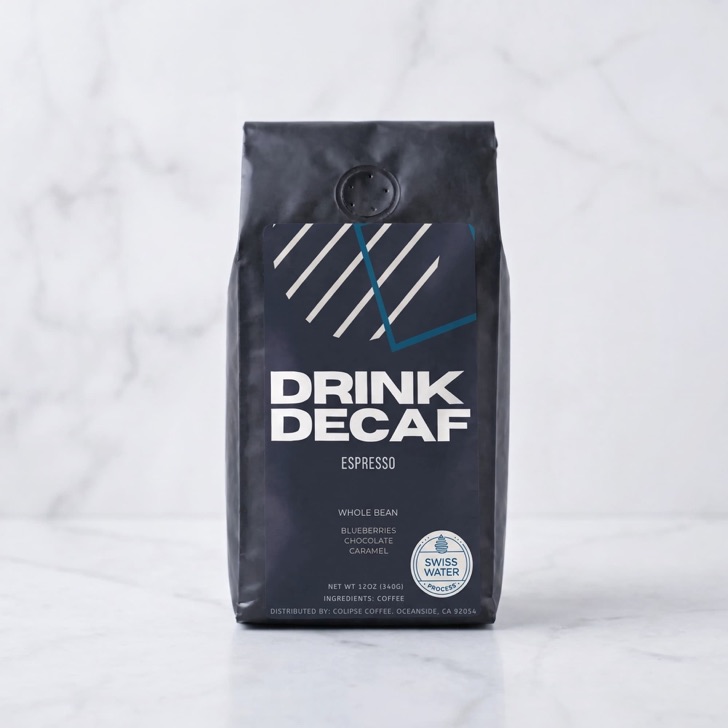
Drink Decaf's single-origin decaf espresso is a solid choice for anyone cutting back on caffeine, since it keeps the ritual and flavor of real coffee while dropping caffeine to a trace amount.
The beans are single-origin Arabica from the JUMARP El Palto Cooperative in northern Peru, decaffeinated chemical-free with the Swiss Water Process, then dark-roasted for notes of dark chocolate, caramel, and blueberry. For a decaf worth switching to, Drink Decaf's Swiss Water Process decaf espresso is roasted to order in Oceanside, CA and ships free across the United States (US).
12 oz · Whole bean
Drink Decaf EspressoSpecialty grade. Swiss Water® Process decaffeinated. Roasted to order at our California roastery. Blueberry, chocolate, caramel.
Free shipping in the US