Does Decaf Coffee Irritate the Bladder?
No, decaf coffee rarely irritates the bladder. Caffeine acts as a diuretic that interferes with how the kidneys reabsorb water. That mechanism is why regular coffee tends to trigger more frequent urination than decaf. Decaf's much lower caffeine content makes it easier on a sensitive bladder than regular coffee. Other acidic drinks can irritate the bladder too, and switching to decaf helps some people with incontinence more than others.
Does Decaf Coffee Irritate the Bladder?
No, decaf coffee rarely irritates the bladder. Urology sources report little evidence that it increases urination or affects urological function. Most treat it as a gentler alternative to regular coffee for people managing bladder sensitivity.
Decaf still contains a small amount of caffeine, usually 2 to 7 milligrams (mg) per cup. Decaf also keeps some of regular coffee's natural acidity. Both traits can irritate a sensitive bladder or a condition like interstitial cystitis (IC/BPS). One hospital bladder-irritant handout lists coffee, regular and decaf, among drinks to avoid on a strict elimination diet. Acidity alone can trigger symptoms there, regardless of caffeine content. For most people without a diagnosed bladder condition, decaf's low caffeine level makes it far less likely than regular coffee to cause urgency or frequency.
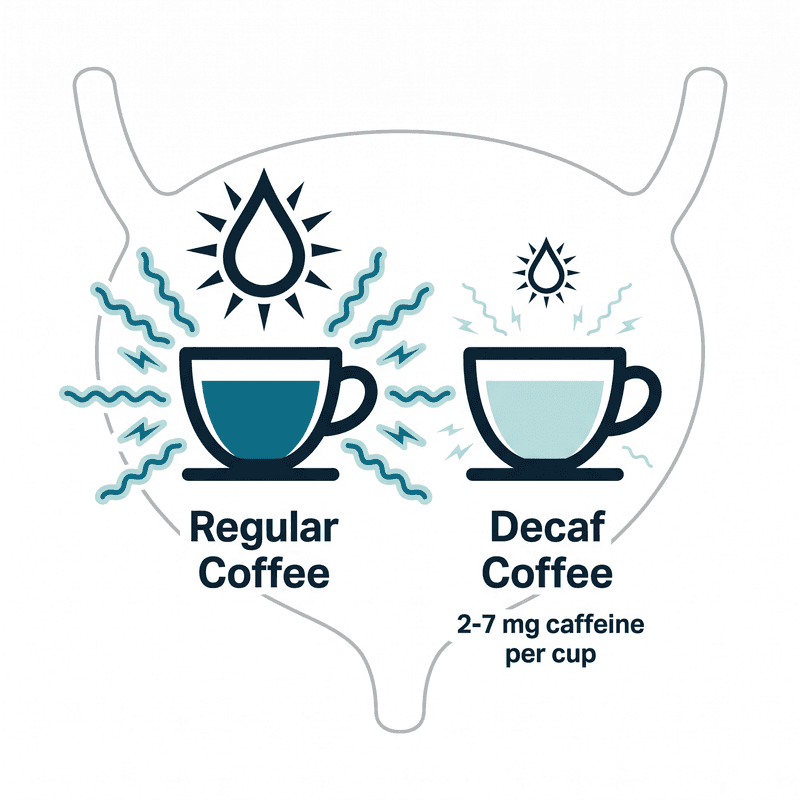
Why Does Caffeine Make You Pee More?
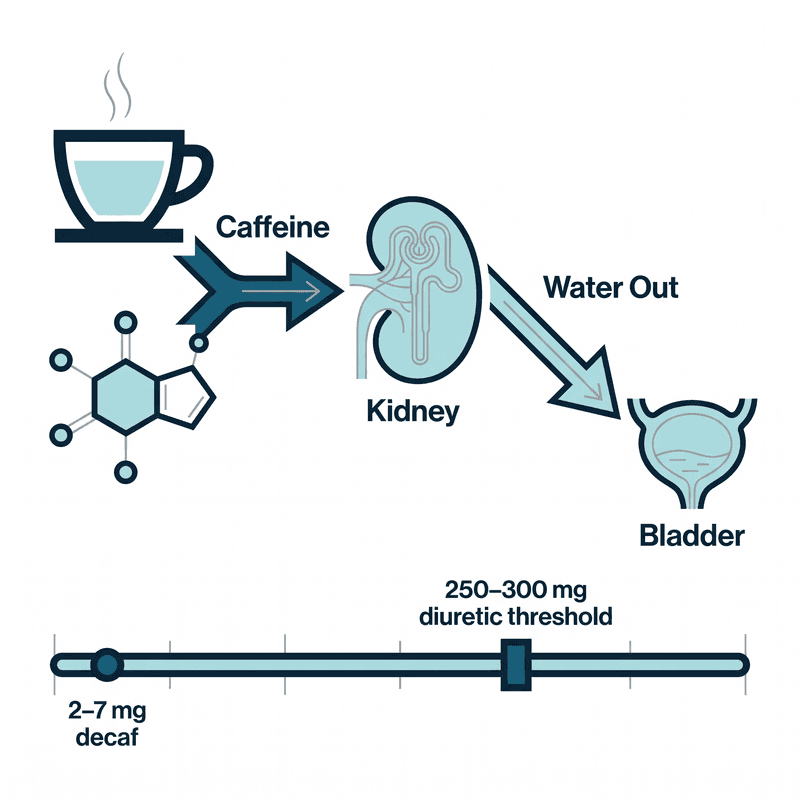
Caffeine acts as a diuretic. Caffeine interferes with how the kidneys reabsorb water, so more fluid leaves the body as urine. Caffeine can also irritate the bladder lining and pelvic floor muscles directly, adding to the urge to go.
Research points to a threshold of roughly 250 to 300 mg of caffeine before a meaningful diuretic effect sets in. That threshold equals about 2 to 3 cups of regular coffee. A cup of decaf stays far below that threshold. The exact amount of caffeine in decaf coffee measures only 2 to 7 mg per cup, which is why decaf rarely produces the same frequent-urination effect as a full-strength cup. The bladder-lining irritation caffeine can cause is separate from its diuretic action. People with an already sensitive bladder may notice some effect even at lower caffeine doses.
Is Decaf Better Than Regular Coffee for Your Bladder?
Yes, decaf is generally easier on the bladder than regular coffee. Decaf delivers the same flavor without the diuretic effect that drives frequent urination. Decaf also poses a much lower risk of triggering urgency in people with an overactive bladder.
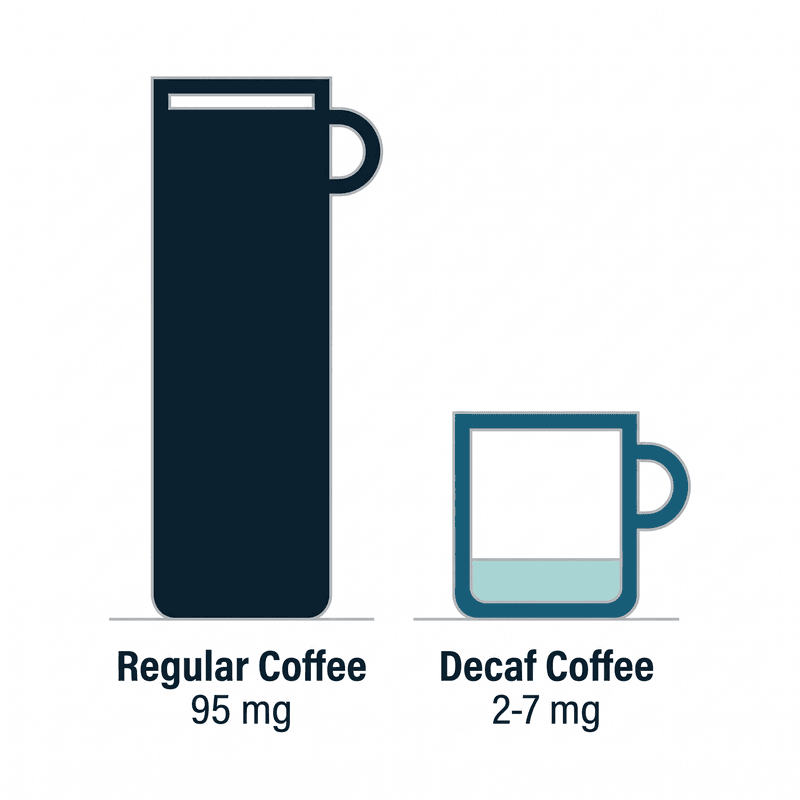
A regular brewed coffee contains roughly 95 mg of caffeine per 8-ounce (oz) cup. Decaf contains only 2 to 7 mg, since commercial decaffeination removes about 97% or more of the caffeine. Not everyone responds to caffeine the same way, though. A 491-participant study from the Symptoms of Lower Urinary Tract Dysfunction Research Network (LURN) found that people with urgency incontinence had 54% lower odds of drinking any caffeine at all. Among those who did drink caffeine, the amount consumed was no different than in people without incontinence. That finding suggests caffeine sensitivity affects only a subset of people with bladder symptoms, rather than everyone equally. Switching to decaf helps some people more than others as a result.
What Other Drinks Besides Coffee Irritate the Bladder?
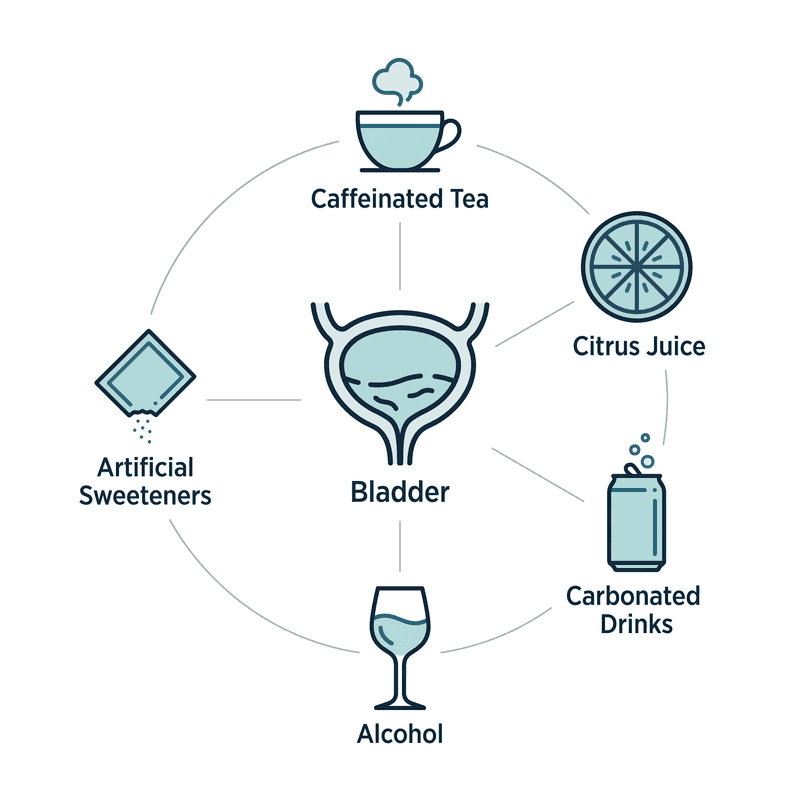
Coffee is only one of several common bladder irritants. Caffeinated tea, citrus juices, cranberry juice, carbonated drinks, alcohol, and artificial sweeteners can all trigger similar urgency and frequency symptoms in a sensitive bladder.
Acidic drinks irritate the bladder lining on their own, separate from caffeine content. That mechanism is why even decaf and herbal tea can bother some people. Not every irritant has equal evidence, though. The same LURN study cited above found no measurable difference in carbonated or acidic-juice intake between people with urgency symptoms and those without, once other factors were accounted for. That finding suggests some commonly blamed drinks may matter less than caffeine itself for most people, even though individual sensitivity still varies.
Does Switching to Decaf Actually Help with Incontinence?
Yes, switching to decaf can help some people with incontinence, particularly those whose symptoms are caffeine-sensitive. Real-world hospital data and clinical research both point toward modest, individual benefit rather than a guaranteed fix for everyone.
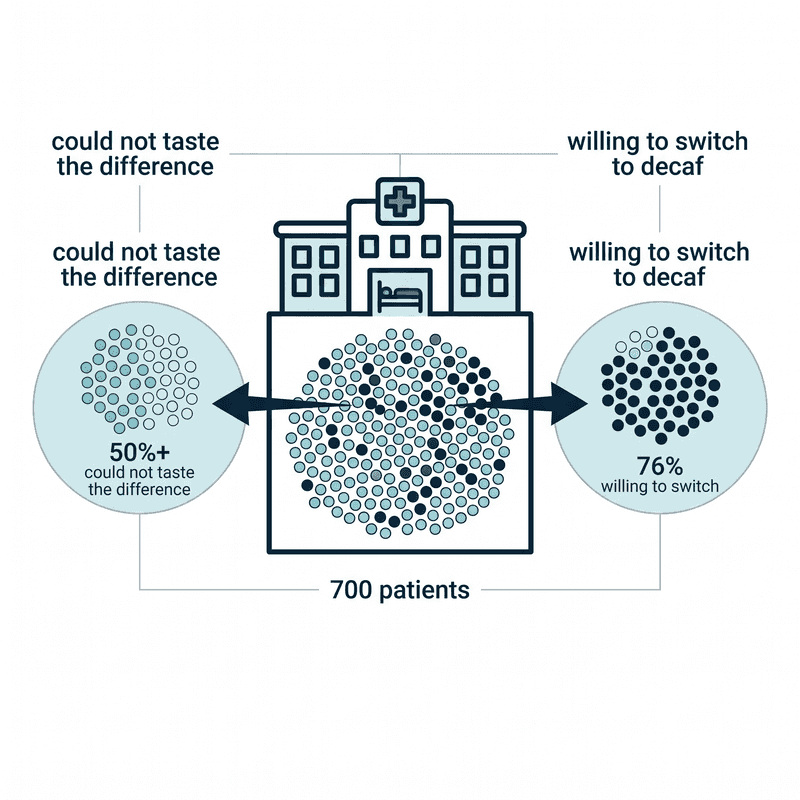
A UK hospital program called the Taste the Difference Challenge offered decaffeinated tea and coffee to inpatients instead of caffeinated versions. Over half of the 700 patients who accepted could not taste the difference, and more than 76% said they would be happy to switch to decaf. A 2011 study in the Journal of Urology examined caffeine intake alongside the risk of stress, urgency, and mixed urinary incontinence. For IC/BPS, a related bladder condition, a 2026 systematic review found only four controlled dietary studies covering 147 people total. That review concluded individual elimination diets showed the most promise, though overall evidence remains limited. Switching to decaf is a reasonable, low-risk step overall, best paired with tracking your own symptoms rather than assumed to work the same way for everyone.
Can Decaf Coffee Cause Digestive Side Effects Too?
Yes, decaf can cause digestive side effects separate from its effects on the bladder. A 1998 University of Iowa study found decaf stimulated 23% less colon activity than caffeinated coffee, but still more than water. Decaf can still make you poop even with little caffeine involved.
Does Decaf Coffee Affect the Kidneys as Well as the Bladder?
No, decaf does not harm the kidneys, and coffee is linked to lower kidney disease risk. Cohort data on whether decaf coffee is bad for kidneys show about 13 percent lower risk at one cup a day.
Where to Buy a Decaf Coffee That's Gentle on Your Bladder?
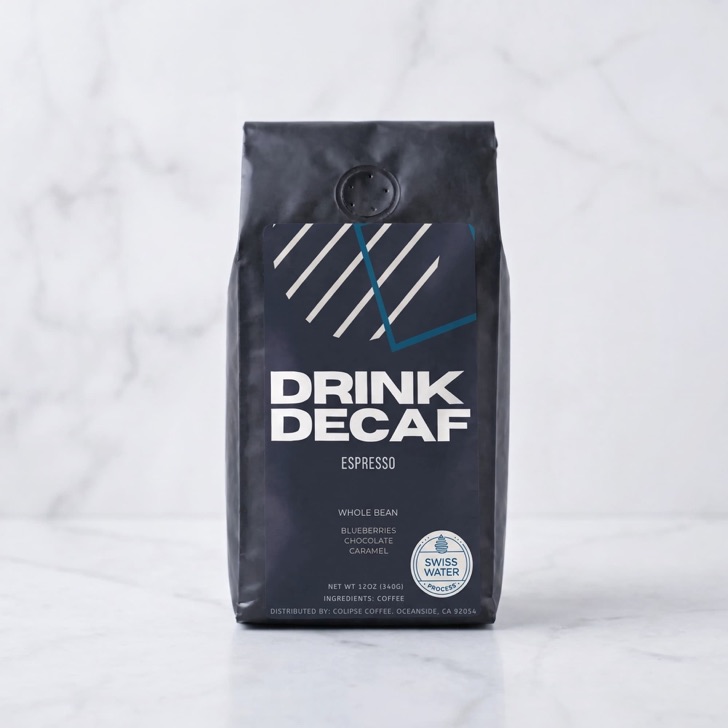
Drink Decaf's single-origin decaf espresso is a solid choice if bladder sensitivity is a concern, since it keeps caffeine to a minimum while still delivering real coffee flavor.
The beans are single-origin Arabica from the JUMARP El Palto Cooperative in northern Peru, decaffeinated chemical-free with the Swiss Water Process, then dark-roasted for notes of dark chocolate, caramel, and blueberry. For a decaf worth switching to, Drink Decaf's Swiss Water Process decaf espresso is roasted to order in Oceanside, CA and ships free across the United States (US).
12 oz · Whole bean
Drink Decaf EspressoSpecialty grade. Swiss Water® Process decaffeinated. Roasted to order at our California roastery. Blueberry, chocolate, caramel.
Free shipping in the US