Is Decaf Coffee Bad for Your Kidneys?
Decaf coffee is not bad for your kidneys. Cohort studies link both decaf and regular coffee to lower chronic kidney disease (CKD) risk, and a mouse study found high-dose decaf improved kidney excretion markers rather than harming them. The bigger factor for kidney health is potassium, since decaffeination removes caffeine but leaves potassium largely intact, which is why people managing kidney disease are still advised to keep coffee, decaf included, to fewer than 3 cups a day.
What Does the Research Say About Decaf Coffee and Kidney Health?
Decaf coffee is not bad for your kidneys. Large cohort studies link both caffeinated and decaffeinated coffee to lower chronic kidney disease (CKD) risk, not higher risk.
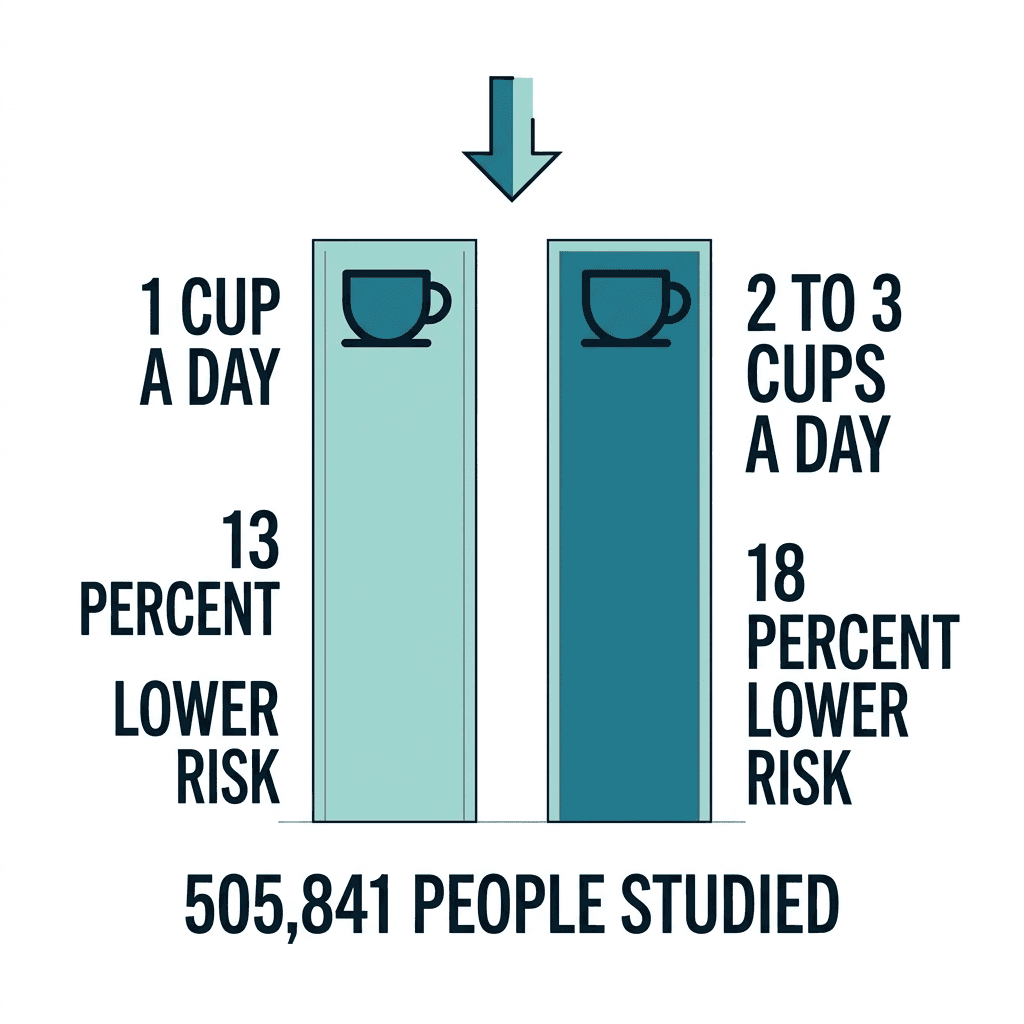
One analysis followed 505,841 people from 1960 to 2020. It found coffee consumption tied to lower CKD rates in a dose-response pattern. Drinking one cup a day was linked to about 13 percent lower CKD risk. Two to three cups a day was linked to about 18 percent lower risk. Researchers attribute this protective pattern to coffee's antioxidant and anti-inflammatory compounds, not to caffeine. Decaf retains most of those compounds, so the same protective association shows up in decaf drinkers too.
How Does Decaf Coffee Affect Kidney Function?
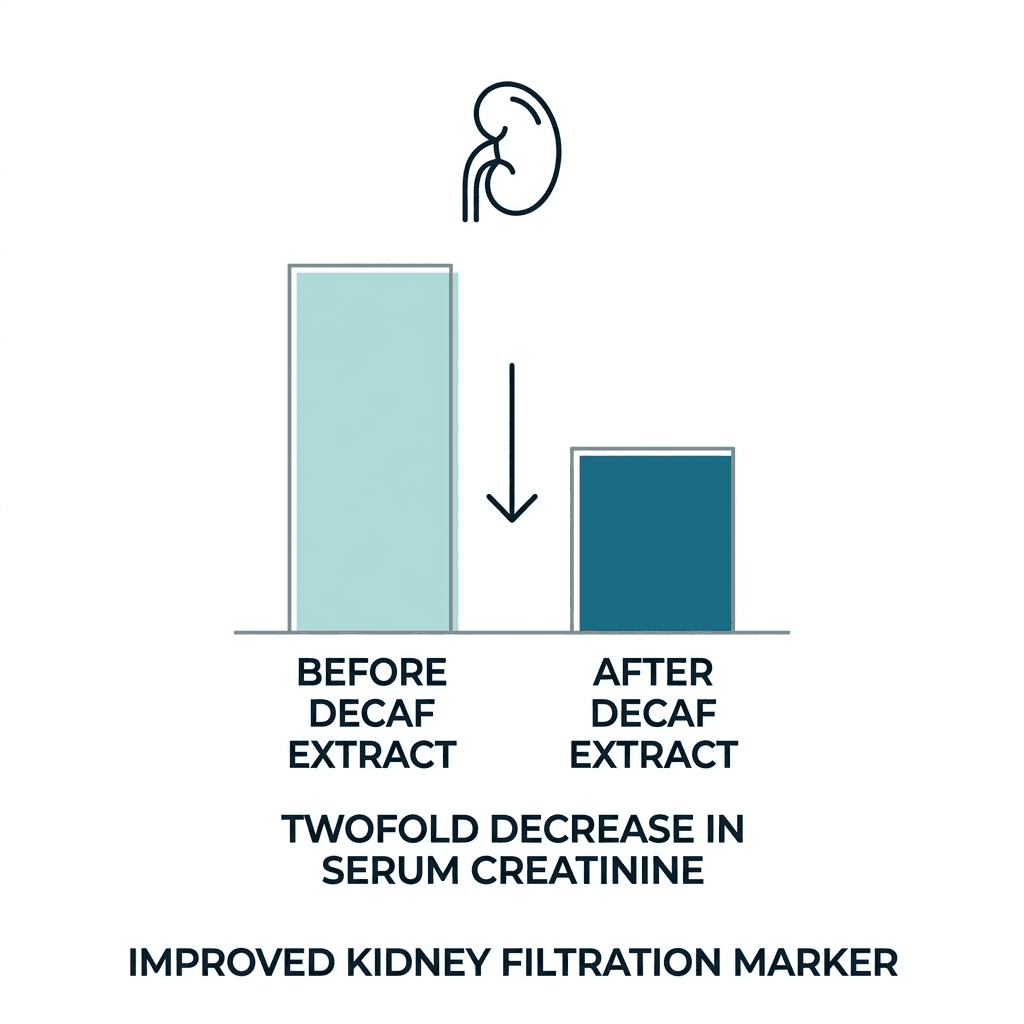
A mouse study found high-dose decaf coffee extract improved kidney excretion markers rather than harming them. Kidney creatinine levels dropped, a sign of better filtration.
Researchers at the Medical University of Gdansk gave mice decaf coffee extract for two weeks. High-dose decaf increased activity of an enzyme called ecto5'-nucleotidase in the kidney cortex. That raised adenosine concentration in the same tissue. This shift came with a roughly twofold decrease in serum creatinine, a marker doctors use to judge kidney filtration. The study's authors described this as improved kidney excretion function, not damage. It is an animal study, so it does not prove the same effect in humans. It offers no evidence that decaf harms kidney function.
How Much Potassium is in Decaf Coffee?
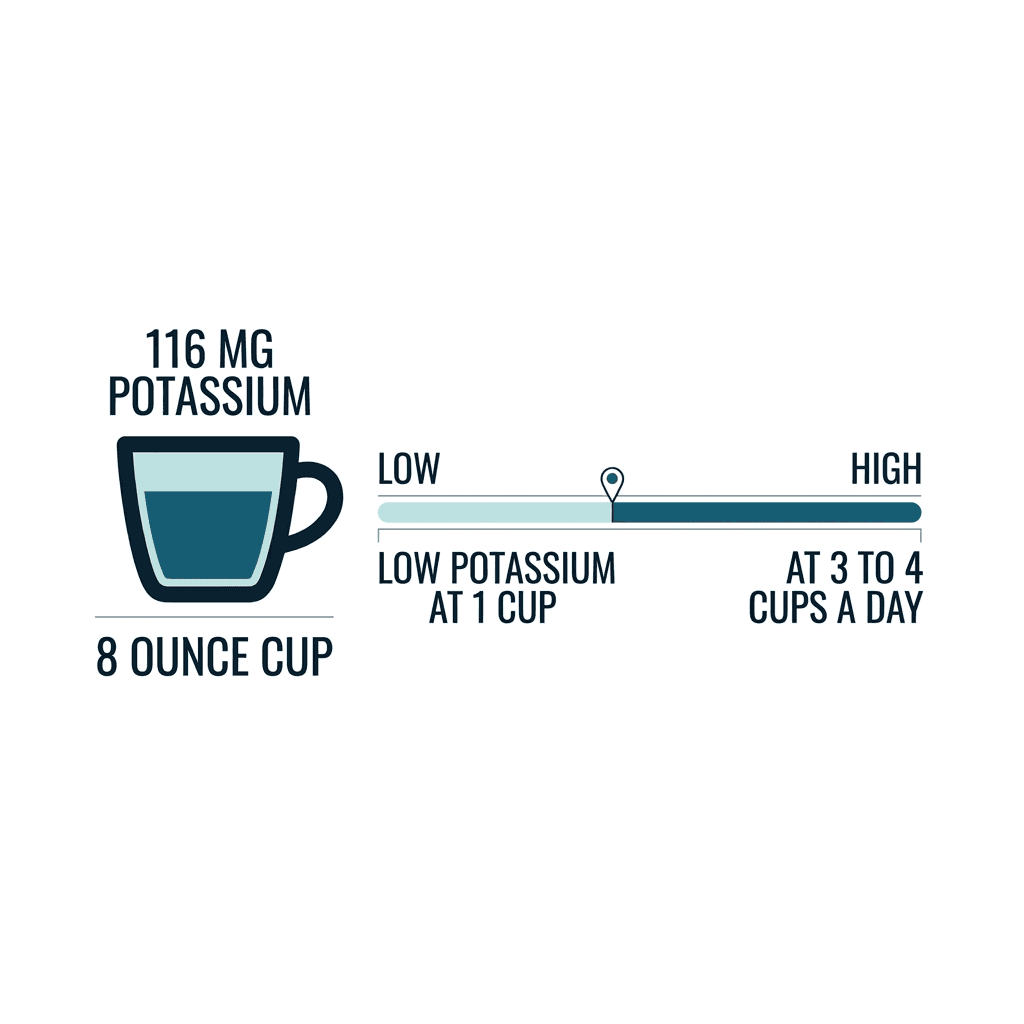
An 8-ounce (oz) cup of black coffee, decaf or regular, contains about 116 milligrams (mg) of potassium. Decaffeination removes caffeine, not potassium.
The National Kidney Foundation classifies a single cup of black coffee as a low-potassium food. Three to four cups a day is considered high in potassium. This threshold applies to decaf and regular coffee alike, since standard decaffeination targets caffeine and leaves potassium largely intact. A coffee industry patent on potassium-reduced decaf confirms this baseline. An untreated decaf product typically delivers 50 to 160 mg of potassium per 160 cc cup, the same range as regular coffee. Adding creamer or milk raises the potassium content further. That matters more for people managing kidney disease than for people with healthy kidneys.
Is Decaf Coffee a Diuretic?
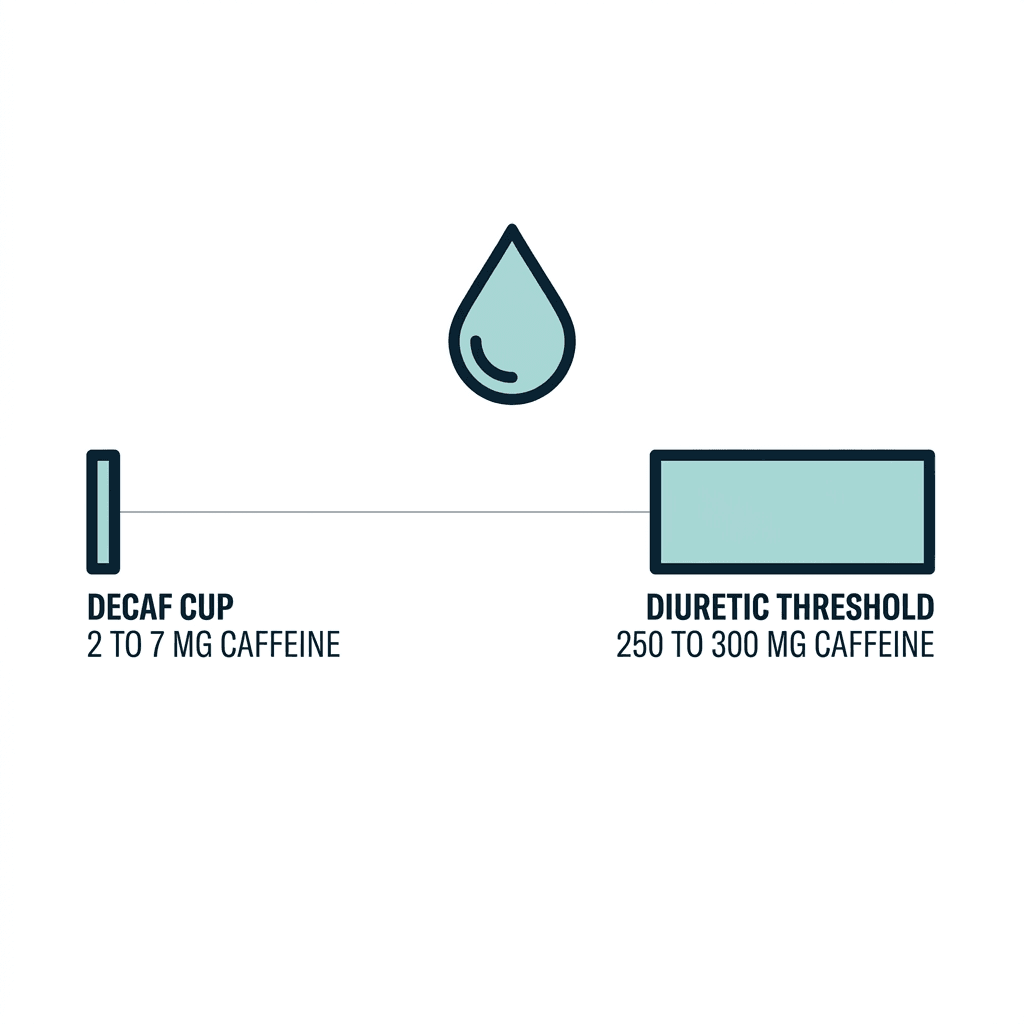
No. Research points to a diuretic threshold of roughly 250 to 300 mg of caffeine. A cup of decaf has only 2 to 7 mg.
Caffeine can act as a mild diuretic at higher doses. It temporarily increases urine output, but decaf coffee sits far below the amount needed to trigger that effect. Medical guidance echoes this. Mayo Clinic notes that the fluid in caffeinated drinks usually balances out the mild urine-producing effect at normal intake. Decaf carries even less caffeine to begin with. In practice, decaf coffee contributes to daily fluid intake the same way water does.
Can Slow Caffeine Metabolism Raise Kidney Risk from Decaf Coffee?
Not meaningfully. The genetic risk identified in recent research applies to regular coffee's caffeine load, which decaf does not carry.
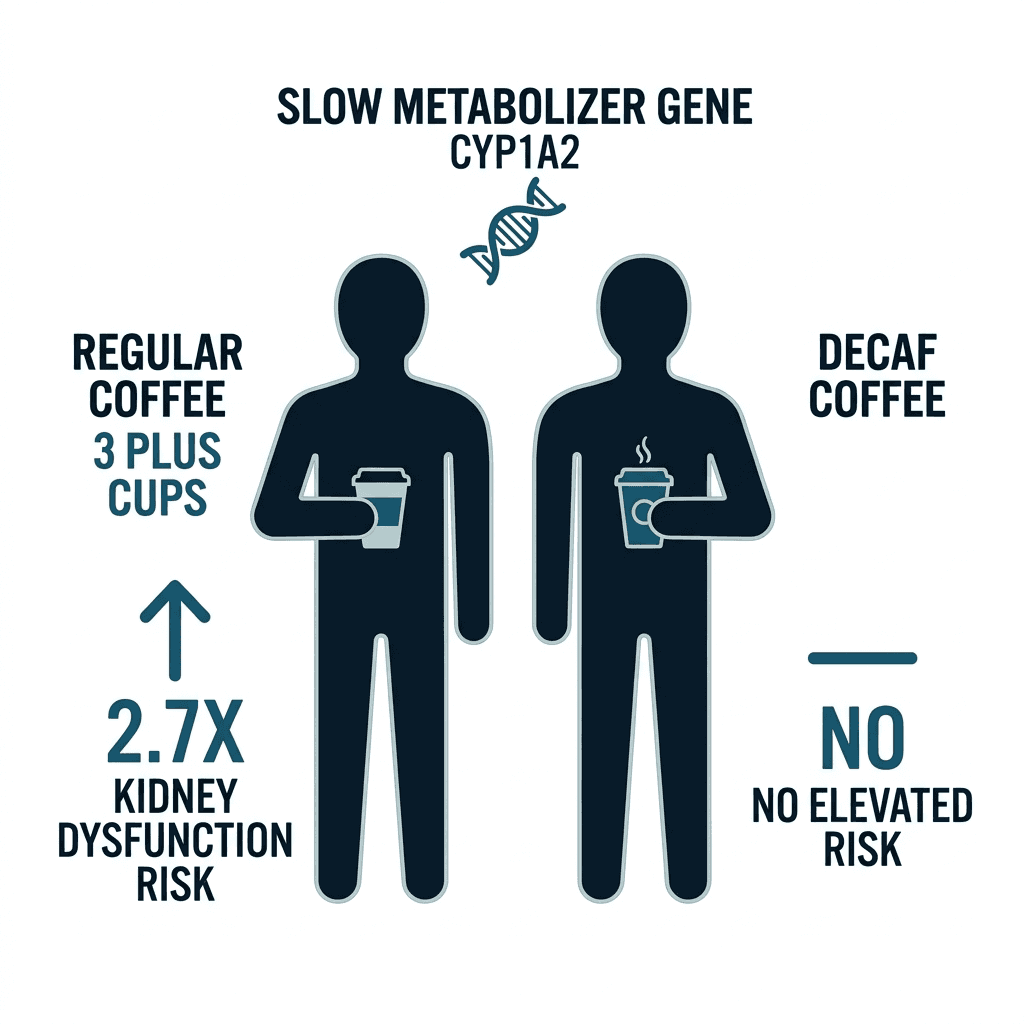
A 16-year study of 1,180 adults with untreated stage 1 hypertension appeared in JAMA Network Open. It found that people carrying the slow-metabolizing rs762551 variant of the CYP1A2 (cytochrome P450 1A2) gene faced higher risk. Those who also drank three or more cups of regular coffee daily were 2.7 times more likely to develop kidney dysfunction. The same group was 2.8 times more likely to develop hypertension. About half the population carries this slow-metabolizer variant. The study's lead author, Dr. Sara Mahdavi, said decaffeinated coffee is virtually devoid of caffeine. She stated that decaf drinkers would not carry this elevated risk regardless of their genetics.
Is Decaf Coffee Safe to Drink with Kidney Disease?
Yes, in moderation. Fresenius Kidney Care and other kidney-focused sources treat coffee, including decaf, as generally safe for most people with kidney disease.
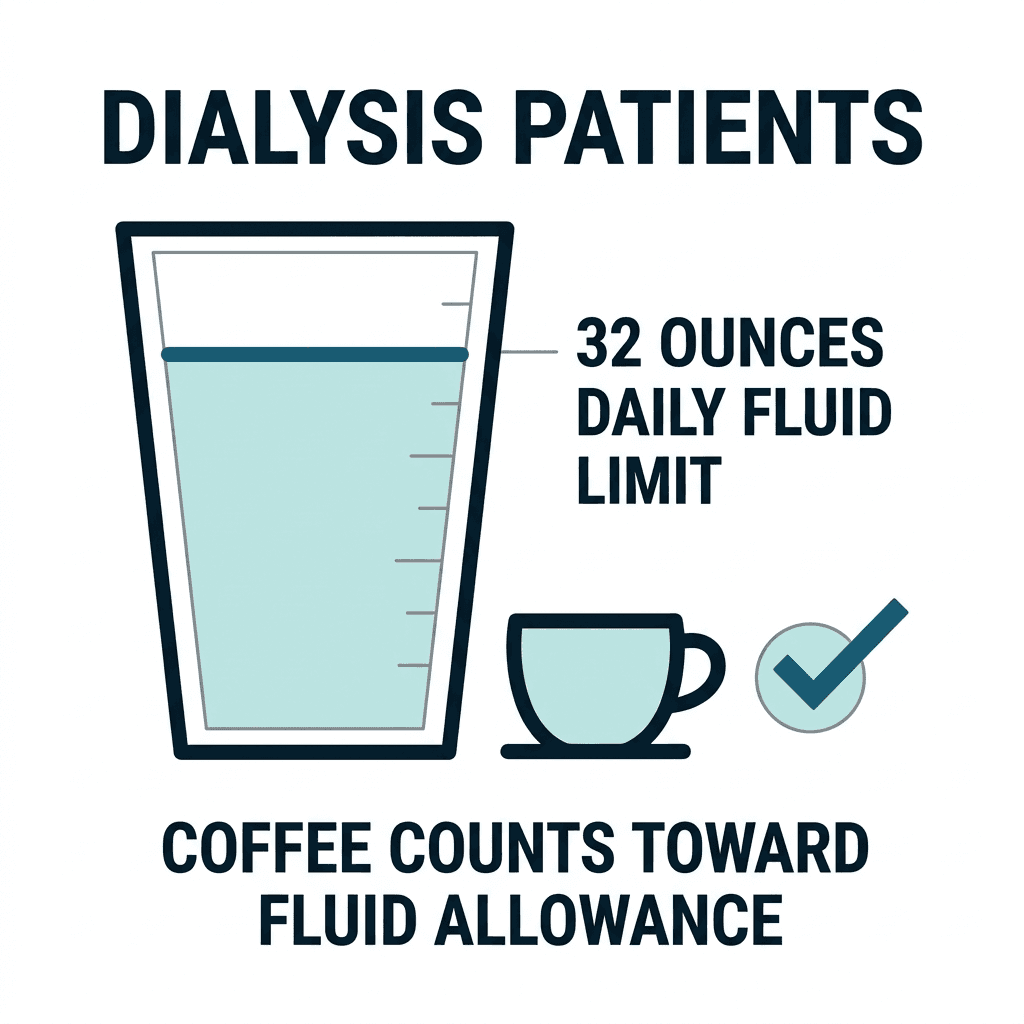
Coffee counts toward a person's daily fluid allowance. That matters for anyone managing CKD under fluid restrictions. Guidance from kidney care organizations centers on three practical points. Keep intake moderate. Limit cream and sugar, since both add potassium or phosphorus. Factor coffee into any fluid limit a nephrologist has set. People with advanced kidney disease or those on dialysis should follow their care team's specific fluid guidance. Dialysis patients are often advised to keep total daily fluid intake to 32 oz or less. Anyone with kidney disease who is unsure about their own limit should ask a registered dietitian or physician rather than guessing.
How Many Cups of Decaf Coffee Are Safe for Kidney Health?
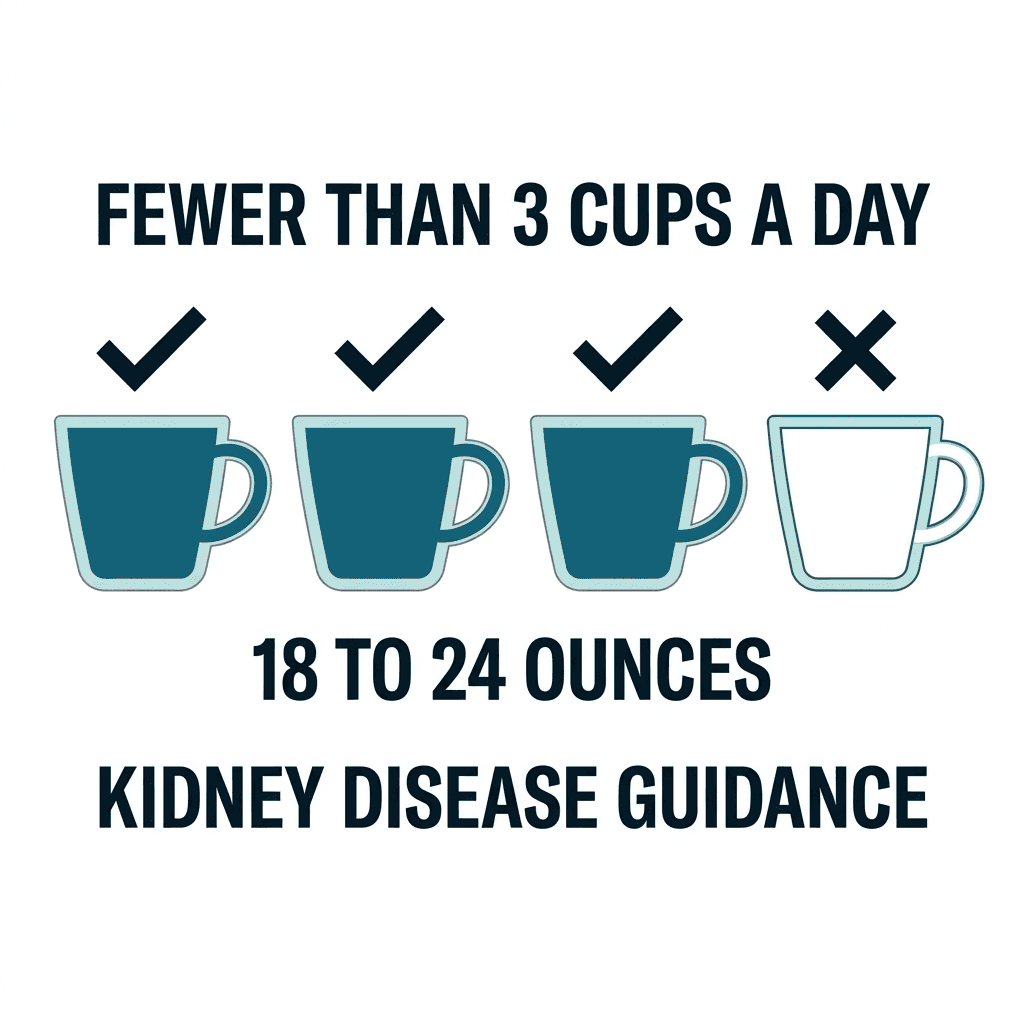
A commonly cited limit is fewer than 3 cups, or about 18 to 24 oz, of brewed coffee a day for people managing kidney disease.
This guidance is built around potassium load rather than caffeine. That is why it applies to decaf almost as strictly as it applies to regular coffee. Decaf retains most of regular coffee's potassium content, so the same 3-cup ceiling still holds. People without kidney disease do not need to track this closely, since healthy kidneys regulate potassium on their own. Anyone managing an existing kidney condition should treat 3 cups as a starting point. Adjust it with a dietitian or nephrologist based on lab results.
Is Decaf Tea Bad for Your Kidneys?
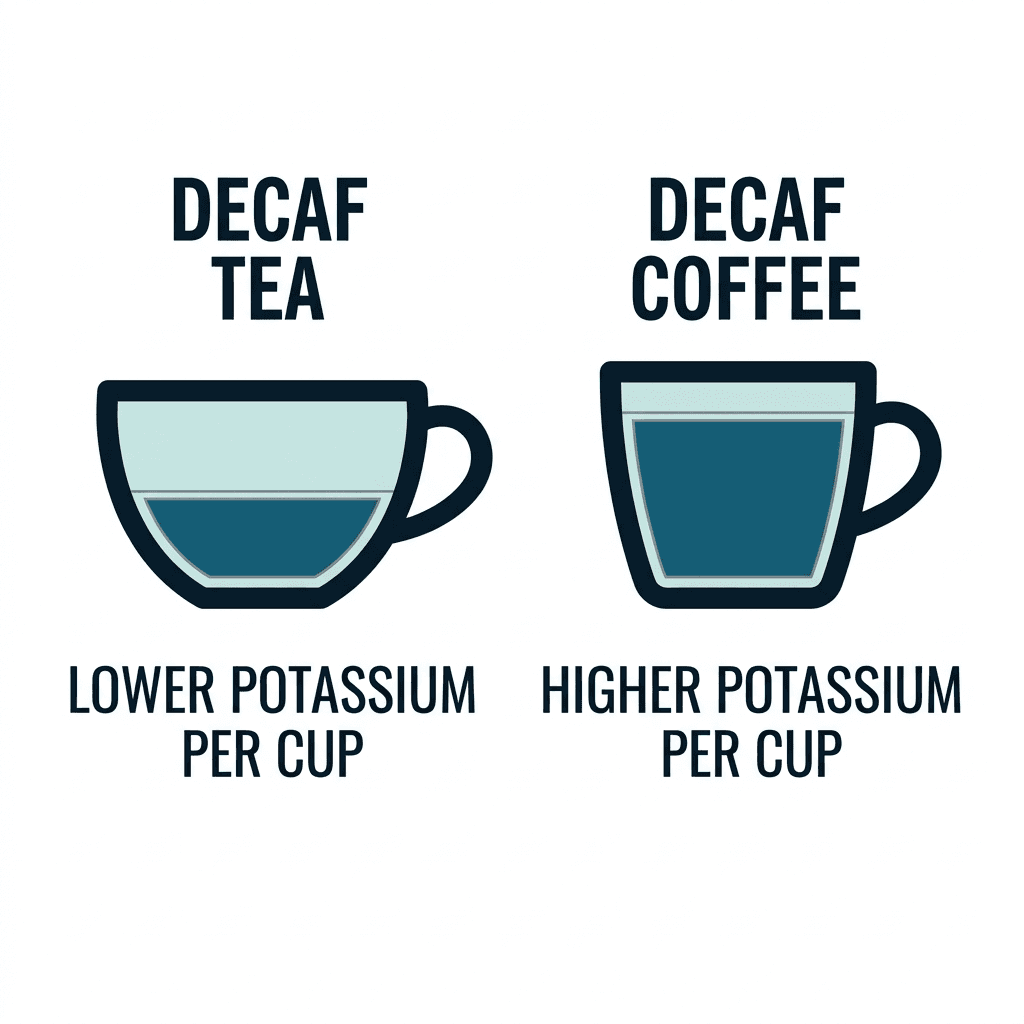
No evidence points to decaf tea causing kidney harm. Decaf tea generally carries less potassium per cup than coffee, which works in its favor.
No dedicated study has tested decaf tea's effect on kidney function directly. This answer draws on decaf tea's known potassium and hydration profile rather than a decaf-tea-specific trial. Kidney-related coffee guidance centers on potassium load and fluid intake. Decaf tea is lower in potassium than coffee, so it does not introduce a distinct kidney risk beyond what decaf coffee guidance already covers. People managing kidney disease should still count decaf tea toward their daily fluid and potassium totals, the same way they would coffee.
Do Decaf Coffee's Antioxidants Help Protect Kidney Health?
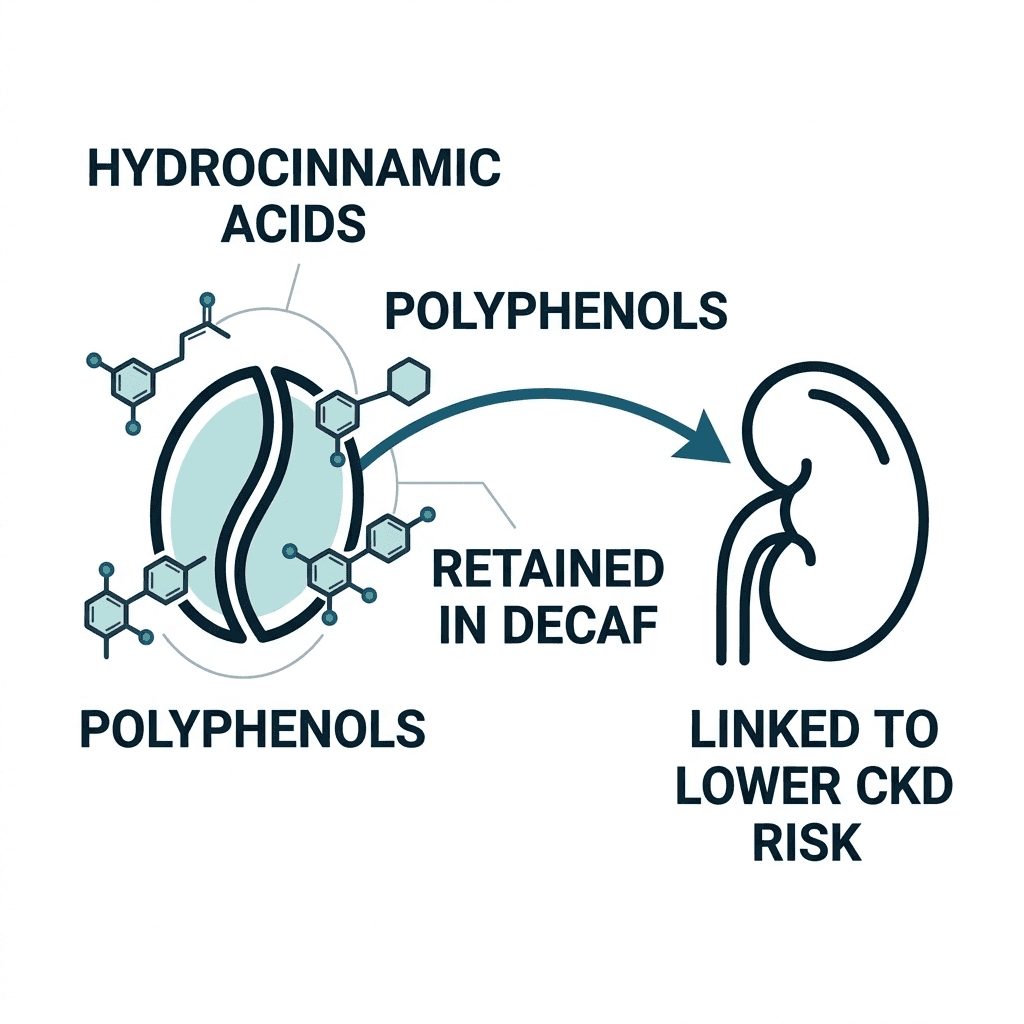
Likely yes. Decaf retains most of regular coffee's antioxidant compounds, which researchers link to the coffee-CKD risk reduction seen in large cohort studies.
Decaf coffee still contains hydrocinnamic acids and polyphenols, the same antioxidant families found in regular coffee. Decaffeination does not strip them out. Large cohort analyses linking coffee drinking to lower CKD rates attribute the effect to these antioxidant and anti-inflammatory compounds, not to caffeine. That is consistent with decaf showing similar associations to regular coffee in that data. This does not make decaf coffee a treatment for kidney disease. It means decaf fits reasonably within a kidney-conscious diet.
If you want to enjoy decaf without worrying about what's in the cup, Drink Decaf's single-origin decaf espresso is roasted to order in Oceanside, CA and ships free across the US. Shop the current batch of single-origin decaf espresso beans today.

12 oz · Whole bean
Drink Decaf EspressoSpecialty grade. Swiss Water® Process decaffeinated. Roasted to order at our California roastery. Blueberry, chocolate, caramel.
Free shipping in the US