Can Kids Drink Decaf Coffee?
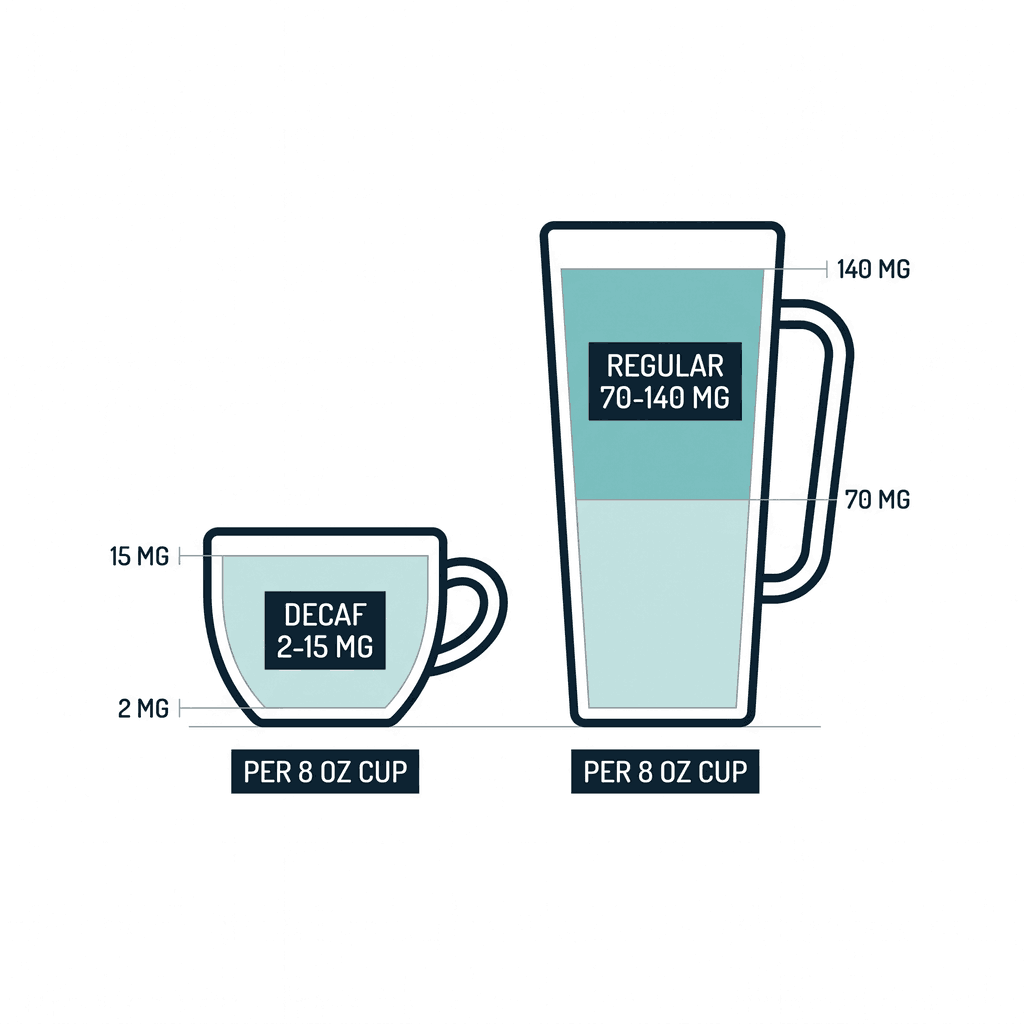
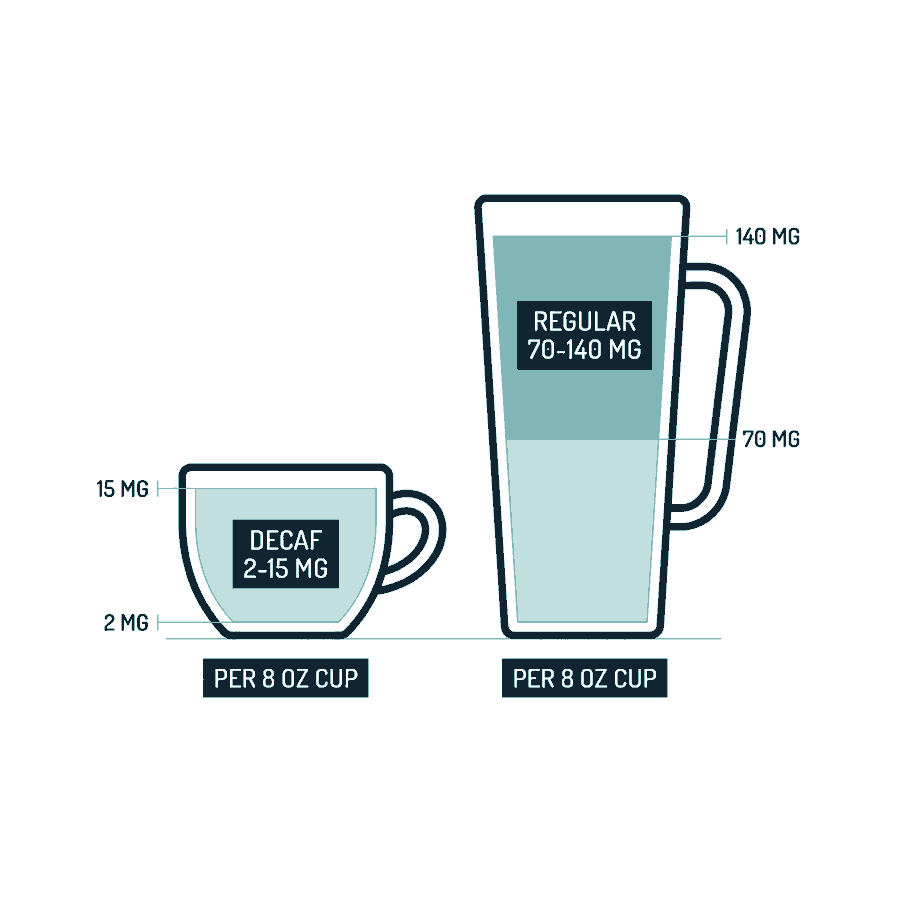
Kids can safely have a small amount of decaf coffee, but it should stay occasional rather than a regular drink. An 8-ounce cup of decaf coffee typically has 2 to 15 milligrams (mg) of caffeine, far below the 70-140mg in a regular cup, but not zero. Pediatric guidance from groups like the American Academy of Pediatrics (AAP) and Health Canada treats that small dose the same way it treats any caffeine, worth limiting by a child's age, since kids are more sensitive to its effects than adults, and caffeine-free options like herbal tea or a babyccino cover the same ritual without the trade-off.
Is Decaf Coffee Safe for Kids?
Kids can safely have a small amount of decaf coffee, but it should stay occasional rather than a regular drink. Decaf still carries a small dose of caffeine, and pediatric guidance treats any caffeine as something children should limit, not seek out.
The AAP has not issued guidance specific to decaf coffee, but its broader stance on caffeine in children supports treating decaf the same cautious way: acceptable in small, infrequent amounts, never as a daily habit. Nemours' KidsHealth, reviewed by pediatricians, states plainly that decaf can be safer for kids to try than caffeinated coffee or tea, the same evidence weighed when asking if decaf coffee is bad for you at adult doses, but recommends no more than a few sips since decaf still contains some caffeine. Crosby Coffee, a UK roaster, frames the same answer from a nutrition angle: decaf offers children little to no nutritional benefit, especially under age 12, so there is no health reason to introduce it early, only a taste-curiosity reason.
How Much Caffeine Can Kids Get from Decaf Coffee?
An 8-ounce cup of decaf coffee typically has 2 to 15mg of caffeine, far below the 70-140mg in a regular cup, but not zero. The exact amount depends heavily on which decaffeination method produced the beans.
The National Coffee Association (NCA) describes standard commercial decaffeination as removing 97% or more of a bean's original caffeine, which is why most 8-ounce cups of decaf land between 2mg and 15mg. The Swiss Water Process pushes that further: it uses only water, temperature, and roughly 8 to 10 hours of time (no chemical solvents) to strip out 99.9% of the caffeine, landing decaf brewed this way at the low end of that range or below it. Bruce Goldberger, a forensic toxicologist at the University of Florida's William R. Maples Center for Forensic Medicine, has pointed out that drinking 5 to 10 cups of decaf in a day could still add up to the caffeine dose in a cup or two of regular coffee, a reminder that "decaf" describes a large reduction, not a caffeine-free product.
What Age Can Kids Start Drinking Decaf Coffee?
There is no single legal minimum age, but pediatric and food-safety guidance converge on the same idea: the younger the child, the more caffeine, including decaf's small amount, should be avoided.
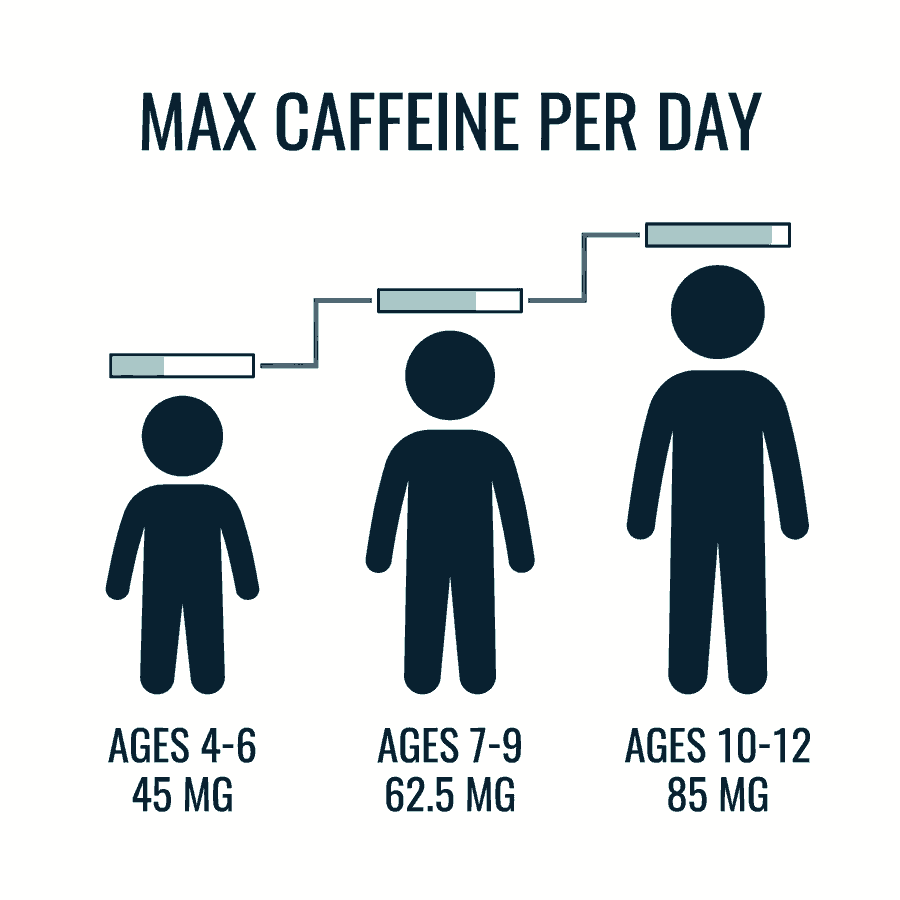
The AAP recommends children 12 and under avoid caffeinated beverages entirely, and caps adolescents ages 12 to 18 at under 100mg of caffeine a day. Health Canada sets a numeric limit instead of an age cutoff: no more than 2.5mg of caffeine per kilogram (kg) of body weight a day for children under 12, which works out to about 45mg a day for ages 4-6, 62.5mg for ages 7-9, and 85mg for ages 10-12. The UK's Food Standards Agency (FSA) uses a similar per-kg limit (3mg/kg/day) and discourages regular caffeine consumption in children, especially under age 16. Crosby Coffee's own age-by-age guidance reflects the same curve: 9- and 10-year-olds should mostly skip it, while an occasional small decaf becomes a lower-concern choice by 11 or 12, since decaf's caffeine load sits well under every one of these thresholds even for a smaller child.
Does Decaf Coffee Have Health Benefits for Kids?
Decaf coffee offers children little meaningful health benefit beyond what a caffeine-free drink like herbal tea or milk already provides. Its main appeal for kids is taste and ritual, not nutrition.
Decaf retains most of regular coffee's antioxidant content, since coffee (caffeinated or not) is the single largest dietary source of antioxidants like hydrocinnamic acids and polyphenols in the Western diet, but no research shows children specifically benefit from that antioxidant load the way some adult studies suggest for heart or metabolic health. One narrower finding stands out: a 2022 study cited by Healthline found decaffeinated coffee may work as a gastric stimulant in pediatric patients in a clinical setting, though that is a targeted medical use, not evidence that everyday decaf drinking benefits a child's digestion. A claim that decaf helps relieve short-term constipation in children circulates on some coffee retailer blogs, but it traces back to general adult research on coffee's stimulant effect on digestion, not a study conducted in children, so it should be read as unverified rather than established.
What Are the Risks of Giving Kids Decaf Coffee?
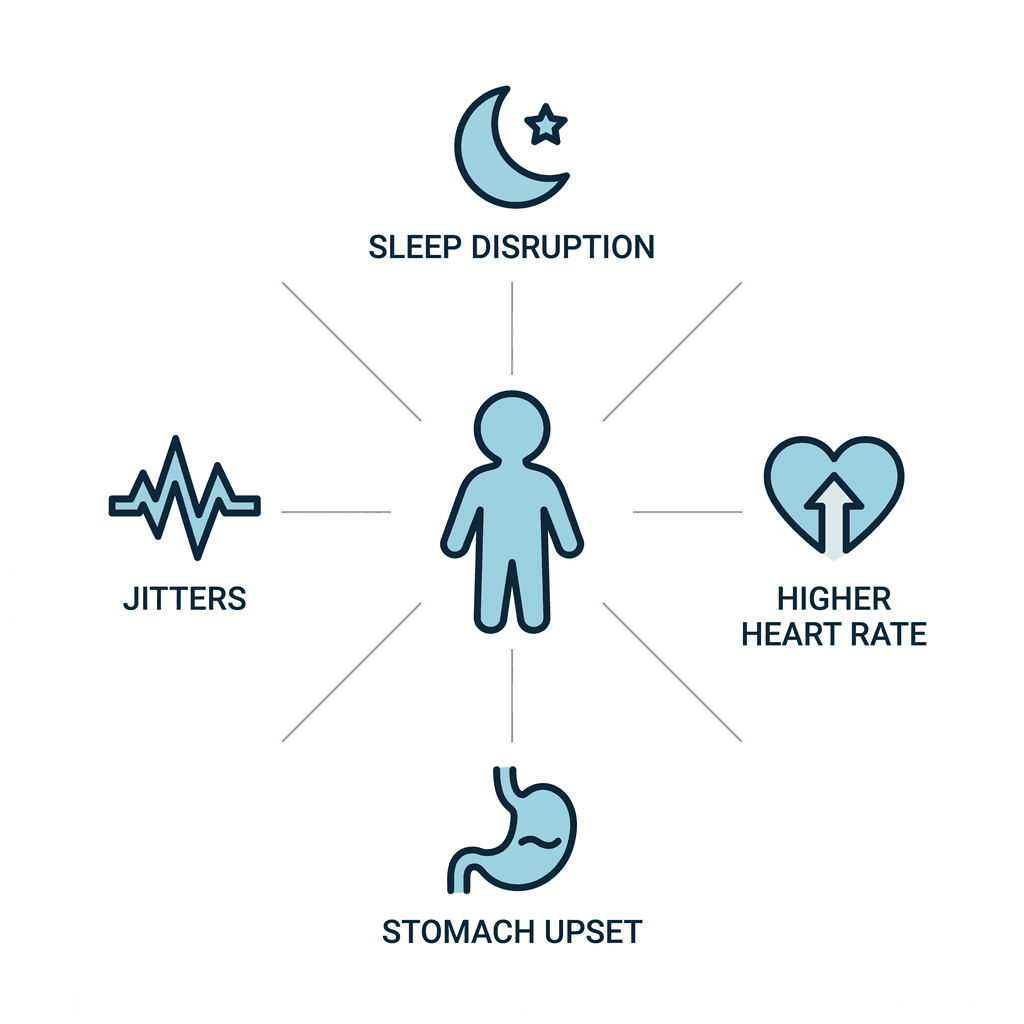
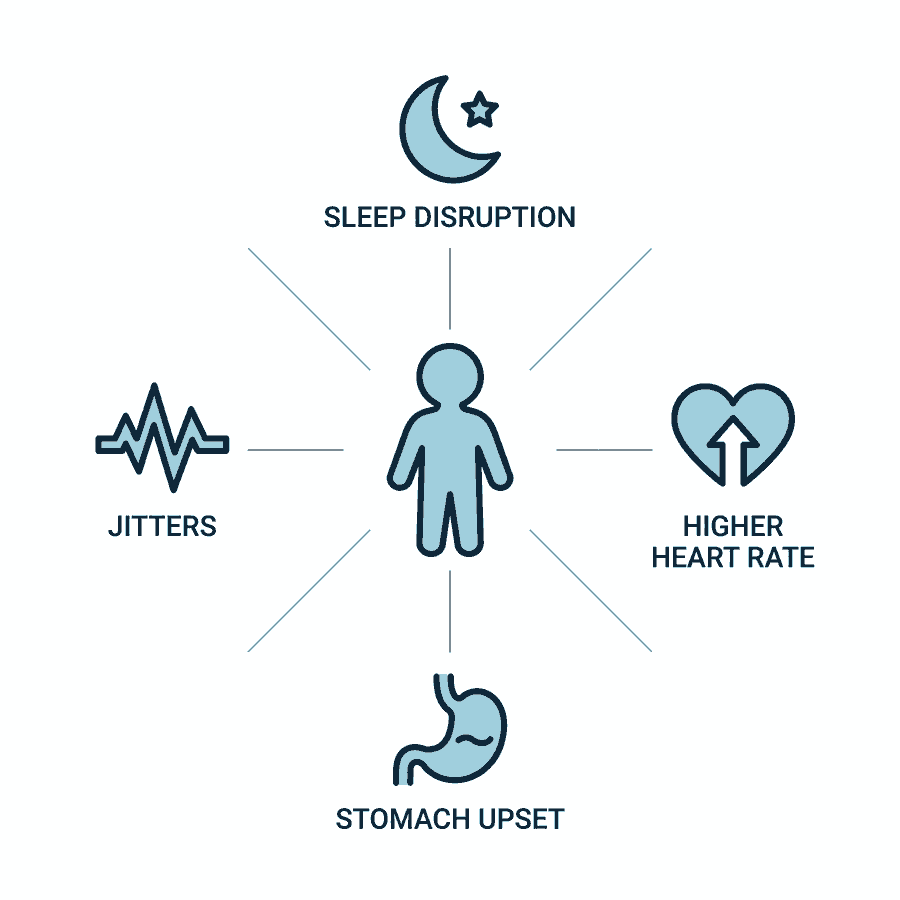
Children are more sensitive to caffeine than adults, so even decaf's small dose can cause sleep disruption, jitteriness, or an upset stomach in some kids.
Reported effects from caffeine in children include disturbed sleep duration and quality, increased nervousness and restlessness, stomach irritation, nausea, a higher heart rate and blood pressure, and reduced iron absorption. Caffeine also interferes with calcium absorption, which raises a mild concern for bone development with regular intake, and acts as a diuretic, adding a small dehydration risk on top of children's already higher susceptibility to it. Regular exposure, even at decaf's low levels, can build tolerance over time, meaning a child may start wanting more to feel the same effect, which is the main reason pediatric guidance favors keeping decaf occasional rather than habitual.
What Are Healthier Alternatives to Decaf Coffee for Kids?
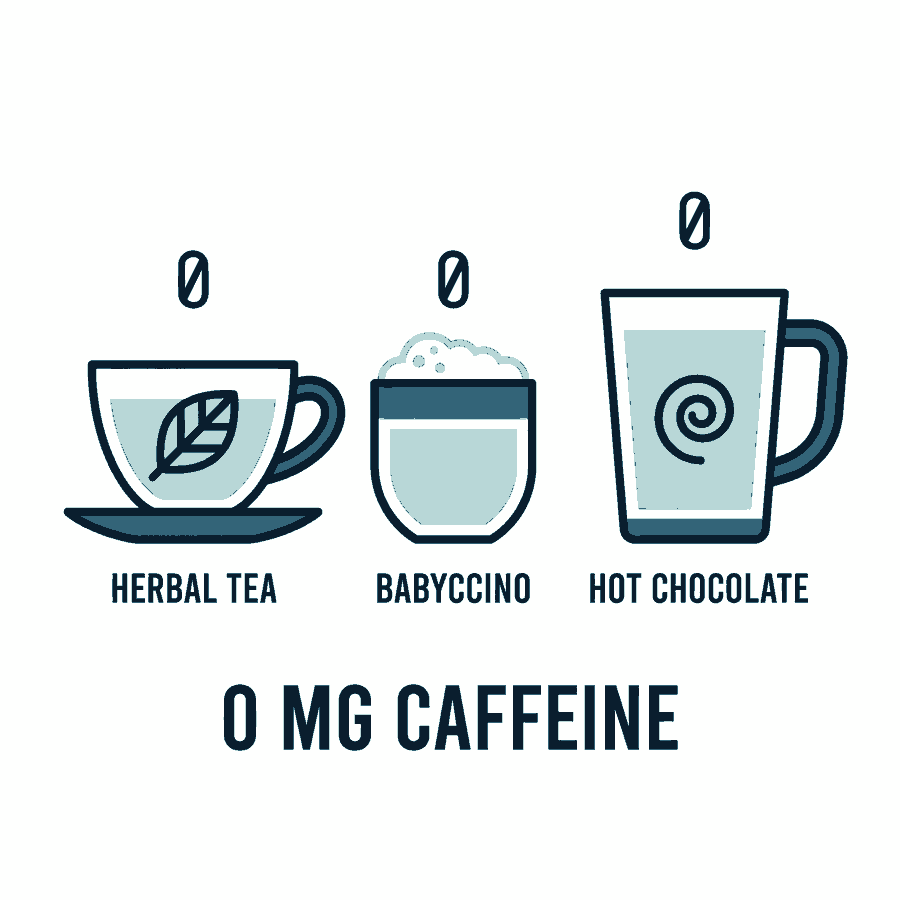
Caffeine-free herbal tea, a babyccino, and hot chocolate all let a child join a coffee ritual without any caffeine at all.
Most herbal teas, like chamomile or mint, are naturally caffeine-free and considered safe for kids, though it's worth checking the label since some blends mix in caffeinated tea leaves. A babyccino, frothed (and sometimes flavored) milk served in a small cup with no coffee at all, gives a child the ritual of "having a coffee" alongside a parent without introducing caffeine. Hot chocolate and warm milk sweetened with honey work the same way. Some brands now market vitamin-fortified instant drink mixes labeled as caffeine-free "coffee for kids," a different product category from brewed decaf espresso, but a sign that demand for a kid-safe coffee-adjacent drink is real.
Decaf Coffee for Kids
The short version for kids: decaf coffee is not caffeine-free, but its 2 to 15mg of caffeine per 8-ounce cup is low enough that an occasional small serving is reasonable for most children old enough to want to try it, especially past age 10 or so.
Decaf should never become a daily habit for kids, since pediatric and food-safety guidance from the AAP, Health Canada, and the UK's FSA all treat children's caffeine intake as something to minimize, not budget for, and decaf coffee brings no real nutritional upside to offset that caffeine, however small. Herbal tea, a babyccino, or hot chocolate cover the same ritual without the caffeine question at all.
Does Decaf Coffee Stain Kids' Teeth?
Yes, decaf can stain a child's teeth, though less than regular coffee. Decaffeination keeps the tannins, so the risk behind decaf coffee staining teeth is smaller, not gone.
For the grown-ups in the house who want the real thing, Drink Decaf's single-origin decaf espresso is Swiss Water Process decaffeinated and roasted to order in Oceanside, CA, with free shipping across the US.
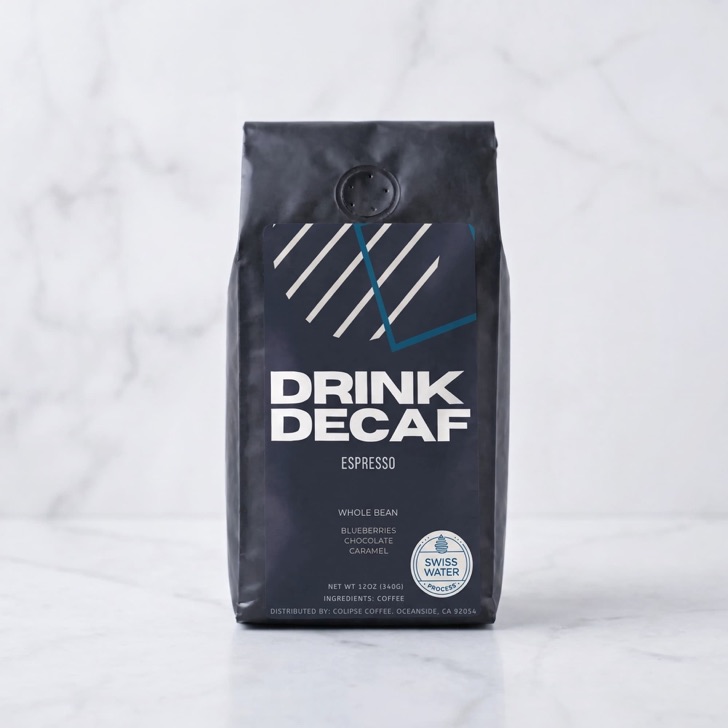
12 oz · Whole bean
Drink Decaf EspressoSpecialty grade. Swiss Water® Process decaffeinated. Roasted to order at our California roastery. Blueberry, chocolate, caramel.
Free shipping in the US