Does Decaf Coffee Stain Teeth?
Decaf coffee stains teeth because it still contains the tannins and chromogens that cause staining in regular coffee. The staining and enamel-erosion risk drops with caffeine content but never disappears, since decaffeination removes caffeine, not the acids and pigment compounds responsible for either effect. Cow milk's casein, a water rinse, and a delayed brushing routine each cut new staining, while professional whitening and cleaning reverse stains that have already set in.
Does Decaf Coffee Stain Teeth?
Decaf coffee stains teeth because it still contains the tannins and chromogens that cause staining in regular coffee. Removing caffeine does not remove these compounds. Decaf coffee compared to caffeinated coffee stains teeth less severely, since caffeine level tracks with tannin concentration and staining severity.
Decaf coffee shares the same core staining chemistry as regular coffee. Tannins and chromogens survive every common decaffeination method, because decaffeination targets caffeine molecules specifically and leaves the pigment-carrying compounds intact. A daily decaf habit still exposes teeth to the same category of stain-forming compound as a daily regular-coffee habit, only at a somewhat reduced dose.
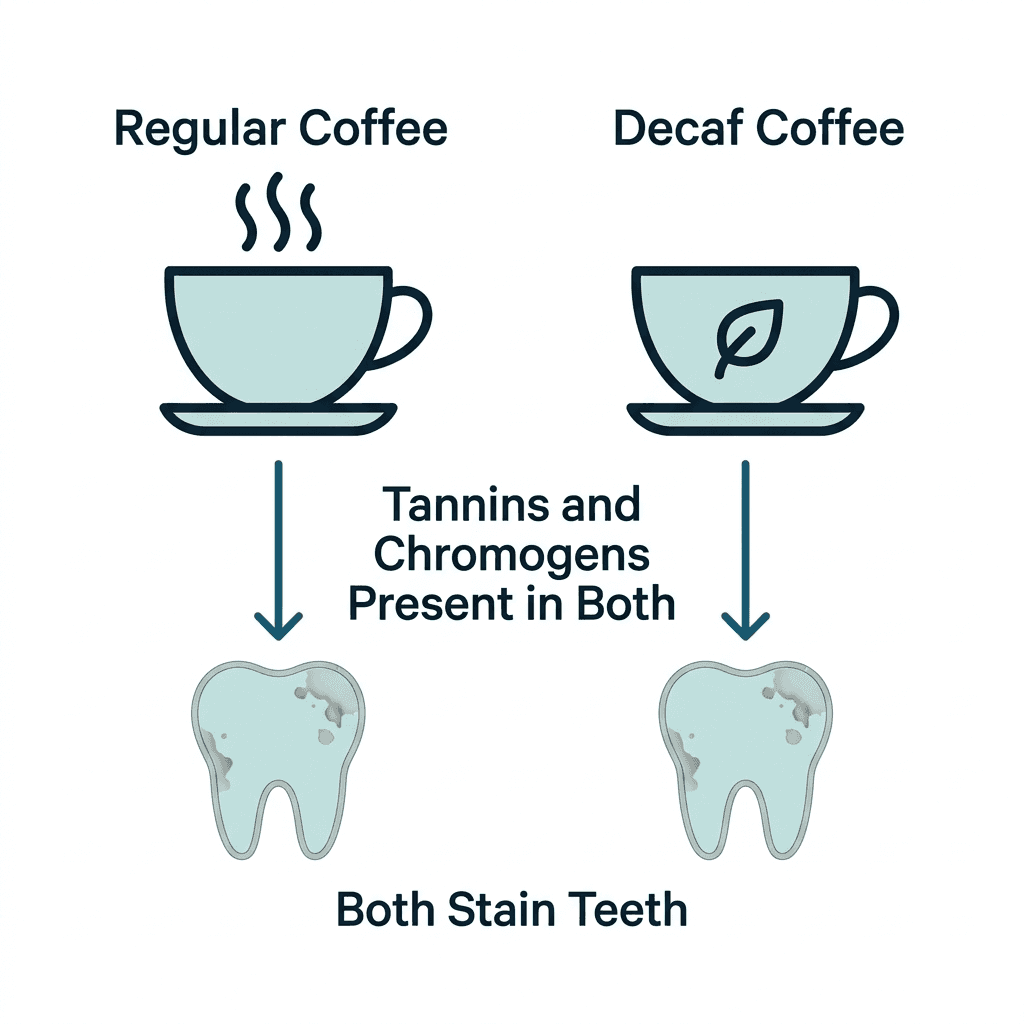
Why Does Coffee Stain Teeth?
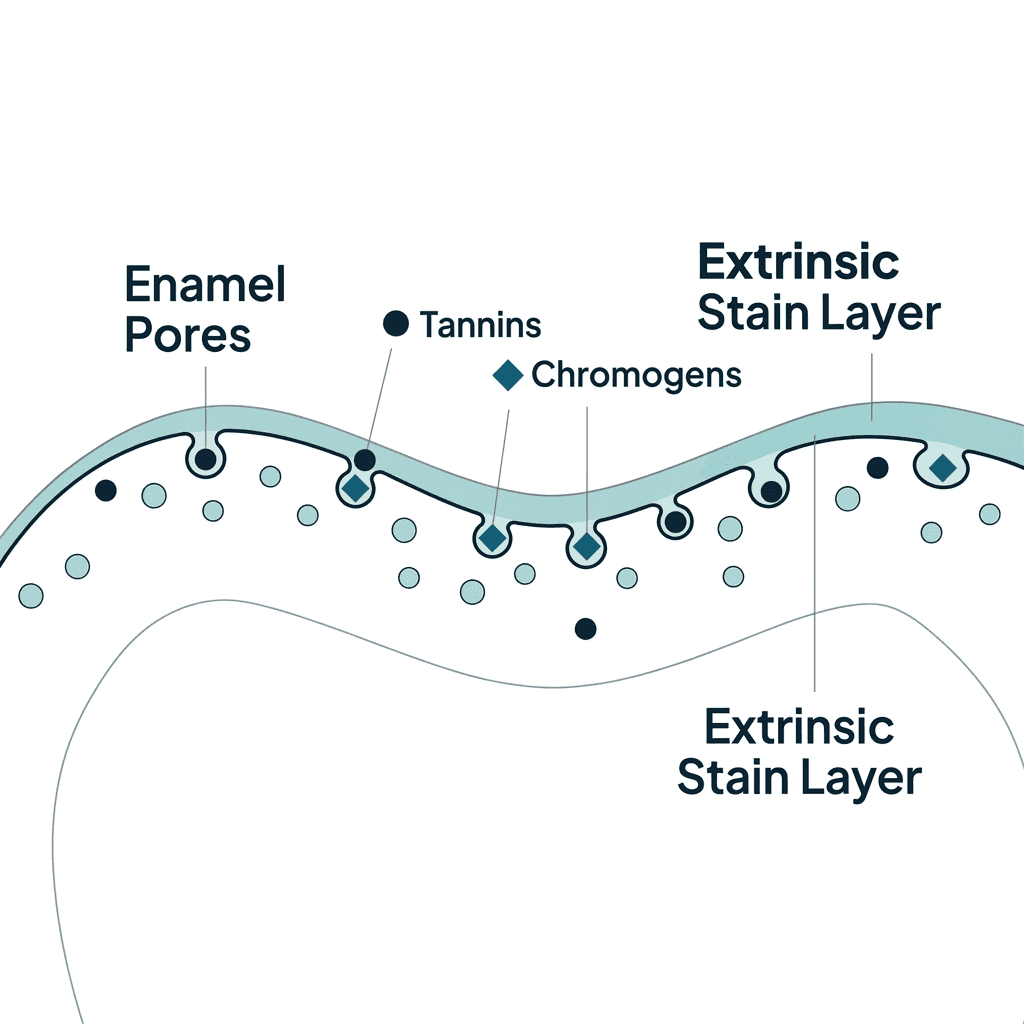
Coffee stains teeth because tannins and chromogens seep into the microscopic pores of tooth enamel and leave discoloration behind. Enamel looks smooth but is actually porous at a microscopic level. Coffee's acidity also softens enamel over time, which makes those pores easier for staining compounds to penetrate.
Chromogens are the pigment-carrying compounds responsible for coffee's dark color, and they bond directly to enamel's outer surface. Tannins work alongside chromogens as a second staining agent, latching onto the same enamel pores and forming what dentists classify as extrinsic stains. Extrinsic stains sit on the enamel surface rather than inside the tooth structure, which is why professional cleaning and whitening can remove most of them.
Does Decaf Stain Teeth Less Than Regular Coffee?
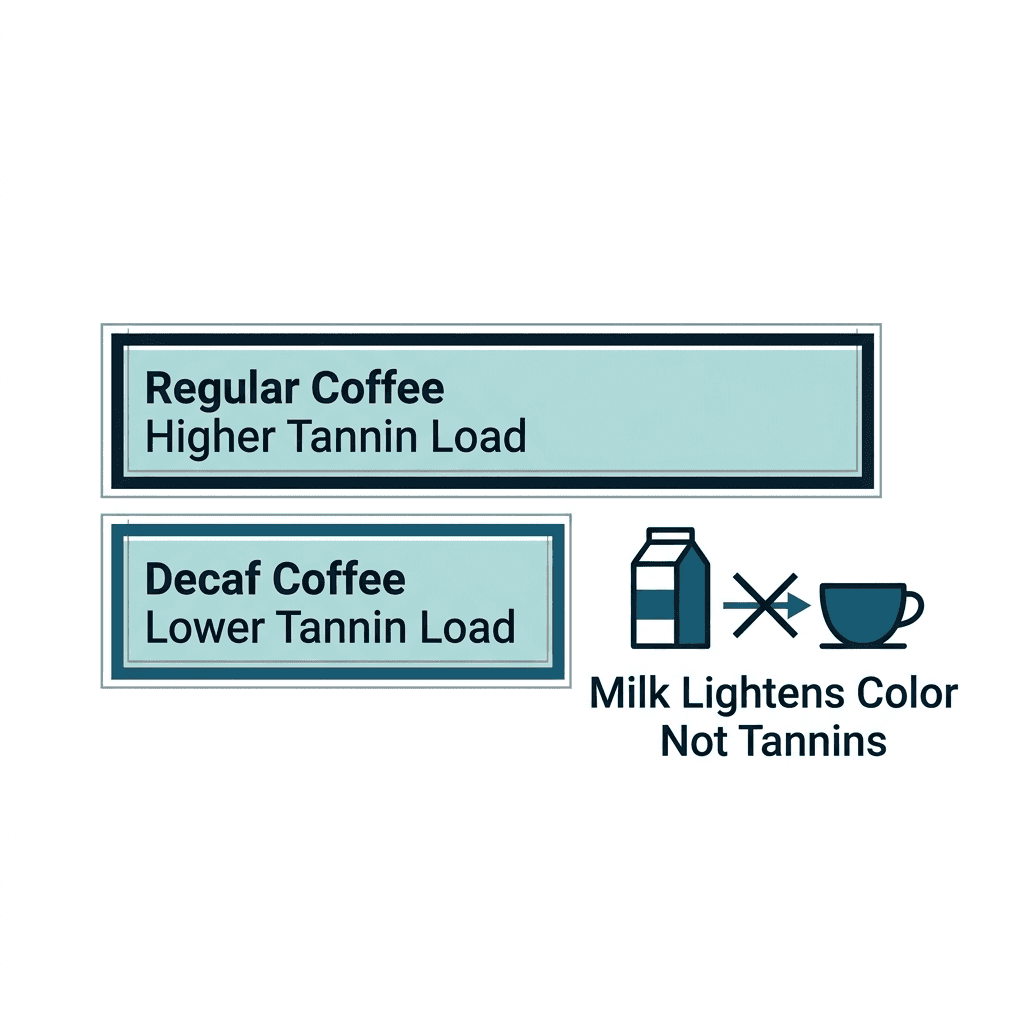
Decaf stains teeth less than regular coffee because caffeine content and tannin concentration rise together, so removing most of the caffeine also reduces the tannin load. The staining difference is one of degree, not a difference in the underlying chemistry. Decaf still carries enough tannin to discolor teeth with regular use.
Coffee roasters do not decaffeinate tannins alongside caffeine, since the two compound classes are chemically unrelated and removed through different mechanisms. Adding cream or milk to either regular or decaf coffee does not neutralize this effect by dilution alone. Cream and milk lighten the visible color of the liquid, but the tannins remain present and active at close to their original concentration.
Does Decaf Coffee Still Erode Enamel?
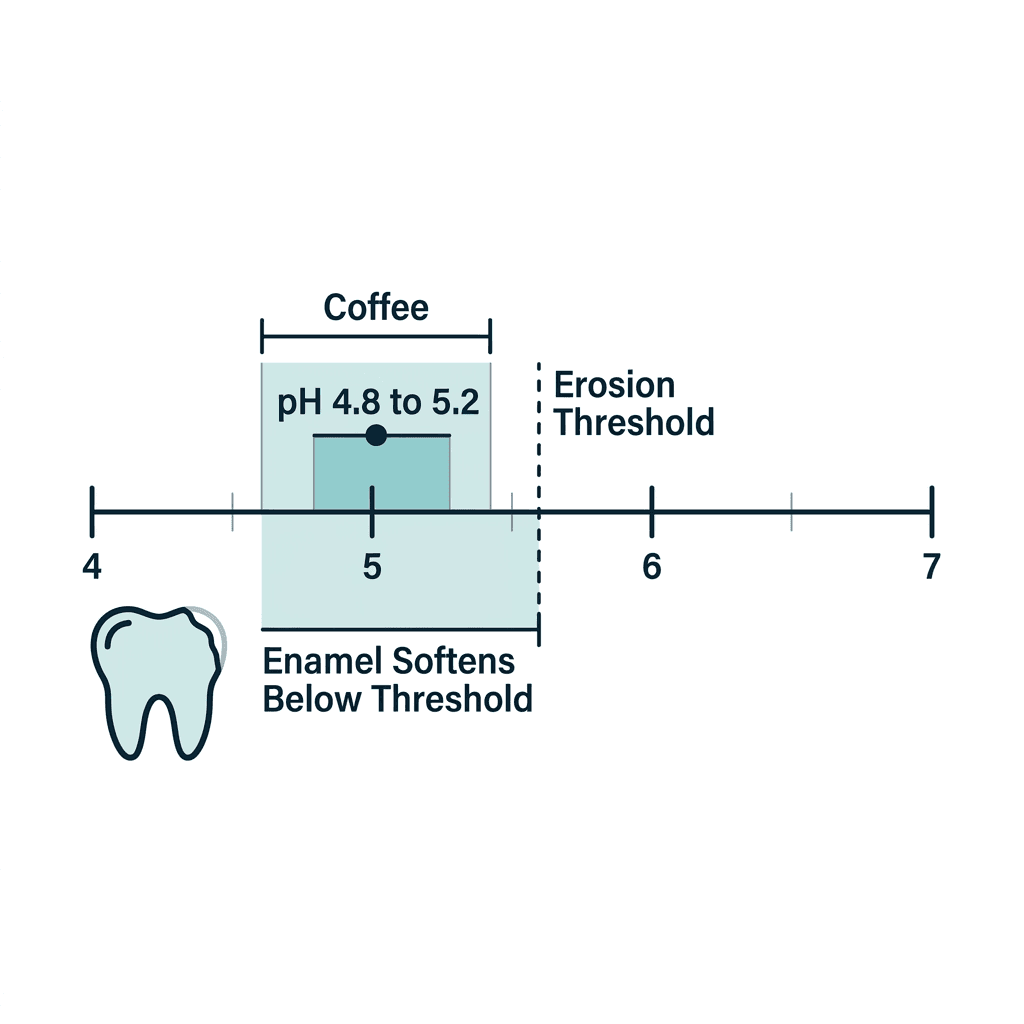
Decaf coffee still erodes enamel because it retains an acidic pH close to regular coffee's typical range. Brewed coffee generally falls between pH 4.8 and 5.2, below the roughly 5.5 threshold dentists treat as the point where enamel begins to soften. Decaffeination changes caffeine content, not the coffee's underlying acidity.
Enamel erosion happens gradually as repeated acid exposure wears down the enamel's protective outer layer. Enamel does not regenerate once it erodes, so the effect accumulates over years of regular decaf consumption rather than reversing on its own. Brand and brewing method can shift decaf's acidity somewhat, but frequent drinking without adjusting oral care habits still adds to erosion risk over time.
How Can You Prevent Decaf Coffee Stains?
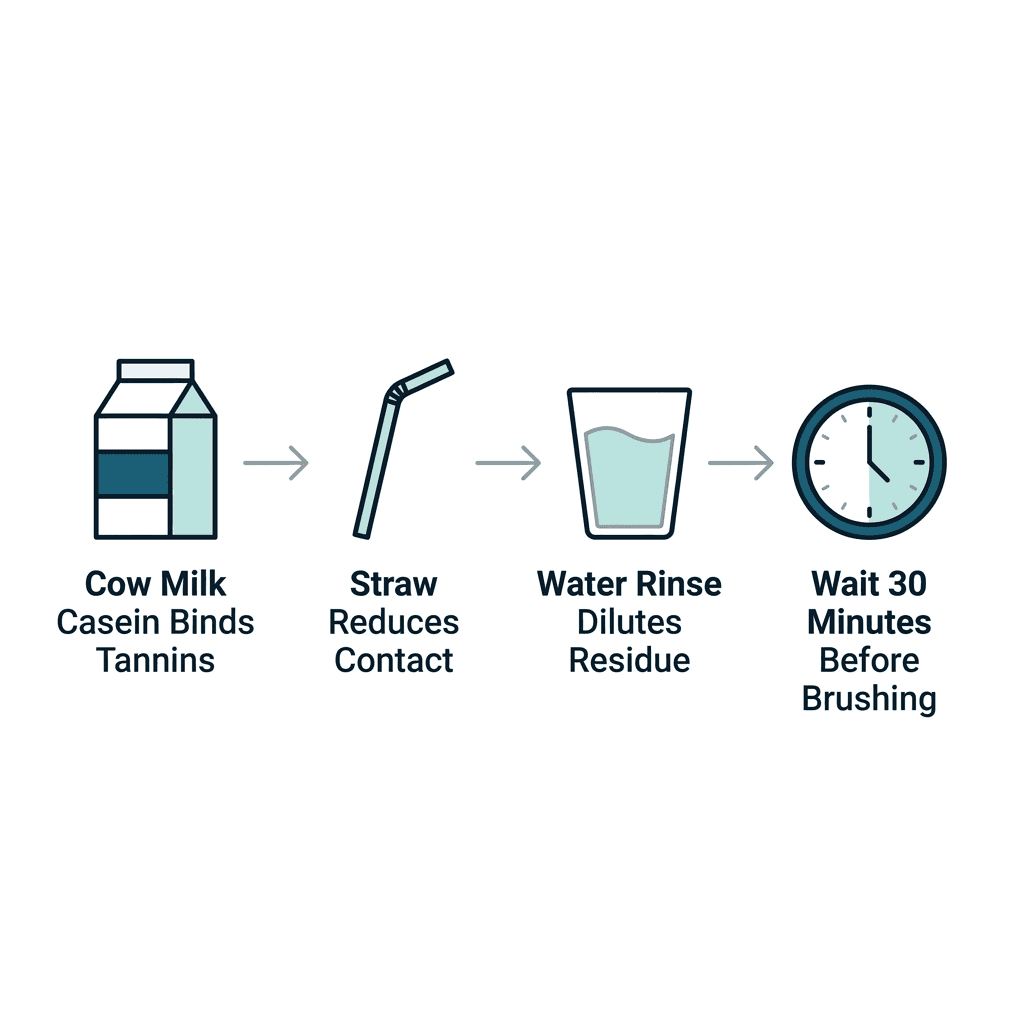
Preventing decaf coffee stains starts with adding cow milk, since a 2014 study in the International Journal of Dental Hygiene found that milk's casein protein binds directly to tannins before they can reach enamel. Researchers Ava Chow, Graciela Garen, Rebecca Lee, Angela Bayne, and Marguerite Tiangco soaked extracted human teeth in tea and tea-with-milk solutions for 24 hours and measured the shade change in each.
Casein bound the tannins in the milk-added solution and produced a color-change reduction the researchers described as comparable to vital bleaching products and stronger than whitening toothpaste alone. Almond milk and soy milk do not contain casein, so they do not reproduce this protective effect. Drinking decaf through a straw further limits the effect, by channeling the liquid past the front teeth and reducing direct contact with the most visible enamel surfaces. Rinsing the mouth with water immediately after finishing a cup dilutes any remaining tannin residue before it settles into enamel pores. Waiting at least 30 minutes to brush after drinking decaf also matters, because coffee's acidity temporarily softens enamel and brushing too soon can wear away that softened layer instead of protecting it.
How Do You Remove Existing Decaf Coffee Stains?
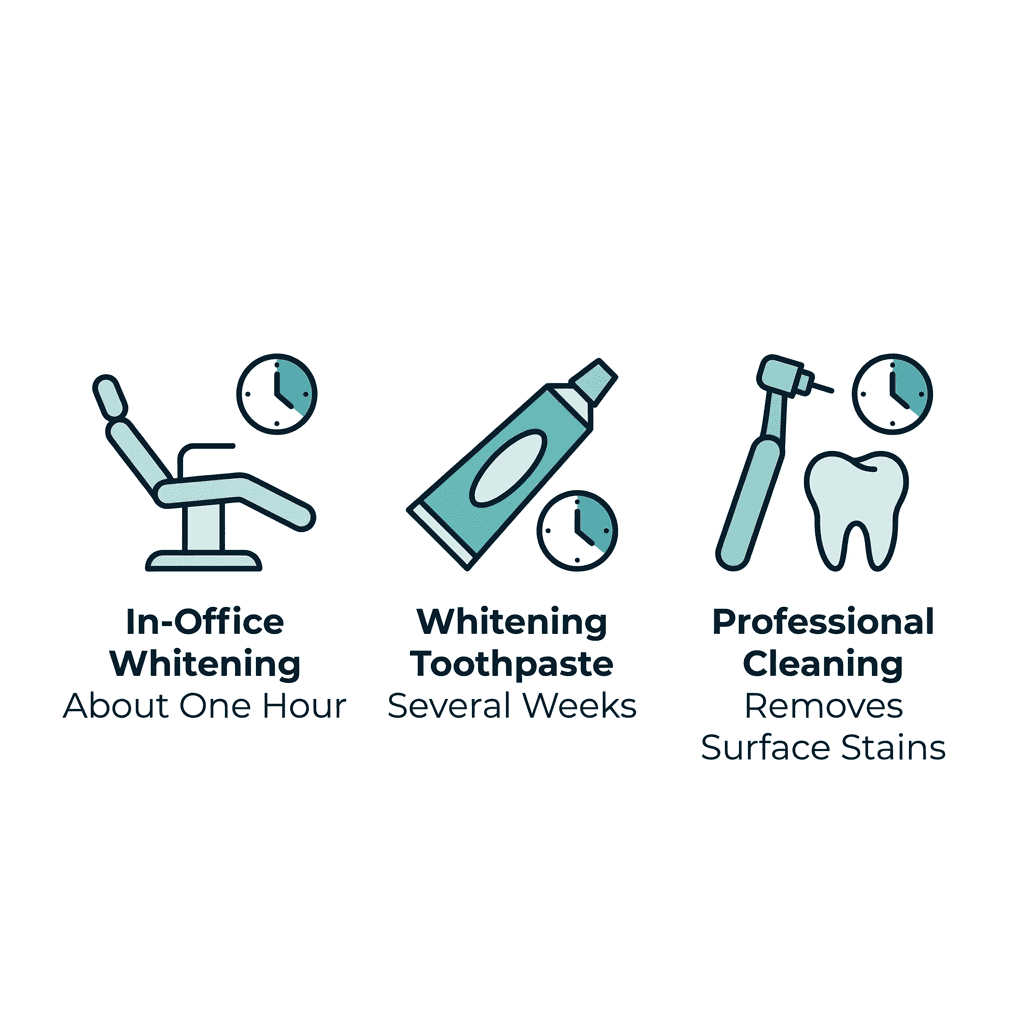
Removing existing decaf coffee stains works best through professional in-office whitening, which applies a peroxide-based bleaching gel that a dentist activates with light or laser and typically lightens teeth within about an hour. Professional cleaning and at-home whitening toothpaste offer slower, gentler alternatives for milder staining.
Professional cleaning uses abrasion and polishing to remove surface-level extrinsic stains that daily brushing and flossing cannot reach on their own. Whitening toothpaste relies on mild abrasives and, in stronger formulations, small amounts of hydrogen or carbamide peroxide to lift stains gradually across weeks of regular use rather than in a single session. In-office whitening results fade over time and typically need repeat treatment based on how much decaf a person drinks and how consistent their daily oral hygiene stays afterward.

12 oz · Whole bean
Drink Decaf EspressoSpecialty grade. Swiss Water® Process decaffeinated. Roasted to order at our California roastery. Blueberry, chocolate, caramel.
Free shipping in the US