Can You Drink Decaf Coffee While Pregnant?
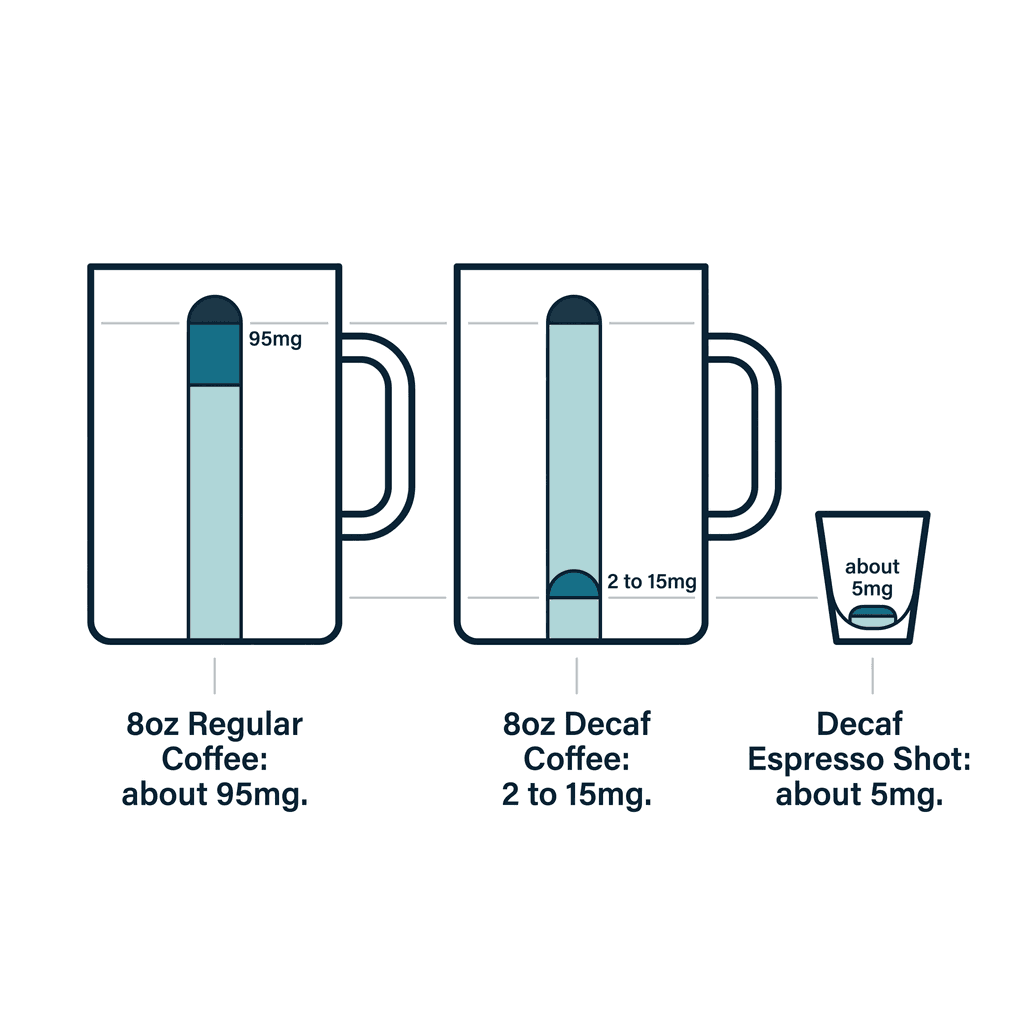
Decaf coffee still carries a small amount of caffeine. Serving sizes here use ounces (oz) and milligrams (mg). A typical 8oz cup of decaf holds 2 to 15mg, versus roughly 95mg in regular coffee. The American College of Obstetricians and Gynecologists (ACOG) recommends pregnant women keep total caffeine under 200mg a day. Decaf's low dose leaves room for several cups under that ceiling. A decaf made with the Swiss Water Process skips chemical solvents entirely. This choice removes the one added question pregnant drinkers usually ask about decaf. Research on decaf's direct fetal effects is limited, but consistently smaller than regular coffee's.
How Much Caffeine is in Decaf Coffee?
Decaf coffee still carries a small amount of caffeine. An 8oz cup typically holds 2 to 15mg, compared with roughly 95mg in a regular cup.
There is no Food and Drug Administration (FDA) standard fixing an exact percentage for the word "decaffeinated." The National Coffee Association describes commercial decaffeination as removing about 97% or more of the caffeine. The FDA notes decaf can still contain up to about 15mg per 8oz cup. A decaf espresso shot runs closer to 5mg, and a decaf latte made with two shots totals about 10mg.
How Much Decaf Coffee Can You Drink While Pregnant?
Most pregnant women can drink several cups of decaf a day and stay well under recommended caffeine limits.
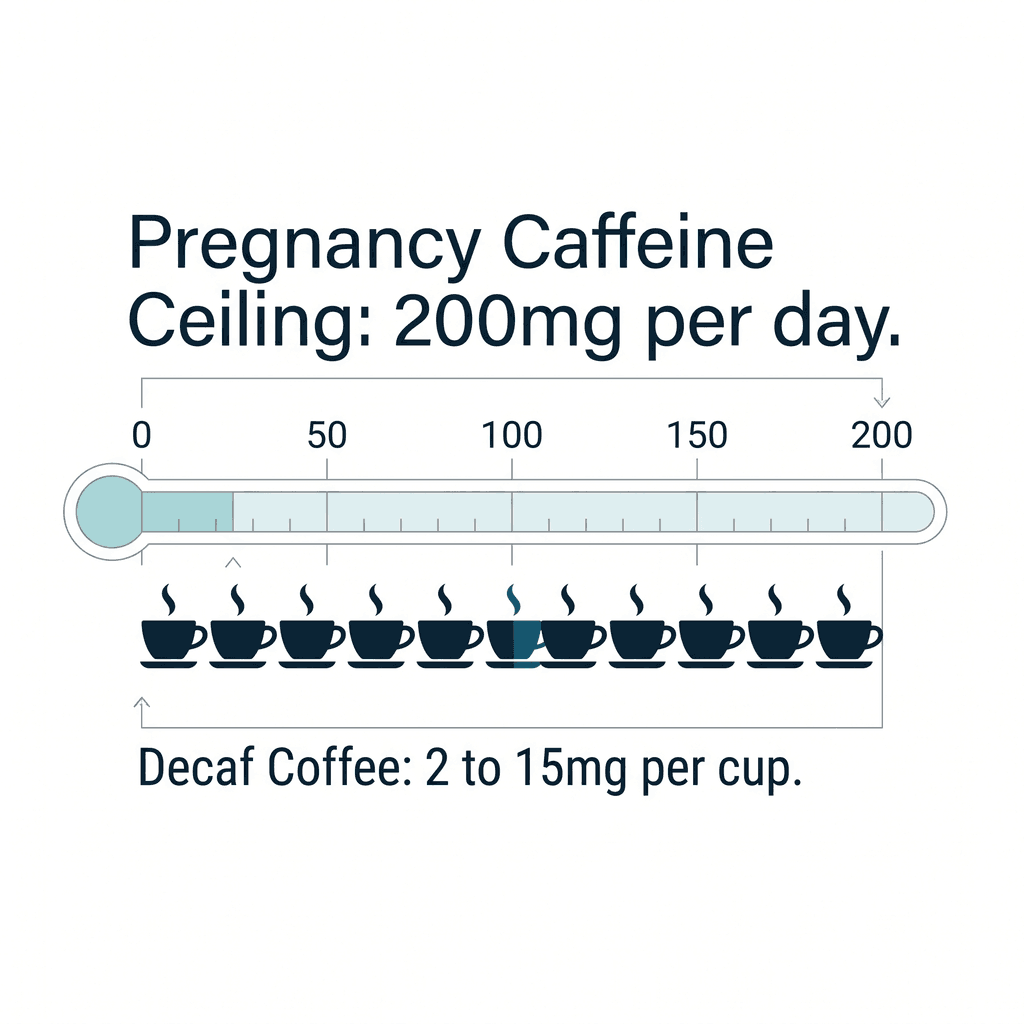
The American College of Obstetricians and Gynecologists recommends pregnant women keep total caffeine intake under 200mg a day. Decaf coffee carries only about 2 to 15mg per 8oz cup. Someone drinking exclusively decaf would need more than a dozen cups to reach that ceiling. Any caffeine from tea, chocolate, or medication still counts toward the same 200mg total. Overall intake is worth tracking, not just decaf alone.
What Are the Benefits of Decaf Coffee During Pregnancy?
Decaf coffee lets pregnant women keep their coffee routine without the caffeine load of regular coffee.
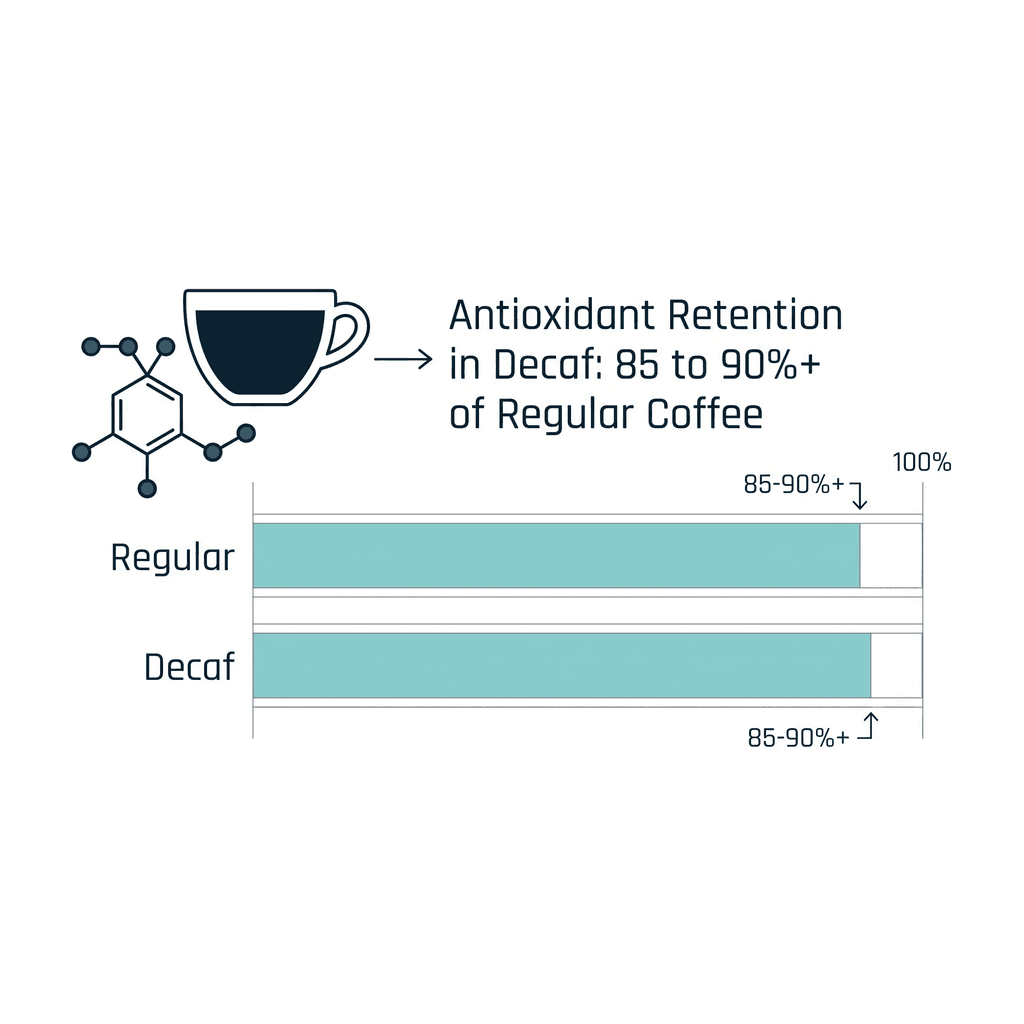
Decaffeination does not strip out coffee's antioxidant compounds in any major way. Studies of decaf beans put retention of chlorogenic acid and polyphenols at 85% to 90%+ of regular coffee's levels. The exact range depends on the decaffeination method used. Methods like the Swiss Water Process, which avoid chemical solvents, preserve these compounds best. A pregnant woman drinking decaf still gets most of coffee's antioxidant content and flavor, minus nearly all the caffeine.
Which Decaf Process is Safest During Pregnancy?
The Swiss Water Process is the safest decaffeination method to look for during pregnancy.
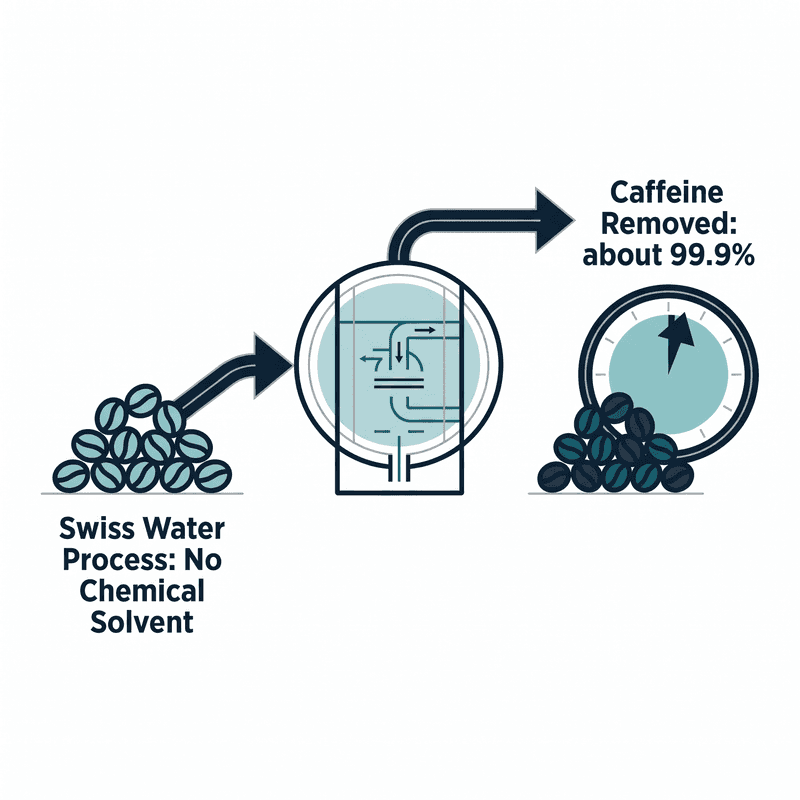
The Swiss Water Process removes caffeine using only hot water, temperature, and a caffeine-free Green Coffee Extract. No chemical solvent ever touches the beans, and the process reaches about 99.9% caffeine removal. Other methods use a solvent called methylene chloride to strip caffeine from the beans before roasting. Checking a bag's label for "Swiss Water Process" or "chemical-free" avoids that question entirely.
What Are the Risks of Decaf Coffee During Pregnancy?
Decaf coffee carries few added risks beyond its small caffeine content for most pregnant women.
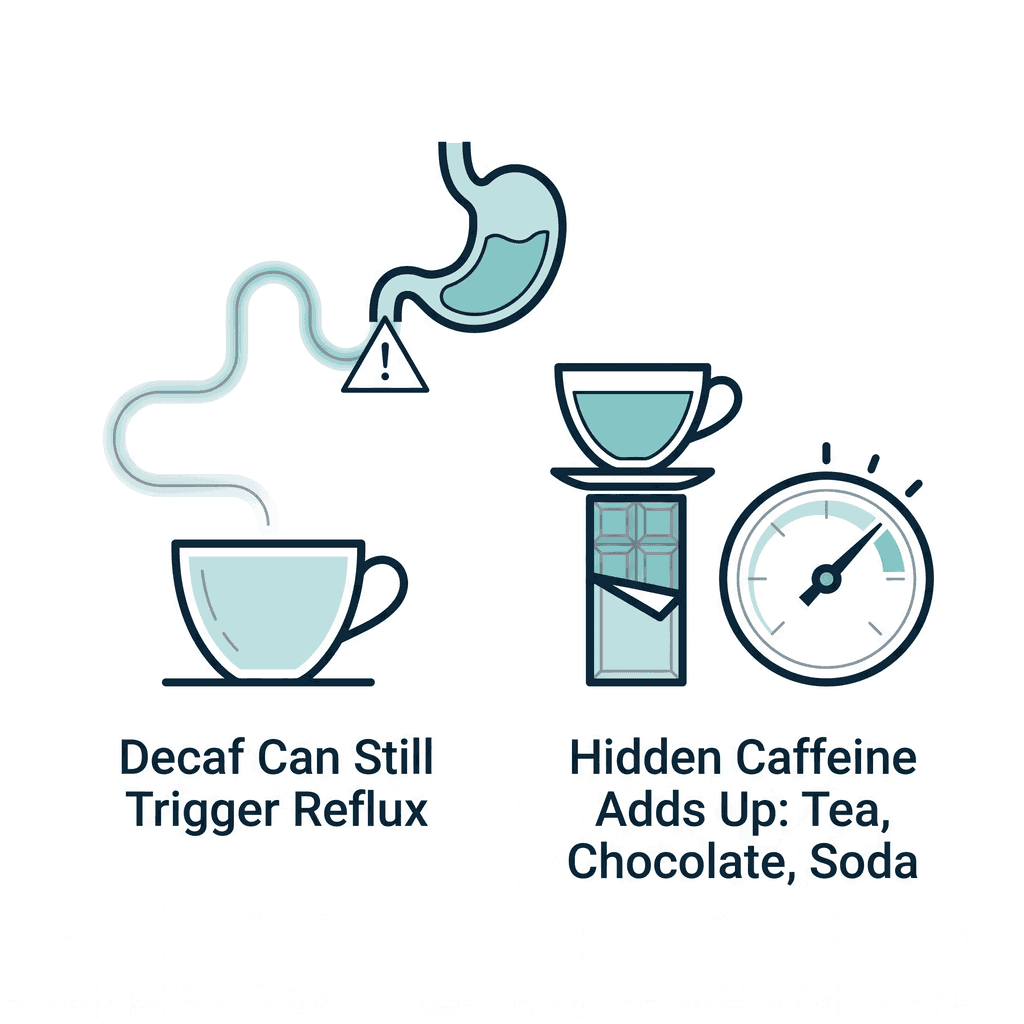
Coffee itself, decaf included, is acidic and can worsen heartburn or reflux. Many pregnant women already deal with reflux, so this applies to decaf too. Some decaf blends also use flavoring additives or sweeteners worth checking on a label. Decaf's main practical risk is simply forgetting it still contains some caffeine. A pregnant woman drinking decaf alongside tea, chocolate, or soda could still near the 200mg daily ceiling without realizing it.
Does Decaf Coffee Contain Methylene Chloride Residue?
Decaf coffee processed with methylene chloride can retain only a strictly limited residue under FDA rules.
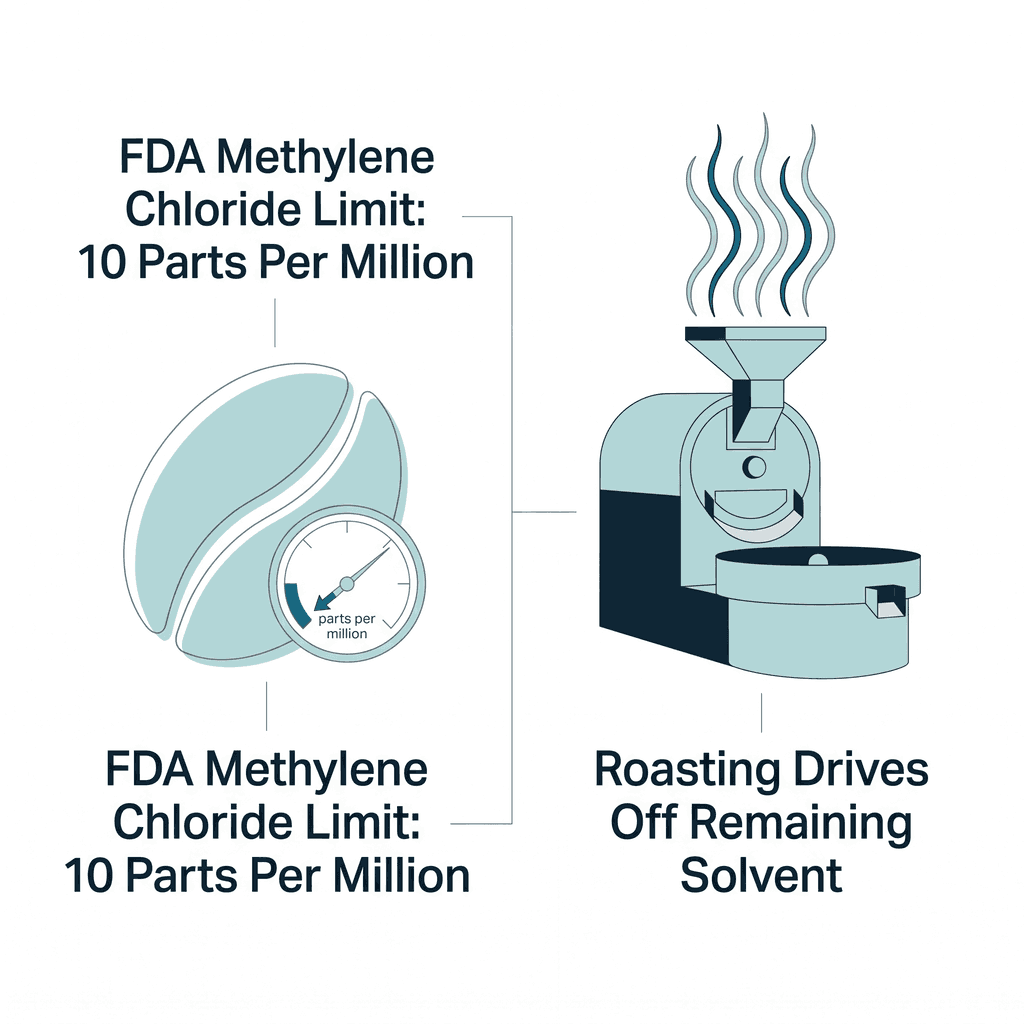
The FDA caps methylene chloride residue in solvent-processed decaf beans at 10 parts per million. Roasting the beans afterward drives off nearly all of any remaining solvent. Methylene chloride boils at a much lower temperature than roasting reaches. Pregnant women who want to avoid the question entirely can choose a Swiss Water Process or carbon dioxide (CO2)-processed decaf. Neither one uses a chemical solvent at any stage.
Can You Drink Decaf Coffee While Breastfeeding?
Decaf coffee is considered safe during breastfeeding in typical amounts.
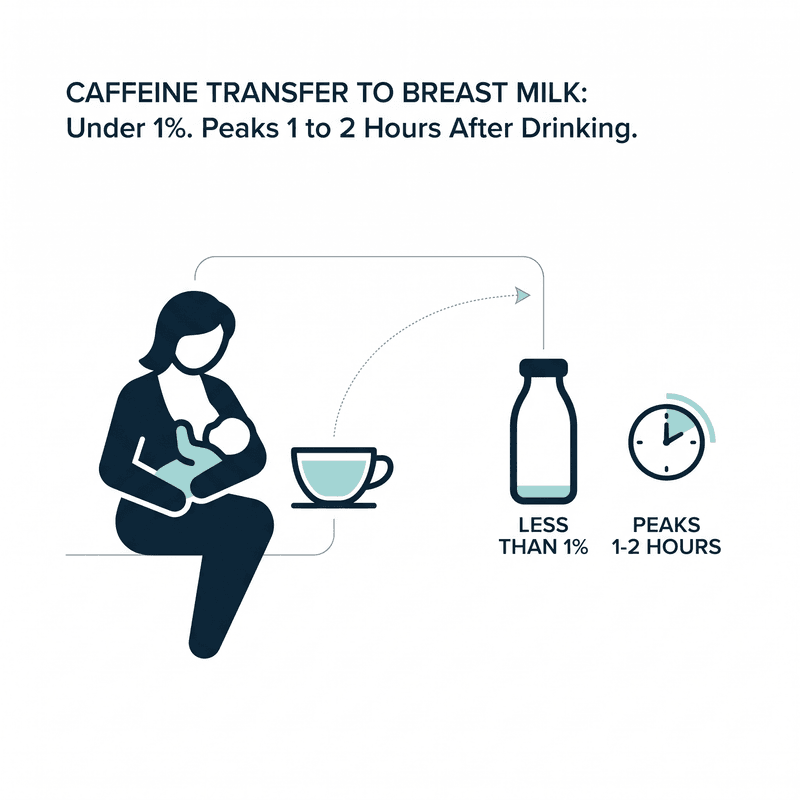
Less than 1% of the caffeine a breastfeeding mother consumes transfers into breast milk. Milk caffeine levels peak about one to two hours after she drinks it. The American Academy of Pediatrics classifies caffeine as a maternal medication usually compatible with breastfeeding. Most health organizations set 200 to 300mg a day as an acceptable ceiling while nursing. Regular coffee drinkers reach that ceiling at roughly 2 to 3 cups. Decaf's 2 to 15mg per cup sits far below that threshold, even across several cups a day.
What Does Research Say About Decaf Coffee and Pregnancy?
Available research shows decaf's fetal effects are consistently smaller than regular coffee's.
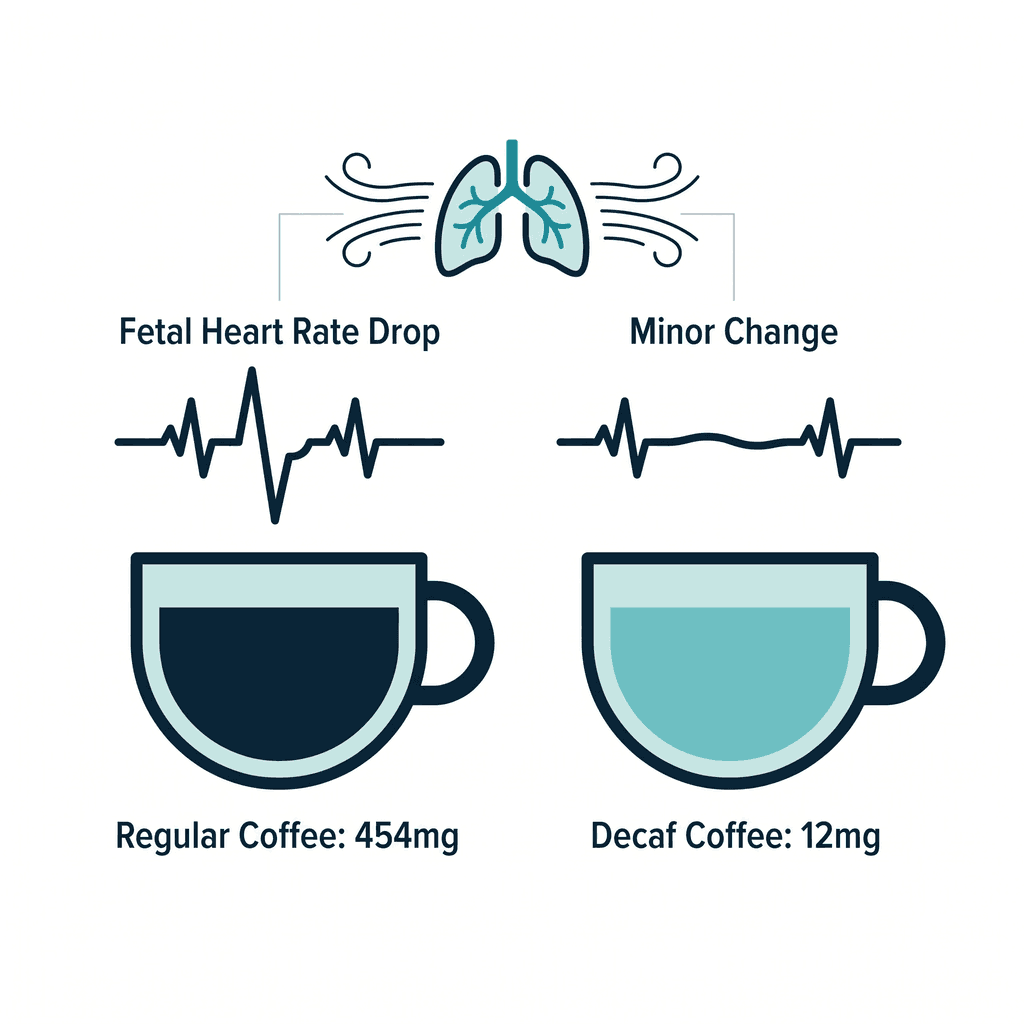
A small crossover study followed 8 pregnant women at 32 to 36 weeks gestation. Researchers compared two cups of regular coffee against two cups of decaf. Regular coffee, carrying about 454mg of caffeine, produced a twofold rise in fetal breathing activity. The same dose also caused a significant drop in fetal heart rate. Decaf, carrying about 12mg, also raised fetal breathing activity slightly but caused only a minor heart rate change. Larger reviews of caffeine and pregnancy outcomes cover miscarriage and birth weight studies. These reviews generally track total caffeine intake, not decaf specifically, since decaf's own share of that total stays small.
Drink Decaf's own single-origin decaf espresso uses the Swiss Water Process, so no chemical solvent ever touches the beans. If you are ready to try genuinely great decaf, shop the current batch of single-origin decaf espresso beans today.
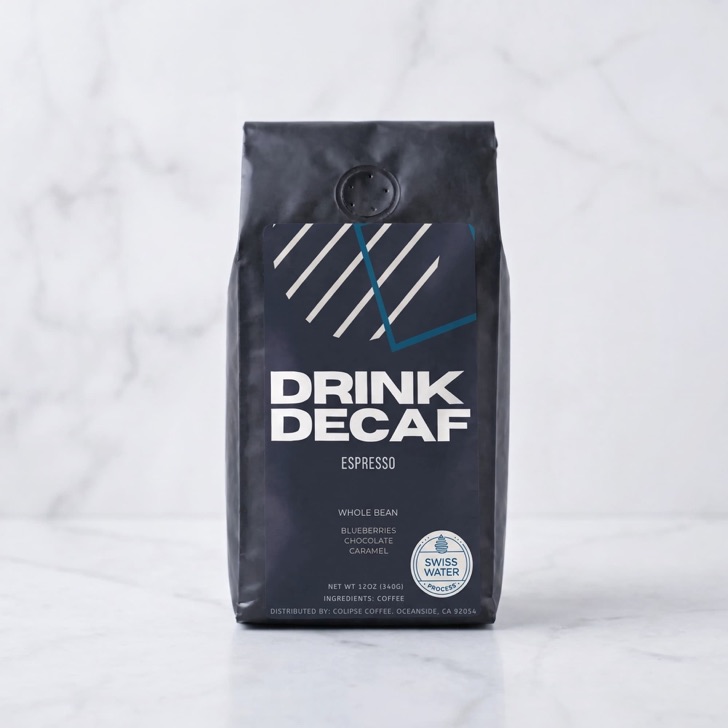
12 oz · Whole bean
Drink Decaf EspressoSpecialty grade. Swiss Water® Process decaffeinated. Roasted to order at our California roastery. Blueberry, chocolate, caramel.
Free shipping in the US